Children: Section Guide
Guide to the ten files in the children section, examining traditional Yorùbá games, moonlight play, oral literature, physical contests, and indigenous child pedagogy.
introhigh·
Guide to the ten files in the children section, examining traditional Yorùbá games, moonlight play, oral literature, physical contests, and indigenous child pedagogy.
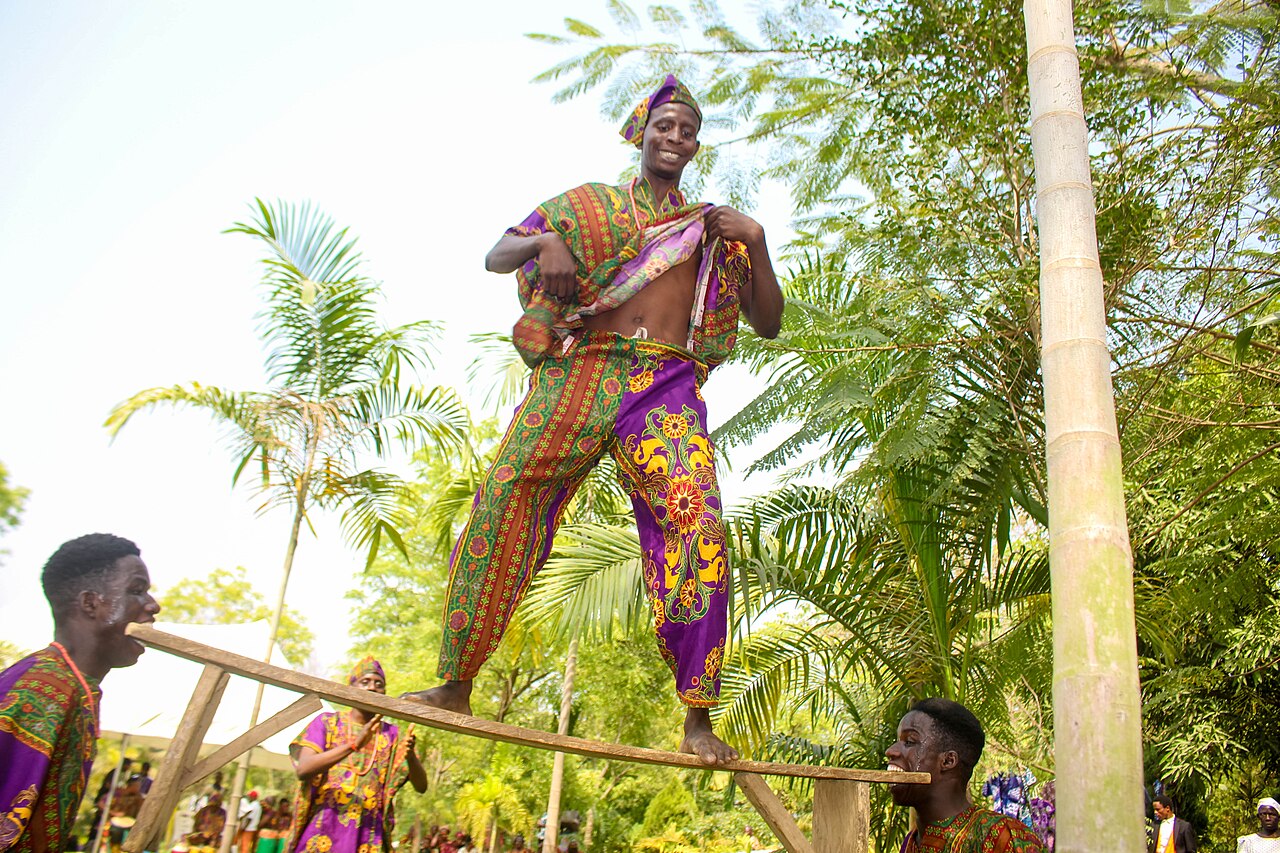
This section examines the world of Yorùbá childhood: how children play, sing, count, wrestle, tell stories, and learn social responsibility through communal games and oral traditions , . It covers ten core files spanning indoor mathematical strategy, outdoor kinetic play, nocturnal storytelling, nursery rhymes, lullabies, linguistic riddles, and indigenous pedagogy , . Across these files, play (eré) is analyzed not merely as recreational amusement, but as the foundational curriculum through which character (ìwà), cognitive dexterity, physical resilience, and cultural memory are transmitted across generations , .
| # | File | One-line summary |
|---|---|---|
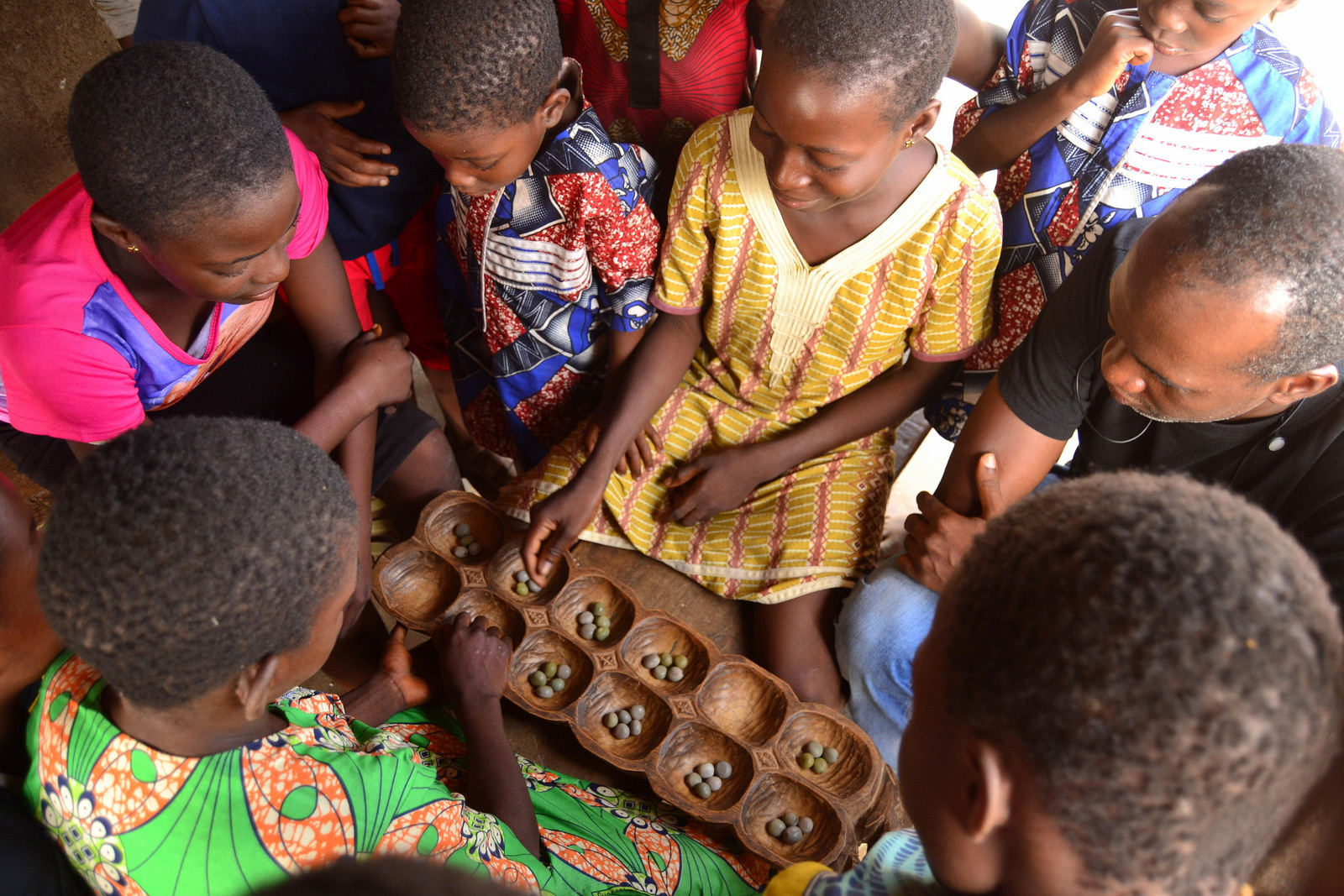
| 01 | Ayò Ọlọ́pọ́n: The Board Game | Rules, counting logic, and social ethics of the ancient twelve-pit mancala game played across Yorùbáland. |
| 02 | Bójú Bójú: Hide and Seek | The ritualized hiding game, its cautionary lyrics invoking predatory forces, and its spatial socialization. |
| 03 | Ṣuwe: The Hopping Game | Grid structures, balance rules, and territorial acquisition mechanics in traditional hopscotch variations. |
| 04 | Ten Ten and Clapping Games | Syncopated footwork, polyrhythmic clapping songs, and kinetic coordination in girls' peer performances. |
| 05 | Moonlight Play and Ìtàn Àṣálẹ́ | Communal evening gatherings (eré òṣùpá), call-and-response storytelling (àlọ́ àpagbè), and the Tortoise (Ìjàpá) cycle. |
| 06 | Counting Rhymes and Choosing Games | Numerical mnemonic verses, random selection chants, and early introduction to the Yorùbá vigesimal mathematical system. |
| 07 | Lullabies and Ọlọ́mọ Songs | Infant-soothing oral poems (orin ìrọ́mọ), maternal philosophies of child-worth, and communal caretaking verses. |
| 08 | Tongue Twisters and Word Play | Enunciation puzzles, tonal gymnastics, and riddle challenges (àlọ́ àpamọ̀) that train phonological agility. |
| 09 | Ìjàkadì and Physical Play | Traditional wrestling, acrobatic sparring (gídìgbò), predator-prey tag, and boyhood physical endurance rites. |
| 10 | What the Games Teach | Philosophical analysis of indigenous Yorùbá pedagogy (ẹ̀kọ́ ilé), character formation (omoluabi), and play-based learning models. |
File Ayò Ọlọ́pọ́n: The Board Game details the architecture, computational strategy, and social etiquette of ayò ọlọ́pọ́n, the classic Yorùbá sowing-and-capturing mancala played on a two-row wooden board (ọpọ́n) with forty-eight ṣẹ́yọ̀ seeds , . The file breaks down legal moves, anti-clockwise distribution, and the distinction between master strategists (ọ̀tá) and novices (òpè) . It also analyzes the cultural taboo that restricted play to late afternoons and evenings to prevent daylight idleness . What remains historically undocumented is the exact prehistoric origin of specific opening protocols across dialect zones, though regional variants from Ọ̀yọ́, Èkìtì, and Ìjẹ̀bú display consistent mathematical axioms .
File Bójú Bójú: Hide and Seek investigates the sung hide-and-seek game bójú-bójú (literally, "cover the eyes, cover the eyes") . The file provides multi-layer translations of the chanted dialogue between the seeker and hiding participants, unpacking the cautionary warning Olóro ń bọ̀ ("The fierce hunter/ritual disciplinarian is coming") , . Scholars dispute whether the figure of Olóro originated as a secular reference to wild predators or as a socialized echo of sacred ancestral masquerades that enforced nighttime curfews .
File Ṣuwe: The Hopping Game explores the chalk-and-dirt hopping grid game ṣùwè, documenting court geometries, unilateral balance, stone-throwing precision, and the mechanics of claiming and "building houses" (kọ́lé) within designated compartments , . The file contrasts colonial assumptions that viewed ṣùwè merely as an import of European hopscotch with linguistic and structural evidence pointing to autonomous West African street game lineages , .
File Ten Ten and Clapping Games examines the fast-paced rhythmic foot-and-clap game Ten Ten, alongside hand-clapping sequences such as Tinkó Tinkó , . It analyzes the game's core kinetic challenge: jumping and presenting a matching or opposing lead foot on the downbeat to score points . The chapter situates the form within female peer socialization, rhythmic coordination, and rapid reflex development, while noting the lack of written colonial documentation regarding its pre-twentieth-century antecedents .
File Moonlight Play and Ìtàn Àṣálẹ́ centers on the evening courtyard gathering known as eré òṣùpá , . It explores the communal staging of evening folktales (ìtàn àṣálẹ́) and participatory musical riddles (àlọ́ àpagbè), which typically pit the cunning tortoise Ìjàpá against larger beasts to debate greed, justice, and community balance , . The file examines how modern urbanization, rural electrification, and screen culture have displaced these nocturnal gatherings in contemporary towns .
File Counting Rhymes and Choosing Games covers the vocal mnemonics used to teach numeracy and select participants, focusing on the foundational rhyme Ẹní bí ẹní , . It illustrates how cadence and internal assonance scaffold the complex additive and subtractive logic of the Yorùbá base-twenty counting system , . Dialectal variations in number chants across eastern and north-western Yorùbá regions remain partially documented, with the file highlighting where published anthologies have smoothed local variants into standard Ọ̀yọ́ forms .
File Lullabies and Ọlọ́mọ Songs surveys infant-soothing poems (orin ìrọ́mọ) and child-centered praise poetry (orin ọlọ́mọ) , . It treats these songs as vital oral literature expressing maternal philosophies that position children as the apex of human worth (ọmọ lérè ayé) , . The file addresses the scholarly dialogue between feminist readings that emphasize maternal economic agency and older anthropological treatments that reduced these songs to domestic sentimentality , .
File Tongue Twisters and Word Play studies phonological acrobatics, minimal-pair tongue twisters (ọ̀rọ̀ àpárò), and descriptive riddles (àlọ́ àpamọ̀) , . It provides full three-layer translations demonstrating how tonal shifts distinguish identical segmental sequences to sharpen linguistic auditory processing in early childhood . It clarifies the distinction between public childhood verbal riddles and the restricted, esoteric riddles reserved for ritual guilds .
File Ìjàkadì and Physical Play investigates traditional wrestling (ìjàkadì), chest-to-chest sparring (gídìgbò), predator chase games (ẹkùn méran), swimming, and tree climbing , . It examines wrestling rules that prohibit lethal violence, emphasize agility and balance over raw weight, and celebrate civic virtue, as seen in the annual Ìjàkadì l'ọ́rọ̀ Ọ̀fà festival in Ọ̀fà kingdom . The file traces how juvenile wrestling transitioned from an informal compound pastime into structured civic ceremonies .
File What the Games Teach provides the overarching theoretical synthesis for the section, analyzing traditional childhood play through the lens of indigenous educational philosophy (ẹ̀kọ́ ilé) , . Drawing on the frameworks of A. Babs Fafunwa, J. A. Majasan, and Helen Callaway, the file articulates how physical games, oral folklore, and rhythmic contests systematically build the ọmọlúàbí ideal: a well-rounded, courageous, honest, and communal individual , , .
If you want cognitive and linguistic development: Start with Counting Rhymes and Choosing Games, proceed to Tongue Twisters and Word Play, and conclude with Ayò Ọlọ́pọ́n: The Board Game. This path highlights numerical dexterity, tonal ear-training, and abstract probability calculation.
If you want kinetic play and physical socialization: Read Ṣuwe: The Hopping Game, then Ten Ten and Clapping Games, followed by Bójú Bójú: Hide and Seek and Ìjàkadì and Physical Play.
If you want oral literature and social philosophy: Begin with Lullabies and Ọlọ́mọ Songs, move to Moonlight Play and Ìtàn Àṣálẹ́, and finish with What the Games Teach.
This section focuses strictly on the informal practices, peer games, rhymes, and oral literature of children and youth.
20-crafts-and-professions.05-ifa.02-language under Orúkọ: Yorùbá Names and How They Are Given and Oríkì: Praise Poetry, Genealogy, and the Naming of Essence.08-social-structure.The classical Yoruba two-row board game of count-and-capture, examining its mechanics, historical antiquity, strategic taxonomy, symbolic structures, and social regulations.
Evening games, riddles, and folktales organized under the moonlight in Yoruba communities, their pedagogical mechanics, and their modern institutional decline.
An examination of traditional Yoruba children's games as an indigenous pedagogical system transmitting numeracy, physical coordination, language fluency, and moral character, alongside the causes and consequences of their modern decline.
A survey of traditional Yorùbá children's games, examining the performance rules, songs, spatial arrangements, and social functions of outdoor recreational play.
Structural mechanics, scoring systems, rhythmic pedagogy, and performance rules of Yoruba children's clapping and foot games.
Traditional Yorùbá children's chants, game rhymes, and cautionary story-songs documented in play, performance, and communal recreation.