The Ogboni (Òṣùgbó) Society and Earth Jurisprudence · Ìpilẹ̀ṣẹ̀
The Ogboni (Òṣùgbó) Society and Earth Jurisprudence
An exhaustive scholarly investigation into the Ogboni (Òṣùgbó) institution, the sacred cosmology of Earth (Ilẹ̀), and its judicial and constitutional governance across Yorùbá polities.
advancedhigh28 min to read·27 source dem
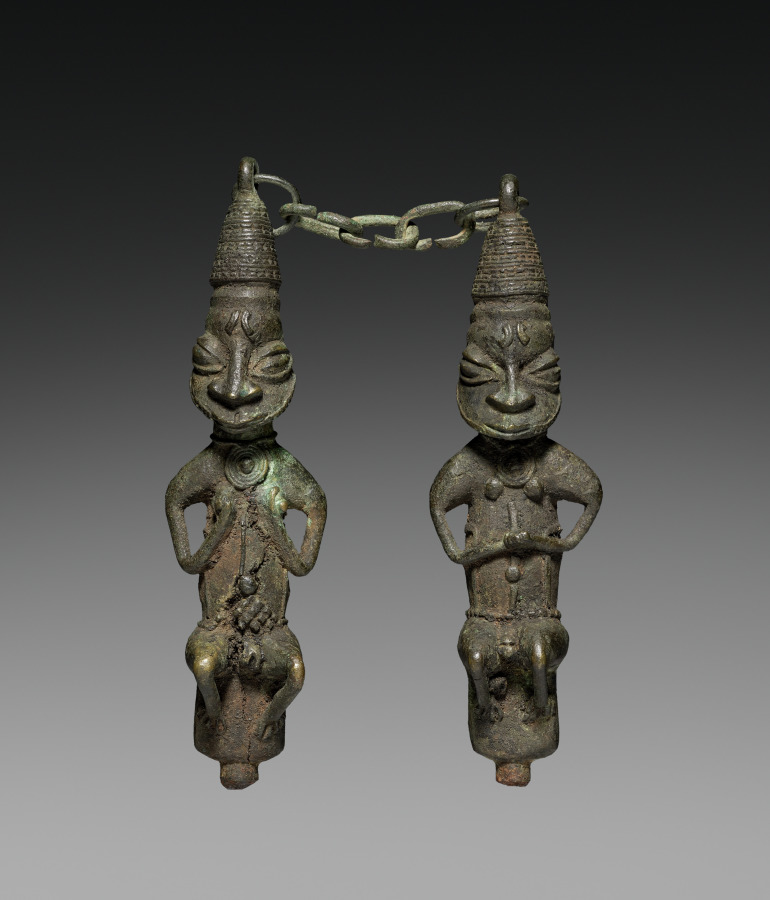
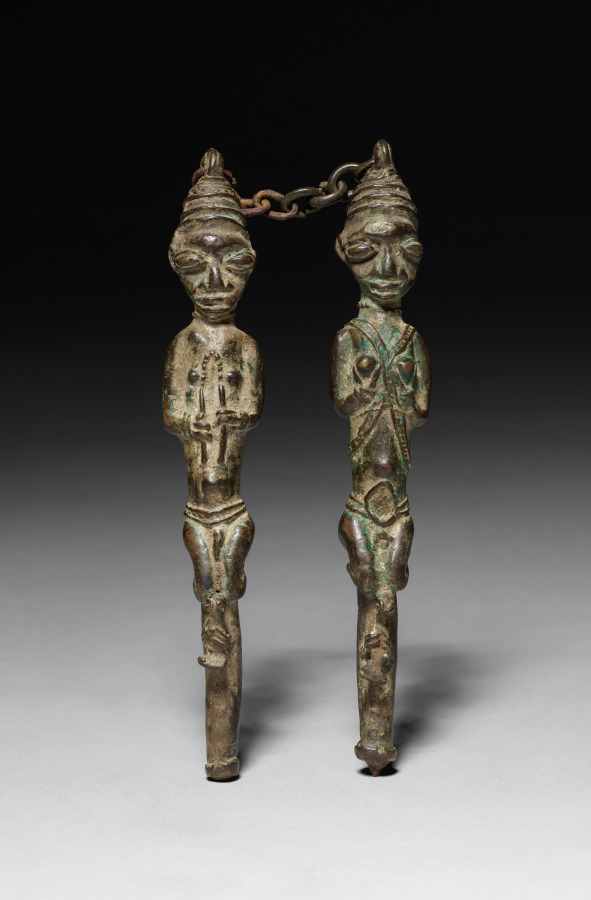
Pair of Ritual Staffs (ẹdan Ògbóni)Gift of Drs. James, Gladys, Jay, Jeffrey, and Jamie StrainThe Cleveland Museum of Art · CC0
Pair of Ritual Staffs (ẹdan Ògbóni)
Gift of Drs. James, Gladys, Jay, Jeffrey, and Jamie Strain
The Cleveland Museum of Art · CC0
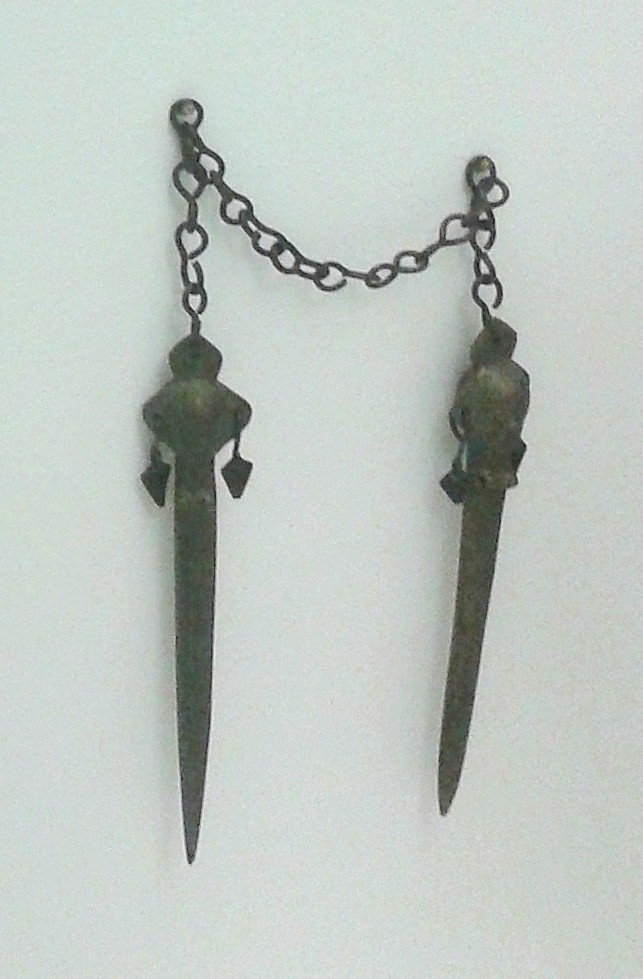
Edan MN 02Own workWikimedia Commons · CC BY-SA 4.0
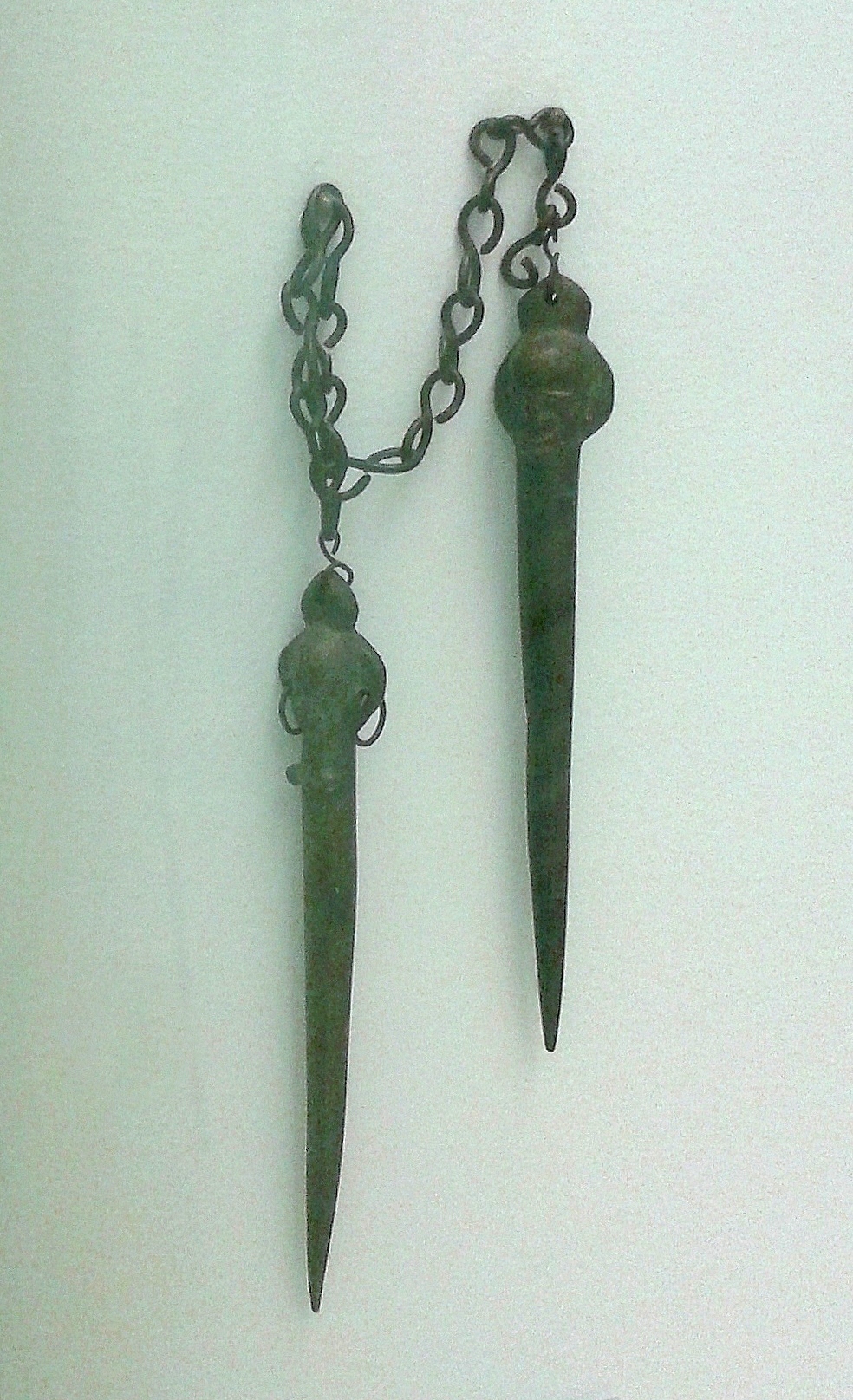
Edan MN 01Own workWikimedia Commons · CC BY-SA 4.0
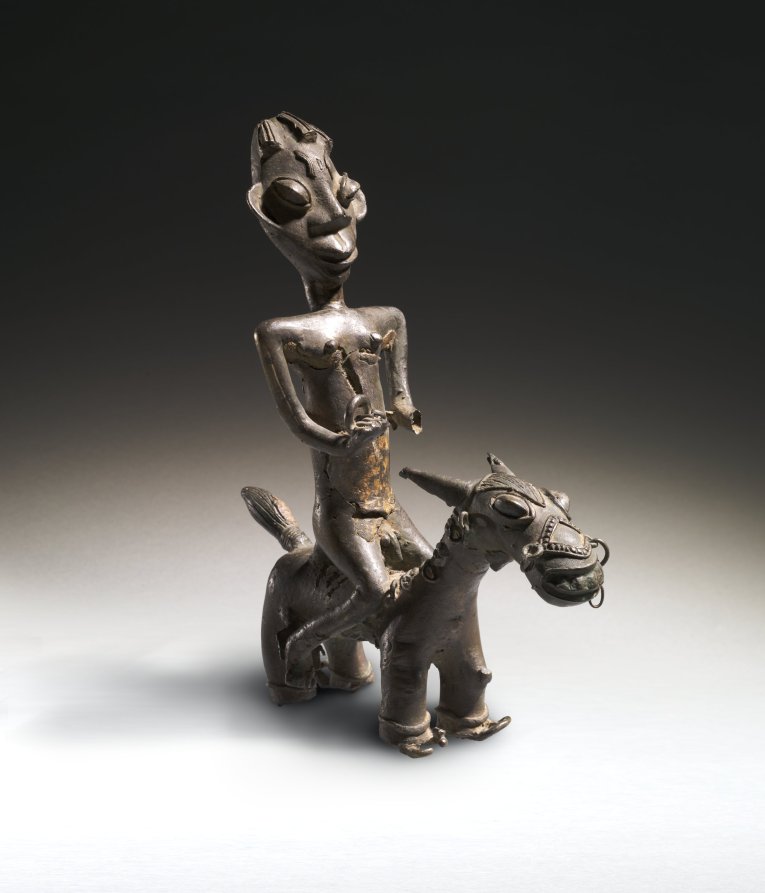
Altar figure (onílé)Alma Kroeger FundThe Cleveland Museum of Art · CC0
The Ògbóni society, known among the Ìjẹ̀bú and Ẹ̀gbá as Òṣùgbó, is an indigenous Yorùbá institution of titled elders, civic judges, and ritual custodians dedicated to the veneration and legal sovereignty of the Earth (Ilẹ̀ or Onílẹ̀) . Functioning as a supreme judicial court, electoral college, and constitutional check on royal power, the society mediated disputes between the executive authority of monarchs (ọba), lineage chiefs, and the wider populace across precolonial southwestern Nigeria . Through its sacred brass and iron insignia (ẹdan Ògbóni), the assembly exercised exclusive jurisdiction over capital offenses, particularly crimes that shed human blood upon the ground and polluted the spiritual integrity of the land .
Unlike secular legislative assemblies, Ògbóni operates under a theological framework of Earth jurisprudence, wherein human law derives its legitimacy from cosmic covenant and the unyielding moral witness of Ilẹ̀ . The society unites elderly men and titled postmenopausal women (Erelú) in an esoteric council sworn to inviolable secrecy, collective consensus, and the maintenance of political equilibrium .
Names, Morphology, and Dialectal Variations
The institution is identified across Yorùbaland by two primary designations whose distributions reflect regional political histories and dialectal boundaries .
The name Ògbóni (pronounced with low-high-mid tones: ` _ ¯) has several competing etymological derivations in historical linguistics and oral tradition:
Ọgbọ́n ní (Possessors of Wisdom): Derived from the noun ọgbọ́n (wisdom, cunning, or discernment) and the verb ní (to have or possess) . In this reading, an Ògbóni is an elder endowed with esoteric sagacity and maturity required to resolve intractable communal disputes .
Gbó-ẹni (The Aged / Seasoned Person): Proposed by Peter Morton-Williams, deriving from the verb gbó (to grow old, ripe, or mature) combined with ẹni (a person) . Under this morphological model, Ògbóni translates as "the assembly of the elders" or "the corporation of ripe persons" .
Ògbo-oní (Covenant of the Double-Edged Truth): Found in esoteric lodge liturgies, where ògbo references longevity and unyielding durability, personified in ritual metallurgy .
Etymology and Regional Scope of Òṣùgbó
In southern coastal Yorùbaland, particularly among the Ìjẹ̀bú and Ẹ̀gbá kingdoms, the institution is known almost exclusively as Òṣùgbó .
Dialectal Root: Morphologically parsed from Ò-ṣe-ùgbó or Ò-ṣù-gbó, referencing the ancient assembly of regional forest founders, land clearers, and autonomous ward heads who predate later dynastic migrations .
Institutional Distinctiveness: While Ògbóni in Ọ̀yọ́ functioned alongside royal lineage councils, Òṣùgbó among the Ìjẹ̀bú constituted the central legislative, judicial, and municipal council of the city-state . The Awùjalẹ̀ (paramount ruler of Ìjẹ̀bú) could not enact legislation, declare war, or execute capital punishment without the explicit concurrence of the Òṣùgbó assembly meeting at the supreme lodge (Ilédì) .
The Philosophy of Earth Jurisprudence (Ilẹ̀)
At the foundation of Ògbóni governance lies the ontological status of Ilẹ̀ (the personified Earth, also invoked as Onílẹ̀, the "Owner of the Earth") . In Yorùbá cosmology, Ilẹ̀ is not inert matter or mere agricultural soil; it is a sentient, primordial cosmic entity that sustains human life, receives the deceased into its womb, and witnesses every human thought and deed .
                     +----------------------------+
                     |    Ọlọ́dùmarè (Cosmic Aṣẹ)   |
                     +-------------+-------------+
                                    |
          +-------------------------+-------------------------+
          |                                                   |
          v                                                   v
+-------------------+                             +-------------------+
|   Ọ̀run (Spiritual)  |                             |   Ayé (Physical)   |
|   - Òrìṣà          |                             |   - Living Humans  |
|   - Ancestors      |                             |   - Rulers / Obas  |
+---------+----------+                             +---------+----------+
          |                                                   |
          +------------------------+-------------------------+
                                   |
                                   v
                     +----------------------------+
                     |   Ilẹ̀ / Onílẹ̀ (The Earth)    |
                     |   The Unyielding Foundation |
                     |   Supreme Cosmic Witness    |
                     +-------------+-------------+
                                    |
                                    v
                     +----------------------------+
                     |  Ògbóni / Òṣùgbó Conclave   |
                     |  Custodians of the Earth    |
                     |  Adjudication & Pacification|
                     +----------------------------+
The Inviolability of Blood and Land Pollution (Ẹ̀jẹ̀ sí Ilẹ̀)
The central axiom of Yorùbá earth jurisprudence is that the Earth must never drink human blood shed in anger, murder, or unjustified violence . Shedding human blood upon the ground violates the primordial covenant between humanity and Ilẹ̀, causing immediate cosmic contamination (èérí ilẹ̀) .
Universal Jurisdiction over Murder: Because homicide defiles the Earth, private vengeance or family settlement was prohibited . Every murder case immediately bypassed family and quarter chiefs, falling under the jurisdiction of the Ògbóni lodge .
Fratricide and Civil Strife: Physical brawls resulting in open bloodshed within town walls required immediate intervention by the Apena (the judicial officer of the lodge), who planted his staff into the earth between combatants to impose an inviolable truce .
Cosmic Retribution: If an unexpiated murder occurred, Ilẹ̀ was believed to withhold fertility, causing barrenness among women, agricultural drought, livestock failure, and sudden death . The Ògbóni were the sole priests possessing the ritual knowledge to cleanse the land (ètùtù ilẹ̀) and restore ecological and social harmony .
The Mystery of Three (Ẹ̀ta Ògbóni)
Ògbóni metaphysical philosophy is organized around the sacred numeral three (ẹ́ta) . While profane life is characterized by dualities (male and female, sky and earth, life and death), the Ògbóni initiate recognizes the indispensable third element that resolves and transcends polarity .
"Two Ògbóni become three. The third entity is the mystery (awo), the child of the union, the unyielding Earth (Ilẹ̀) that witnesses and binds the living to the unborn."
This principle is embodied in the ritual hand sign: initiates form two fists, placing the left fist over the right fist (ọwọ́ osì lórí ọwọ́ ọ̀tún) with the thumbs concealed inside, symbolizing the third invisible presence that completes the covenant . The left hand (ọwọ́ osì), culturally associated with the esoteric, the cool (òtútù), and the spiritual, takes precedence over the assertive, aggressive right hand .
Liturgical Poetry and Performance Layers
The invocation chanted during opening deliberations inside the Ilédì, recorded across Ọ̀yọ́, Ìjẹ̀bú, and Ẹ̀gbá lodges, captures the foundational theology of Ògbóni longevity, secrecy, and Earth veneration .
Textual Presentation
Layer 1: Original Transcription
Èrìwò yà!
À yà gbó, à yà tó!
Ògbóni gbó, Ògbóni ràn,
Erelú gbó, Erelú bímọ a-b'orí-fẹ́lẹ́.
Ilẹ̀ mọ̀ mí o, má jẹ́ kí ń sìnà,
Ẹdan gbà mí o, má jẹ́ kí ń d'ẹlẹ́jọ́ sí ilẹ̀.
Layer 2: Literal Gloss
Assemblage-of-secrets / open-wide!
May-we-turn-to / grow-old, / may-we-turn-to / endure!
Ògbóni / grow-old, / Ògbóni / spread-in-vigor,
Erelú / grow-old, / Erelú / give-birth-to-children / one-who-possesses-flexible-destiny.
Earth / know / me / oh, / do-not / let / that / I / wander-astray,
Ẹdan / receive / me / oh, / do-not / let / that / I / become-owner-of-dispute / against / the-earth.
Layer 3: Idiomatic English
Open wide, sacred assembly of secrets!
May we attain ripe old age, may we achieve enduring life!
May the male elders mature in wisdom and continuous strength,
May the titled mothers live long and bear children of noble destiny.
O sacred Earth, know and acknowledge me; never let me stray from truth,
O holy Ẹdan, sustain me; never allow me to transgress the cosmic laws of the land.
(Translation synthesized from Babatunde Lawal , Denis Williams , and William Idowu ).
Analytical Depth: The Ten Layers of the Liturgy
+----------------------------------------------------------------------------------+
|                        THE TEN LAYERS OF ÒGBÓNI LITURGY                           |
+----+----------------------+------------------------------------------------------+
| 1  | What it Means         | Prayer for longevity, moral integrity, and safety.   |
+----+----------------------+------------------------------------------------------+
| 2  | What it is Used For   | Opening lodge sessions, judicial arbitration, oaths. |
+----+----------------------+------------------------------------------------------+
| 3  | Scenarios             | Initiations, boundary settlements, murder hearings.  |
+----+----------------------+------------------------------------------------------+
| 4  | Importance & Value    | Enforces communal ethics under divine earth witness. |
+----+----------------------+------------------------------------------------------+
| 5  | Variants              | Ìjẹ̀bú/Ẹ̀gbá versions evoke specific riverine groves.  |
+----+----------------------+------------------------------------------------------+
| 6  | Tonality & Wordplay   | Tone contrast: gbó (grow old) vs. gbọ́ (hear/obey).   |
+----+----------------------+------------------------------------------------------+
| 7  | Metallurgy Metaphor   | Brass never corrodes; iron anchors justice in soil.   |
+----+----------------------+------------------------------------------------------+
| 8  | The Left-Hand Motif   | Inversion of profane greetings; cool over assertive. |
+----+----------------------+------------------------------------------------------+
| 9  | Gendered Parity       | Male elders (Ògbóni) and titled mothers (Erelú).     |
+----+----------------------+------------------------------------------------------+
| 10 | Translation Limits    | English fails to capture 'a-b'orí-fẹ́lẹ́' inner heads.  |
+----+----------------------+------------------------------------------------------+
1. What it Means
The prayer affirms that human physical survival and moral rectitude are contingent upon living in harmonious alignment with Ilẹ̀ . Old age (ìgbó) and longevity (ìtó) are the supreme blessings granted to those who guard communal secrets, respect moral boundaries, and avoid shedding innocent blood .
2. What it is Used For
Initiates chant these lines upon stepping into the inner chambers of the Ilédì . The phrase Èrìwò yà! serves as an esoteric password and call to order, commanding total silence, psychological readiness, and the cessation of profane speech .
3. Scenarios
Illustrative Scenario: In a high court session convened to judge an accused conspirator charged with poisoning a town chief, the Oluwo strikes the earth thrice with the brass staff while the assembly recites this chant. The utterance establishes the room as a consecrated legal precinct where false testimony triggers immediate biological retribution by Ilẹ̀ .
4. Importance and Value
The chant enshrines the supreme Yorùbá value of Ìwà tútù (cool, composed character) and Àìdúró-lẹ́jọ́ (moral blamelessness before cosmic law) . To be known and acknowledged by the Earth (Ilẹ̀ mọ̀ mí) is the highest spiritual safeguard an elder can possess against witchcraft, malevolent sorcery, and judicial perjury .
5. Variants
In Ìjẹ̀bú-Ode lodges, the chant includes lines addressing Olú-Igbó (Lord of the Forest) and references specific coastal groves where the early Òṣùgbó covenanted with autochthonous spirits . In Ọ̀yọ́-Ilé traditions, the lines incorporate invocations to Odùduwà as the cosmic ancestress of the earth mantle .
6. Tonality and Wordplay
The chant relies upon intricate tonal alternation between gbó (high tone, "to grow old / ripe") and gbọ́ (high tone with rising nasal inflection, meaning "to hear, comprehend, or obey") . Stripping diacritics collapses the double meaning that to become an elder (Ògbóni gbó) requires one to be attentive and obedient to the moral whispers of the Earth (Ògbóni gbọ́) .
7. Notes on the Translation
The phrase a-b'orí-fẹ́lẹ́ (literally, "one who possesses a pliable, receptive inner head") resists direct translation into Western juridical English. It refers to offspring whose personal destiny (Orí) is receptive to ancestral wisdom, balanced temperament, and ethical restraint, avoiding headstrong violence that brings ancestral ruin .
History and Evolution
The historical trajectory of the Ògbóni/Òṣùgbó society spans early urban formation in the first millennium through nineteenth-century civil wars, British colonial indirect rule, and postcolonial structural transformations .
+------------------------------------------------------------------------------------+
|                         CHRONOLOGY OF ÒGBÓNI EVOLUTION                             |
+---------------+-------------------------------------------------------------------+
| c. 800-1100   | Emergence during Early Classical Ifẹ̀ as autochthonous earth-guild.|
+---------------+-------------------------------------------------------------------+
| c. 1600-1790  | Constitutional integration in Old Ọ̀yọ́; check on the Ọ̀yọ́ Mèsì.     |
+---------------+-------------------------------------------------------------------+
| 1820s-1880s   | Ẹ̀gbá and Ìjẹ̀bú wars; Abeokuta federation governed by unified lodge. |
+---------------+-------------------------------------------------------------------+
| 1892-1914     | British colonial conquest; creation of Native Courts absorbs powers.|
+---------------+-------------------------------------------------------------------+
| Dec 18, 1914  | Rev. T. A. J. Ogunbiyi establishes Reformed Ogboni Fraternity (ROF).|
+---------------+-------------------------------------------------------------------+
| Post-1960     | Split into traditional lodges (AOF) and elite fraternal societies.|
+---------------+-------------------------------------------------------------------+
Early Classical Origins (c. 800-1400 CE)
Archaeological excavations and historical syntheses by Akinwumi Ogundiran trace the ideological roots of Ògbóni to the consolidation of agricultural and metalworking communities during the Early and Late Classical periods in Ilé-Ifẹ̀ . Before the rise of centralized royal dynasties, independent communities were coordinated through earth covenants (májẹ̀mú) managed by councils of lineage elders and master metallurgists . When dynastic centralized kingship (ẹbí system) expanded under royal lineages claiming descent from Odùduwà, these ancient earth-priest guilds preserved their autonomy by institutionalizing themselves as the Ògbóni society . They retained spiritual ownership of the soil, compelling immigrant royal dynasties to submit to ritual consecration before occupying ancestral land .
Constitutional Triad in Old Ọ̀yọ́ (c. 1600-1790 CE)
In the imperial metropolis of Old Ọ̀yọ́ (Ọ̀yọ́-Ilé), the Ògbóni developed into a sophisticated constitutional mechanism designed to prevent despotic absolutism . Governance rested upon a delicate tripartite division of power :
The Executive: The Aláàfin (King): Held supreme executive, administrative, and spiritual authority, personifying the state .
The Aristocratic Senate: The Ọ̀yọ́ Mèsì: Seven non-royal hereditary noble chiefs, led by the Baṣọ̀run (Prime Minister), representing the non-royal citizen lineages with the power to appoint kings or reject tyrants .
The Judicial Arbiter: The Ògbóni: The council of Earth elders meeting in the Ilédì, situated directly within the palace quarter .
                     +----------------------------+
                     |    The Aláàfin (King)      |
                     |    Executive Authority     |
                     +-------------+-------------+
                                   ^
                                   | (Mutual Checks)
                                   v
+----------------------------+ <=======> +----------------------------+
|   The Ọ̀yọ́ Mèsì (Senate)    |           |   The Ògbóni (Judiciary)   |
|   Headed by the Baṣọ̀run    |           |   Headed by the Olúwo      |
|   Voice of the Lineages    |           |   Custodians of the Earth  |
+----------------------------+           +----------------------------+
As documented by Peter Morton-Williams, the Ògbóni restrained both the monarch and the aristocratic senate . While the Ọ̀yọ́ Mèsì held the formal constitutional prerogative to reject an abusive Aláàfin by presenting him with a covered calabash containing parrot eggs or an empty vessel (signaling the command to commit ritual suicide), they could not execute this sentence without the religious concurrence of the Ògbóni assembly . The Baṣọ̀run himself was required to enter the Ilédì and consult the Olúwo and the Earth oracle . If the Ògbóni determined that the Ọ̀yọ́ Mèsì were motivated by personal ambition rather than legitimate breaches of cosmic law, the assembly refused sanction, shielding the throne from factional coups .
Nineteenth-Century Wars and Municipal Supremacy in Abeokuta and Ìjẹ̀bú
The collapse of the Ọ̀yọ́ Empire in the early nineteenth century and the ensuing intra-Yorùbá wars restructured regional governance . When displaced Ẹ̀gbá refugees founded the federal city of Abeokuta around 1830 under military commanders like Ṣódẹkẹ, they preserved civic order by constructing a centralized Ògbóni government .
In Abeokuta and throughout Ìjẹ̀bú territory, the Ògbóni/Òṣùgbó served as the actual town government . The lodge selected civil chiefs, settled commercial disputes, regulated border duties, collected judicial fines, and conducted foreign policy . Decisions passed inside the lodge were executed publicly by the Orò society, whose nightly curfews and terrifying acoustic instruments enforced banishments, property confiscations, and capital executions .
Colonial Penetration, Missionaries, and the 1914 Schism
The British military expedition against Ìjẹ̀bú-Ode in 1892 (the Imagbon War) and the subsequent annexation of Yorùbaland marked a profound disruption of Ògbóni authority .
+----------------------------------------------------------------------------------+
|                   COLONIAL DISRUPTION OF INDIGENOUS JURISPRUDENCE                |
+----------------------------------------------------------------------------------+
| - British Native Courts Proclamation strips capital jurisdiction (1900-1914)     |
| - Christian Missionaries condemn Ogboni as demonic secret society                 |
| - Educated elite excluded from traditional title structures                      |
| - Rev. T. A. J. Ogunbiyi founds Reformed Ogboni Fraternity (Dec 18, 1914)        |
| - Emergence of dual branches: Aborigine Ogboni (Traditional) vs. ROF (Fraternal) |
+----------------------------------------------------------------------------------+
Abolition of Capital Jurisdiction: Between 1900 and 1914, British colonial authorities systematically stripped Ògbóni lodges of judicial powers, establishing British-style Native Courts and Magistrate benches that criminalized trial by ordeal and traditional capital executions .
Missionary Antagonism: Christian missionary societies (notably the Church Missionary Society, CMS) viewed Ògbóni with hostility, portraying it as a sinister, bloodthirsty cabal . Missionaries excommunicated African converts who refused to renounce their lodge memberships, generating severe social crises across Yorùbá towns where elder converts were expected to perform hereditary state burial rites .
The Rise of the Reformed Ogboni Fraternity (ROF): In response to this conflict, an elite Anglican clergyman, the Reverend Thomas Adesina Jacobson Ogunbiyi, founded the Reformed Ogboni Fraternity (Ẹgbẹ́ Ògbóni Onígbàgbọ́) in Lagos on December 18, 1914 . Ogunbiyi adapted traditional Yorùbá fraternal forms, ritual vocabulary, and regalia to accommodate Christian monotheism, incorporating elements of Western Freemasonry . The ROF discarded blood sacrifices, replaced the sacred Ẹdan brasses with Christian bibles, and reconstituted the society as a registered fraternal and charitable organization .
Contemporary Landscape and Transatlantic Echoes
Today, the Ògbóni heritage exists across several parallel spheres:
Traditional Lodges (Ògbóni Aborigine / Òṣùgbó): Continue to function across historical Yorùbá towns (Ìjẹ̀bú-Ode, Abeokuta, Ọ̀yọ́, Ìfẹ̀), retaining lineage priesthoods, sacred metallurgy, and crucial ceremonial roles during the installation and secret burial of traditional monarchs (Ọba) .
The Reformed Ogboni Fraternity (ROF Inc.): Operates hundreds of chartered conclaves across Nigeria, the United Kingdom, Europe, and North America as an elite fraternal network uniting professionals, jurists, and politicians of diverse religious faiths .
Diaspora Echoes: While the full institutional infrastructure of Ògbóni was not transplanted to the Americas on the same institutional scale as the Òrìṣà pantheon due to the elder-based communal nature of the lodges, Ògbóni brass motifs, left-hand greetings, and the veneration of Onílẹ̀ survive within Cuban Lucumí (Arará/Ochosi and Ifá inner rites) and Brazilian Candomblé Ketu .
Institutional Hierarchy and the Ìwàrẹ̀fà
The operational leadership of an Ògbóni/Òṣùgbó lodge is vested in an inner executive council of six titled officers known collectively as the Ìwàrẹ̀fà (derived from Ìwà-rẹ-ẹ̀fà, meaning "the six elders of noble character") .
                     +----------------------------+
                     |    The Ìwàrẹ̀fà (Inner Six)   |
                     +-------------+-------------+
                                    |
          +-------------------------+-------------------------+
          |                                                   |
          v                                                   v
+-------------------+                             +-------------------+
|  Olúwo (Chief)     |                             |  Apena (Executive) |
|  Lord of Mysteries |                             |  Spokesman & Judge |
+---------+----------+                             +---------+----------+
          |                                                   |
          +-------------------------+-------------------------+
                                    |
         +----------------+-------+-------+----------------+
         |                 |                 |                 |
         v                 v                 v                 v
+----------------+ +---------------+ +---------------+ +---------------+
|  Lisa (Deputy)  | | Aró (Keeper)  | | Ọ̀dọ̀fin (Ritual| | Erelú (Mother)|
|  Administrative | | Sacred Staffs | | Civil Officer)| | Voice of Women|
+----------------+ +---------------+ +---------------+ +---------------+
The Six Principal Offices
Olúwo (Lord of the Sacred Mysteries): The sacerdotal president and supreme priest of the lodge . The Olúwo sits at the head of the conclave, presiding over all sacred sacrifices, divinations, and high consecrations .
Apena (The Path-Maker / Convener): The judicial executive, orator, and public interlocutor of the society . The Apena administers oaths, examines litigants and witnesses, executes summonses via ritual staffs, and manages daily administration .
Lisa (The Second-in-Command): The senior administrative deputy who coordinates council deliberations and acts in the absence of the Olúwo .
Aró (The Herald and Custodian of Regalia): The officer responsible for guarding sacred lodge brasses, historical heirlooms, and organizing ritual assemblies .
Ọ̀dọ̀fin (The Liaison of Civic Law): An office mediating between the traditional quarter chiefs, the royal palace, and the lodge interior .
Erelú / Ìyá Àbíyè (The Sovereign Mother): The paramount female titleholder in the Ìwàrẹ̀fà, representing the collective authority, interests, and spiritual power of women (Àwọn Ìyá Wa) .
The Sacred Office of Erelú and Gender Dynamics
A persistent misconception in colonial missionary literature is that Ògbóni was an exclusively patriarchal male fraternity . In historical reality, women were structurally central to the cosmological efficacy and constitutional functioning of the society .
+----------------------------------------------------------------------------------+
|                    STRUCTURAL ROLES OF THE ERELÚ IN ÒGBÓNI                       |
+----------------------------------------------------------------------------------+
| - Absolute Veto Power: Lodge sessions cannot proceed without Erelú's presence    |
| - Invocation of Female Potency: Consecrates libations and pacifies cosmic mothers|
| - Gender Balance: Mirrors the male-female duality cast in the Ẹdan brasses       |
| - Ritual Immunity: Stands immune from political assassination or deposed status  |
+----------------------------------------------------------------------------------+
The Cosmological Necessity of Female Elders
In Yorùbá philosophy, authority that excludes the female principle is inherently unstable and barren (àìl'óbìnrin kò f'ẹsẹ̀ múlẹ̀) . The Erelú (typically postmenopausal women who have surpassed biological reproduction and entered the status of living ancestors) represent the balance between physical life and occult power (àjẹ́) .
Quorum and Veto Authority: In classical Òṣùgbó and Ògbóni jurisprudence, no judicial decision, capital sentence, or political pronouncement is valid unless at least one titled female elder (Erelú or Ìyá Àbíyè) is present and grants concurrence . Her presence seals the judgment before the Earth .
The Breast-Holding Motif: In sacred iconography, the female figure of the Ẹdan Ògbóni is frequently depicted grasping her breasts . Rather than an erotic image, this gesture signifies moral nurturance, the feeding of the community, and the invocation of the ultimate oath: "By the breasts that suckled humanity, let truth prevail" .
Sacred Material Culture and Iconology
Ògbóni material culture represents one of the most sophisticated traditions of lost-wax brass and bronze casting (idẹ) in West African art history .
                  +-------------------------------+
                  |      Ẹdan Ògbóni Scepter       |
                  +---------------+----------------+
                                  |
         +------------------------+------------------------+
         |                                                 |
         v                                                 v
+------------------+                             +-------------------+
|  Cast Brass Head |                             |  Forged Iron Stem |
|  & Torso (Idẹ)   |                             |     (Irin)        |
+-------+---------+                             +---------+---------+
         |                                                 |
         v                                                 v
   Incorruptibility,                               Strength, Severity,
   Coolness (Òtútù),                               Anchoring in Earth,
   Spiritual Sanctity                              Ògún's Justice
The Ẹdan Ògbóni
The primary emblem of membership and judicial instrument of the society is the Ẹdan Ògbóni (also rendered Èdán) . A standard Ẹdan consists of a pair of anthropomorphic figures (one male, one female) cast in brass over iron cores, joined at the crowns of their heads by an iron chain .
Attribute
Symbolic Material / Form
Cosmological and Jurisprudential Meaning
Metal: Brass (Idẹ)
Non-rusting, radiant alloy sacred to Ọ̀ṣun
Incorruptibility of divine law, longevity, cool temper (òtútù), and moral permanence .
Metal: Iron (Irin)
Forged spike at the base sacred to Ògún
Unyielding strength, the execution of justice, and direct grounding into the body of Ilẹ̀ .
Linked Chain
Iron link connecting male and female crowns
The indissoluble bond between the sexes, communal unity, and cosmic harmony .
Almond Eyes (Ojú Ologbón)
Protruding, heavy-lidded spherical eyes
Spiritual vigilance; the Earth's capacity to see through nocturnal deception and hidden crimes .
Bearded Female Figures
Facial hair carved on female anthropomorphs
Androgynous sagacity; transcending conventional gender to possess elder wisdom .
The Onílẹ̀ Altarpieces and Drums (Àgbá Ògbóni)
In addition to portable Ẹdan carried by initiates, every lodge houses monumental stationary brass sculptures known as Onílẹ̀ (Altarpieces of the Earth) . These figures represent the primordial Earth spirit, remaining concealed inside the inner sanctum of the lodge away from the view of the uninitiated (ọ̀gbẹ̀rì) .
The judicial proceedings are accompanied by the polyrhythmic resonance of the Àgbá Ògbóni, a suite of heavy, intricately carved sacred drums . Cast with relief motifs of interlinked mudfish, human heads, and geometric spirals, the drums speak in drum language to announce lodge sessions, signal curfews, and herald executions .
Scholarly Debates and Contested Questions
Academic discourse surrounding the Ògbóni institution features profound theoretical disagreements among historians, anthropologists, and indigenous art scholars .
+------------------------------------------------------------------------------------+
|                         MAJOR SCHOLARLY DISAGREEMENTS                              |
+----------------------+----------------------------+-------------------------------+
| Thematic Dispute     | Position A                  | Position B                    |
+----------------------+----------------------------+-------------------------------+
| Constitutional Power | Morton-Williams (1960):     | Robin Law (1977) /            |
| in Old Ọ̀yọ́           | Ògbóni held supreme veto    | J. A. Atanda (1980):          |
|                      | over the Ọ̀yọ́ Mèsì and Oba.  | Ògbóni role secondary; palace |
|                      |                             | autocracy often bypassed it.  |
+----------------------+----------------------------+-------------------------------+
| Ontological Nature   | Denis Williams (1964):      | Babatunde Lawal (1995) /      |
| of Onílẹ̀            | Anthropomorphic singular    | Henry J. Drewal (1989):       |
|                      | goddess of the earth.       | Collective, androgynous       |
|                      |                             | cosmic matrix of life.        |
+----------------------+----------------------------+-------------------------------+
| Origin of the Guild  | Samuel Johnson (1921):      | Akinwumi Ogundiran (2020):    |
|                      | Dynastic Ọ̀yọ́ innovation     | Pre-Odùduwà indigenous guild  |
|                      | for royal succession.       | dating to Early Ifẹ̀ horizon.  |
+----------------------+----------------------------+-------------------------------+
1. The Extent of Constitutional Power in Old Ọ̀yọ́
The Morton-Williams Thesis: Peter Morton-Williams argues that Ògbóni functioned as the ultimate institutional pivot in Ọ̀yọ́ constitutional law . By anchoring legal authority in the Earth, the society maintained absolute judicial supremacy, checking the Aláàfin through spiritual sanction and checking the Ọ̀yọ́ Mèsì by vetting their decrees against the divine Earth oracle .
The Law and Atanda Critique: Historians Robin Law and J. A. Atanda caution against overstating the institutional symmetry of the Ọ̀yọ́ constitution . They contend that historical practice was far more volatile: powerful eighteenth-century monarchs (such as Aláàfin Abíọ́dún) and despotic prime ministers (such as the infamous Baṣọ̀run Gáà) frequently bypassed or intimidated the Ògbóni council, transforming constitutional checks into factional instruments during periods of imperial crisis .
2. The Theological Nature of Onílẹ̀
The Anthropomorphic Goddess Position: Denis Williams posits that Ògbóni art reflects the worship of a singular, distinct female earth divinity (Onílẹ̀) who acts as a punitive goddess counterpart to sky divinities .
The Androgynous Cosmic Matrix Position: Babatunde Lawal and Henry John Drewal reject the simplistic categorization of Onílẹ̀ as merely an anthropomorphic female deity . They demonstrate through linguistic and ritual analysis that Ilẹ̀ is an all-encompassing, androgynous cosmic entity containing both male and female creative principles, functioning as the primordial matrix from which all òrìṣà, ancestors, and living beings emerge .
Initiatic Silences and Protected Knowledge
In accordance with rigorous ethnographic and field ethics, scholarship acknowledges defined boundaries where traditional knowledge remains initiate-held and confidential .
The Secret Ingestion Rites (Mumi Ilẹ̀): The specific herbal, mineral, and metallurgical formulations mixed into the sacred water bowl during the ingestion of the Earth covenant remain confidential to initiates of the Ìwàrẹ̀fà .
Esoteric Passwords and Sign Language: While basic gestures (such as the left-hand clasp) are documented in academic visual analyses, the complete lexicon of manual finger positions, secret lodge steps, and whispered recognition codes is restricted .
Burial Mechanics of Royal Initiates: The precise physical and ritual protocols executed by the Ògbóni inside the palace during the post-mortem treatment and burial of a deceased Ọba are sacred mysteries (awo) protected under capital oaths . Academic and public records remain silent on these practices, and they are marked as such .
Where e come from
[1]Peter Morton-Williams, "The Yoruba Ogboni Cult in Oyo," Africa: Journal of the International African Institute, Vol. 30, No. 4 (1960), pp. 362-374.
[2]J. Ọmọsade Awọlalu, Yoruba Beliefs and Sacrificial Rites (Longman, 1979), pp. 45-58.
[3]Akinwumi Ogundiran, The Yoruba: A New History (Indiana University Press, 2020), pp. 112-148.
[4]William Bascom, The Yoruba of Southwestern Nigeria (Holt, Rinehart and Winston, 1969), pp. 88-96.
[5]C. O. Adepegba, Yoruba Metal Sculpture (Ibadan University Press, 1991), pp. 32-48.
[6]William Idowu, "Law, Morality and the African Cultural Heritage: The Jurisprudential Significance of the Ogboni Institution," Nordic Journal of African Studies, Vol. 14, No. 2 (2005), pp. 175-192.
[7]Babatunde Lawal, "À Yà Gbó, À Yà Tó: New Perspectives on Edan Ògbóni," African Arts, Vol. 28, No. 1 (1995), pp. 36-49, 98-100.
[8]Saburi O. Biobaku, "The Ogboni, the Egba and the Yoruba," Historical Society of Nigeria, Vol. 1, No. 1 (1956), pp. 257-264.
[9]R. C. Abraham, Dictionary of Modern Yoruba (University of London Press, 1958), pp. 462-463.
[10]Denis Williams, "The Iconology of the Yoruba 'Edan Ogboni'," Africa: Journal of the International African Institute, Vol. 34, No. 2 (1964), pp. 139-166.
[11]Ulli Beier, "Before Oduduwa," Odu: A Journal of Yoruba and Related Studies, No. 3 (1956), pp. 25-32.
[12]E. A. Ayandele, "The South-Western Nigeria Social and Political System in the Nineteenth Century," in Groundwork of Nigerian History, ed. O. Ikime (Heinemann, 1980), pp. 245-268.
[13]Rowland Abiodun, Yoruba Art and Language: Seeking the African in African Art (Cambridge University Press, 2014), pp. 84-115.
[14]L. E. Roache, "Psychophysical Attributes of the Ogboni Edan," African Arts, Vol. 4, No. 2 (1971), pp. 48-53.
[15]Wande Abimbola, An Exposition of Ifa Literary Corpus (Oxford University Press, 1976), pp. 150-172.
[16]Toyin Falola and Aribidesi Usman, The Yoruba: From Prehistory to the Present (Cambridge University Press, 2019), pp. 85-120.
[17]Robin Law, The Ọyọ Empire c. 1600-c. 1836: A West African Imperialism in the Era of the Atlantic Slave Trade (Clarendon Press, 1977), pp. 65-78, 120-135.
[18]Samuel Johnson, The History of the Yorubas: From the Earliest Times to the Beginning of the British Protectorate (C.M.S. Bookshops, 1921; Routledge reprint, 1966), pp. 60-78.
[19]Toyin Falola, The Power of African Cultures (University of Rochester Press, 2003), pp. 142-165.
[20]A. E. Afigbo, The Warrant Chiefs: Indirect Rule in Southeastern Nigeria, 1891-1929 (Longman, 1972), pp. 34-52.
[21]J. D. Y. Peel, Religious Encounter and the Making of the Yoruba (Indiana University Press, 2000), pp. 280-310.
[22]B. A. Agiri, "The Yoruba and the Reformed Ogboni Fraternity," Journal of African Studies, Vol. 12, No. 3 (1985), pp. 118-129.
[23]Henry John Drewal, "Old Oyo Influences on the Transformation of Lucumí Identity in Colonial Cuba," Americas, Vol. 58, No. 3 (2001), pp. 385-402.
[24]Oyeronke Oyewumi, The Invention of Women: Making an African Sense of Western Gender Discourses (University of Minnesota Press, 1997), pp. 80-110.
[25]J. R. O. Ojo, "Ogboni Drums," African Arts, Vol. 6, No. 3 (1973), pp. 50-52.
[26]J. A. Atanda, An Introduction to Yoruba History (Ibadan University Press, 1980), pp. 18-34.
[27]Henry John Drewal, John Pemberton III, and Rowland Abiodun, Yoruba: Nine Centuries of African Art and Thought (Center for African Art and Harry N. Abrams, 1989), pp. 117-145.