Seniority Against Anatomical Gender: The Oyěwùmí Thesis · Ìpilẹ̀ṣẹ̀
Seniority Against Anatomical Gender: The Oyěwùmí Thesis
An analysis of Oyèrónkẹ́ Oyěwùmí's foundational thesis that precolonial Yorùbá social organization was governed by relative seniority rather than anatomical gender hierarchy, alongside subsequent scholarly debates.
advancedhigh28 min de lectura·27 fuentes
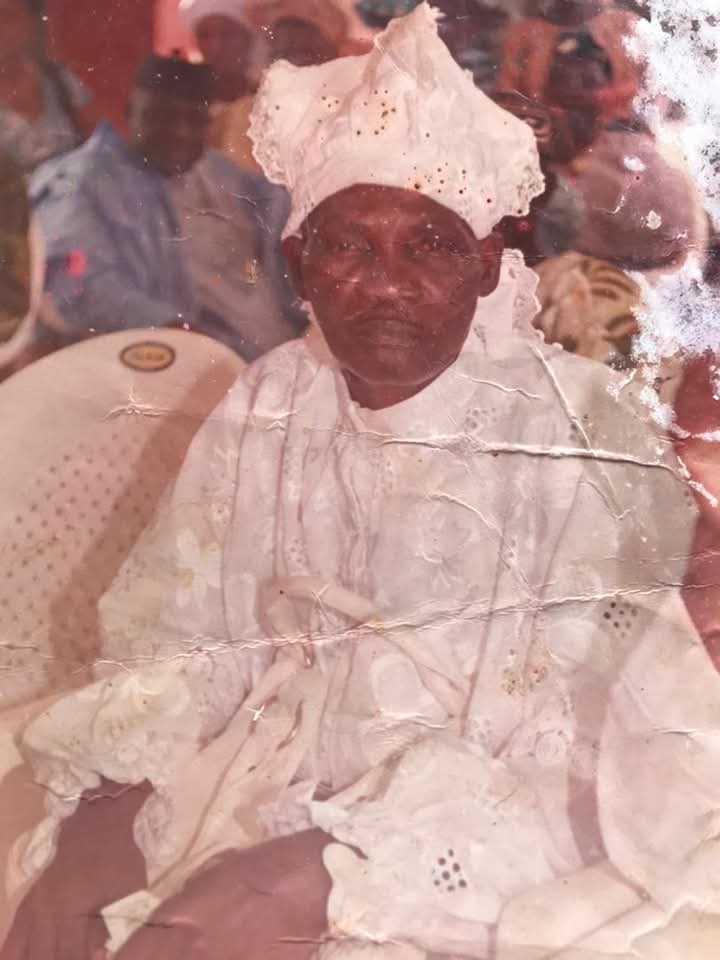
My Yoruba Maternal grandmother in her religion attireOwn workWikimedia Commons · CC BY-SA 4.0
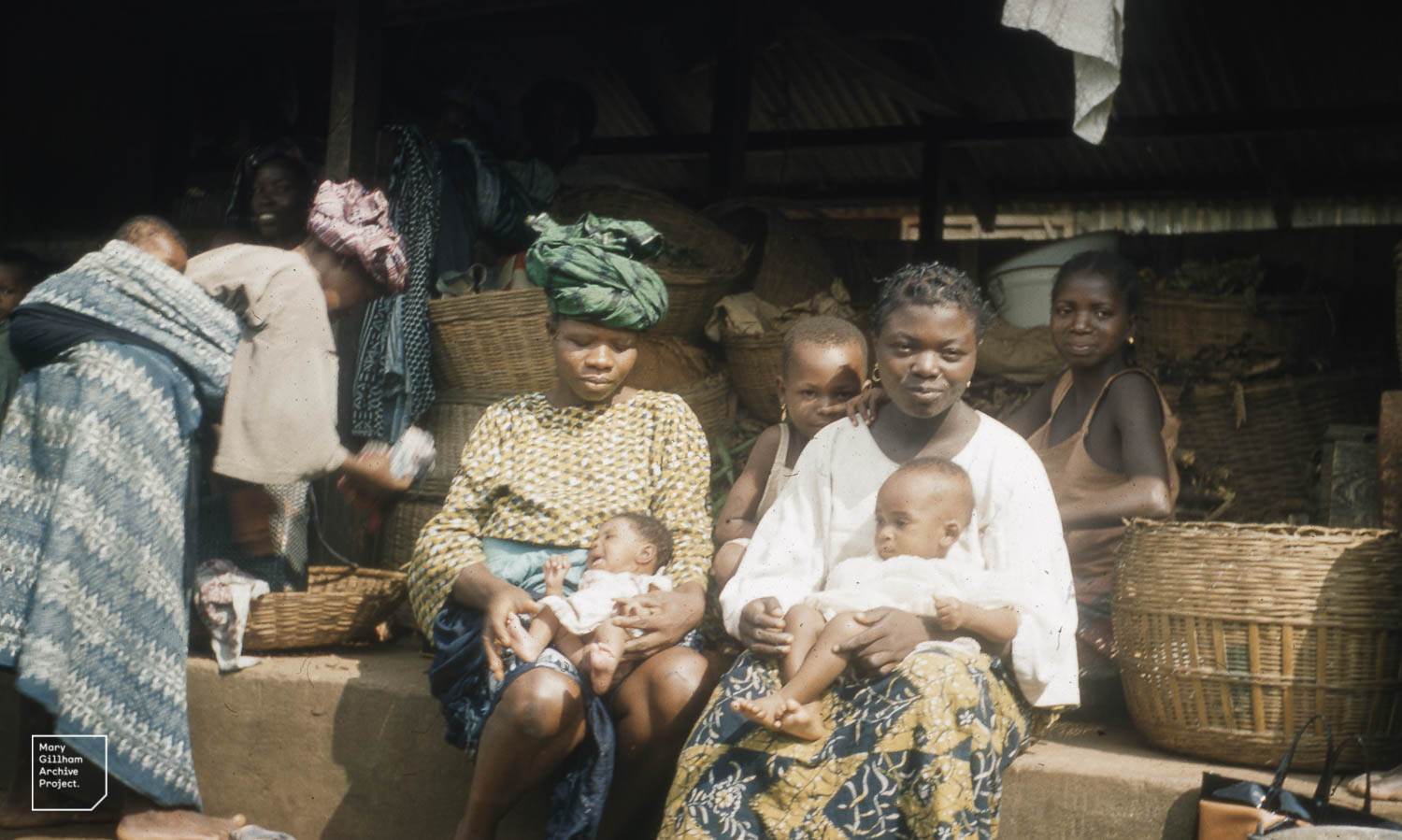
Basket sellers with babies, Yoruba. Ibadan Nigeria
The Oyěwùmí thesis, formulated by Nigerian sociologist Oyèrónkẹ́ Oyěwùmí in her 1997 study The Invention of Women: Making an African Sense of Western Gender Discourses, argues that gender was neither an organizing principle nor an indigenous ontological category in precolonial Yorùbá society . Instead of relying on anatomical differences to allocate power, lineage rights, and social status, precolonial Yorùbá communities structured their social cosmos primarily around seniority, defined as relational age relative to a specific social encounter or entry into a lineage . The categories of "man" and "woman" as universal, hierarchized social classes were introduced through British colonial administration, English Christian missionary education, and colonial legal systems that systematically displaced female-bodied subjects from governance and economic authority . While celebrating its decolonial critique of Western universalism, subsequent African feminist philosophers, anthropologists, and linguists have challenged the thesis, disputing its linguistic claims, its portrayal of lineage parity, and its minimization of precolonial patriarchal power .
                THE OYĚWÙMÍ MODEL OF YORÙBÁ SOCIAL STATUS

         RELATIONAL SENIORITY                 ANATOMICAL GENDER
      (Indigenous Yorùbá Order)            (Colonial/Western Import)
    +---------------------------+        +---------------------------+
    | • Chronological entry     |        | • Somatocentric / ocular  |
    |   into lineage (Ẹbí)      |        | • Fixed binary hierarchy  |
    | • Context-dependent rank  |        | • Men dominate women      |
    | • Fluid (Ọkọ / Aya shifts)|        | • Universal subordination |
    +-------------+-------------+        +-------------+-------------+
                  |                                    |
                  v                                    v
     Power based on lineage age          Power based on biological sex
The Core Architecture of the Oyěwùmí Thesis
Oyěwùmí's critique operates at the intersection of epistemology, historical sociology, and linguistics. She contends that Western feminist theory has historically committed a fundamental error by projecting its culturally specific assumptions regarding biological essentialism onto non-Western societies . Western philosophy, from Aristotle through modern biology, operates within what Oyěwùmí calls "bio-logic" or "somatocentrism", a conceptual paradigm in which the physical body serves as the foundational rationale for social stratification, political disenfranchisement, and legal hierarchy .
In contrast, Oyěwùmí asserts that precolonial Ọ̀yọ́-Yorùbá society did not derive social roles from the anatomical body . Biological differences between human beings were recognized purely as physiological distinctions related to procreation, not as determinants of civic standing, political eligibility, or spiritual authority . Where Western systems constructed an unyielding binary between "men" (as rational, public subjects) and "women" (as bodily, domestic subordinates), Yorùbá society categorized persons according to relational criteria that shifted according to context .
Conceptual Axis
Western "Bio-Logic" Model
Indigenous Yorùbá Seniority Model
Primary Organizing Metric
Anatomical sex (visual bodily classification)
Relational seniority (chronological entry into social units)
Pronominal and lexical gender (he/she, brother/sister)
Non-gendered grammar and kinship (ó, wọ́n, ẹgbọ́n, àbúrò)
Trajectory of Authority
Static: male authority remains constant across sites
Fluid: an individual may be senior in one room and junior in the next
Epistemic Foundations: "World-Sense" Versus "Worldview"
A central theoretical contribution of the Oyěwùmí thesis is the distinction between a "worldview" and a "world-sense" . Oyěwùmí critiques Western scholarship for its unreflective use of the visual metaphor "worldview" to describe cosmological and philosophical orientations . She argues that Western thought is fundamentally ocularcentric, prioritizing the visual gaze over all other human senses . In visual cultures, the physical surface of the body is immediately visible, rendering skin color and genital morphology convenient markers for racial and sexual hierarchies .
For Yorùbá society, Oyěwùmí proposes the term "world-sense" (ìwòran-àgbáyé, though Oyěwùmí prefers to bracket visual terminology entirely, emphasizing auditory and relational comprehension) . In Yorùbá epistemological practice, seeing is not the primary measure of knowing: hearing, verbal communication, oral testimony, and ancestral invocation hold epistemic primacy . Because one cannot determine a person's precise chronological age or lineage status merely by looking at their physical surface, social organization in Yorùbá communities required interpersonal dialogue, knowledge of genealogical sequence, and situational interaction .
Kinship and the Non-Gendered Compound (Agboolé)
The social foundation of precolonial Yorùbá life was the patrilineal residential compound, the agboolé (literally: "flock of houses", from àgbájọ "gathering" and ilé "house") . Within the agboolé, social hierarchy was structured entirely by relative seniority rather than biological sex . Oyěwùmí demonstrates that the core vocabulary of Yorùbá kinship lacks innate gender distinctions .
                      LINEAGE STRATIFICATION IN THE AGBOOLÉ

                                 ORIGIN / ENTRY
                                       |
                +----------------------+----------------------+
                |                                             |
                v                                             v
        ỌMỌ-ILÉ (Lineage Offspring)                    AYA-ILÉ (In-Marrying Spouses)
   • Born into the bloodline (ẹbí)               • Entered compound via marriage
   • Status fixed by birth order                 • Ranked strictly by date of arrival
   • Hold status of ỌKỌ over all aya-ilé         • Subordinate to all prior Ọmọ-ilé
   • Comprises both males and females            • Comprises both females and males (in rare cases)
Ọmọ-ilé and Aya-ilé
The primary social cleavage in the compound was between two categories:
Ọmọ-ilé (literal: "child of the house"; derived from ọmọ "offspring/child" and ilé "house/lineage"): All individuals, whether possessing male or female anatomies, who were born into the patrilineage . Within the lineage, ọmọ-ilé were ranked strictly by birth order. An older female ọmọ-ilé possessed unambiguous social and ritual seniority over any male ọmọ-ilé born after her .
Aya-ilé (literal: "wives/in-marrying spouses of the house"; derived from aya "marital partner joining from outside" and ilé "lineage"): All individuals who entered the compound through marital alliance . Aya-ilé were ranked in a strict hierarchy based on the date of their marriage into the compound, not their chronological biological age . A fifty-year-old newlywed wife was socially junior to a twenty-year-old wife who had married into the household five years earlier .
The Spousal Categories Ọkọ and Aya
Oyěwùmí identifies the historical translation of ọkọ as "husband" and aya as "wife" as one of the most distortive errors in Africanist scholarship . In English, "husband" denotes a male conjugal partner and "wife" denotes a female conjugal partner, carrying entrenched patriarchal histories of female submission .
In indigenous Yorùbá social structure, ọkọ is a lineage-based relational category that designates any insider of the birth lineage (ọmọ-ilé) in relation to an incoming marital outsider (aya) . Consequently, all female members of a lineage are ọkọ to every aya married into that lineage . A female ọmọ-ilé exercised full authority as ọkọ: commanding domestic labor, receiving formal deferential greetings, assigning names to children born to the aya, and settling domestic disputes . The category ọkọ was not a masculine identity, but an insider status; aya was not a female identity, but an outsider-by-marriage status .
Sibling Terminology: Ẹgbọ́n and Àbúrò
English kinship requires immediate lexical gendering: one must specify whether a sibling is a "brother" or a "sister" . Yorùbá contains no indigenous lexical equivalents for "brother" or "sister" . The primary terms for siblings are:
Ẹgbọ́n (phonetic: ẹ-gbọ́n; meaning: "elder sibling" or "senior relative", related to the verb gbọ́n "to be mature/wise") .
Àbúrò (phonetic: à-bú-rò; meaning: "younger sibling" or "junior relative", from the morphological root denoting trailing or coming behind) .
To communicate anatomical sex, a speaker must deliberately append a qualifying adjective, producing composite phrases such as ẹgbọ́n ọkùnrin ("senior male sibling") or àbúrò obìnrin ("junior female sibling") . In everyday social life, these qualifiers were functionally irrelevant; what governed protocol, speech registers, and decision-making was whether the sibling was ẹgbọ́n or àbúrò .
History and evolution
The interplay between seniority and anatomical gender has evolved across distinct epochs of Yorùbá history, marked by shifting political structures, warfare, missionary translation, and colonial administration .
                     CHRONOLOGY OF THE SENIORITY-GENDER SHIFT

  Pre-1800: Old Ọ̀yọ́ Empire    1800-1893: 19th c. Wars      1893-1960: Colonial Rule    1960, Present: Postcolonial
+---------------------------+ +------------------------+ +-------------------------+ +-------------------------+
| • Lineage seniority rules | | • Collapse of Ọ̀yọ́-Ilé   | | • Native Authority laws | | • Academic contestation |
| • Female Ọba documented   | | • Rise of military war | | • Male-only chieftaincy | | • Oyěwùmí thesis (1997) |
| • Palatine mothers wield  | |   camps (Ìbàdàn)       | | • Victorian domesticity | | • African feminist      |
|   state authority         | | • Wealth over lineage  | | • English legal codes   | |   debates on personhood |
+---------------------------+ +------------------------+ +-------------------------+ +-------------------------+
Pre-Nineteenth-Century Ọ̀yọ́ and Royal Precedents
In the political architecture of the Old Ọ̀yọ́ Empire (prior to its nineteenth-century collapse), royal and civil offices were distributed across titles that did not bar female-bodied persons . Oral traditions document that female rulers occupied the imperial throne as Alaafin (the supreme monarch of Ọ̀yọ́), most notably Alaafin Orompoto in the sixteenth century (circa 1554-1562), who led military campaigns and established cavalry regiments .
Within the imperial palace (Ààfin), high-ranking female functionaries, known collectively as the Ìyá Kékeré, Ìyá Ọba, and Ìyámọdẹ, exercised decisive administrative, spiritual, and judicial oversight over the Alaafin and the male Ọyọ Mesi (the supreme council of kingmakers) . The Ìyá Kékeré held custody of the royal regalia and could veto the coronation of an imperial candidate by withholding the royal treasures .
The Nineteenth-Century Wars and Societal Upheaval
The collapse of the Ọ̀yọ́ Empire following the Afonja-led rebellion in 1817, combined with the Fulani jihads and the subsequent Yorùbá civil wars (1820-1893), initiated structural dislocations in social organization . Militarized settlements such as Ìbàdàn and Abẹ́òkúta replaced hereditary lineage-based authority with martial meritocracies dominated by male war captains (balógun) .
Even amidst this militarization, female commercial magnates mobilized substantial wealth to finance military campaigns. Figures such as Ìyálóde Ẹfunṣetán Aníwúrà of Ìbàdàn and Madam Tinubu of Abẹ́òkúta leveraged their economic power into formal political offices as Ìyálóde (leader of the market women and civic councilor) . However, the rise of militarized capitalism and private slave-holding compounds began eroding the egalitarian kinship protections previously guaranteed by lineage seniority .
Missionary Orthography and Samuel Johnson's Historiography
Christian missionary contact, spearheaded by the Church Missionary Society (CMS) under Bishop Samuel Ajayi Crowther from the 1840s onward, laid the textual foundation for the gendering of Yorùbá thought . When nineteenth-century missionary linguists codified Yorùbá orthography and translated the Christian Bible, they mapped patriarchal Victorian theological assumptions onto non-gendered Yorùbá cosmological concepts . The supreme deity Ọlọ́run or Ọlọ́dùmarè, which had functioned as a genderless, primordial ontological force, was translated as "God the Father", casting divine power into an exclusively masculine register .
The definitive textualization of Yorùbá oral history occurred through Reverend Samuel Johnson's monumental manuscript The History of the Yorubas, completed in 1897 and published in 1921 . Oyěwùmí demonstrates that Johnson, an Anglican clergyman of Yorùbá recapture descent (Saro), filtered oral traditions through a patriarchal Victorian lens . Johnson systematically rendered terms like Ọba as "king", ọmọ as "son", and ọkọ as "husband", while framing female political actors as anomalies or aberrations . In recording the history of Alaafin Orompoto, Johnson recorded a tradition alleging that Orompoto had miraculously acquired male genitalia in order to rule, an interpretive move that Oyěwùmí critiques as a retrofitted patriarchal myth designed to explain away female sovereignty within an imported male-monarchical schema .
Colonial Bio-Logic and Legal Reterritorialization
The imposition of British direct and indirect colonial rule across the Lagos Colony and the Protectorate of Southern Nigeria between 1893 and 1914 completed the institutionalization of gender hierarchy . British administrative policy was anchored in Victorian gender ideology, which held that governance, taxation, legal representation, and property custody belonged exclusively to men .
The colonial administration established Native Authorities and Customary Courts that recognized only male lineage elders as political representatives and judicial heads . Female titles such as Ìyálóde were stripped of their statutory legislative standing and relegated to informal civic advisory roles . Colonial labor policies introduced agricultural training and wage labor targeted exclusively at male-bodied individuals, transforming women from independent economic actors and cross-lineage traders into unpaid domestic dependents .
Postcolonial Epistemology, Independence, and the Global Diaspora
Following Nigerian independence in 1960, the hybridized colonial gender system persisted across legal, educational, and political structures . However, the publication of The Invention of Women in 1997, winning the American Sociological Association's Distinguished Book Award in 1998, ignited a major theoretical transformation within postcolonial sociology and African philosophy .
In the Atlantic diaspora, the Oyěwùmí thesis has deeply influenced Yorùbá religious studies in Brazil (Candomblé Ketu) and Cuba (Santería/Lucumí) . Diasporic scholars have debated whether the prominent role of mães-de-santo (female priestesses) in Bahia represents an authentic survival of precolonial Yorùbá seniority-based matriarchy or a diasporic adaptation to racialized urban marginalization . Decolonial feminist theorists, notably Argentine philosopher María Lugones, incorporated the Oyěwùmí thesis directly into their theories of the "coloniality of gender", arguing that the violent introduction of the gender binary was as foundational to European imperialism as the construction of race .
Language, Morphology, and Grammatical Neutrality
Linguistic architecture forms the evidentiary core of the Oyěwùmí thesis . The Yorùbá language is structurally non-gender-differentiated across its morphological, pronominal, and nominal systems .
Pronominal Systems
Unlike Indo-European languages that demand a choice between masculine and feminine singular third-person pronouns (such as "he" and "she"), the Yorùbá pronominal system marks only social distance, honorific register, and grammatical number :
Ó: Third-person singular subjective pronoun, used to refer to any individual of junior or equal status regardless of anatomical sex (e.g., Ó lọ can mean "He went", "She went", or "It went") .
Wọ́n: Third-person plural subjective pronoun, used both as a literal plural ("they") and as an obligatory honorific singular to refer to any elder, parent, or person of superior social status, completely irrespective of anatomy .
Oyěwùmí performs a morphological deconstruction of the words commonly translated into English as "man" and "woman" . In English, "woman" is linguistically derived from "wife-man" (Old English: wīfmann), linguistically anchoring female identity to marital dependence on a male standard .
In Yorùbá, the terms for biological sex share a common nominal root denoting the human species :
Ọkùnrin (phonetic: ọ̀-kùn-rin; translation: "male human / anamale"): Morphologically parsed from the root ọkùn (strength/virility or the anatomical male marker) joined to ẹni or rin (person/being) .
Obìnrin (phonetic: o-bìn-rin; translation: "female human / anafemale"): Morphologically parsed from the root obìn (gestational capacity or the anatomical female marker) joined to ẹni or rin (person/being) .
Oyěwùmí emphasizes that obìnrin is not linguistically or semantically derived from ọkùnrin . The two terms stand in morphological parity as descriptions of distinct procreative anatomies, without carrying hierarchical social, political, or moral baggage . To avoid the ideological connotations of the Western terms "man" and "woman", Oyěwùmí coined the technical neologisms anamale (anatomical male) and anafemale (anatomical female) to refer to biological bodies without imputing social hierarchy .
                 MORPHOLOGY OF YORÙBÁ HUMAN NOUNS

                     ẸNI / ẸNÌYÀN (Human Person)
                                 |
                +----------------+----------------+
                |                                 |
                v                                 v
        ỌKÙN + RIN = ỌKÙNRIN             OBÌN + RIN = OBÌNRIN
         (Male human anatomy)            (Female human anatomy)
                |                                 |
                +----------------+----------------+
                                 |
                                 v
                Syntactically and Semantically Equal
                 (Neither is derived from the other)
The Scholarly Counter-Critiques
While Oyěwùmí's thesis remains a landmark text of decolonial theory, it has encountered rigorous methodological, linguistic, and historical critiques from across African studies .
                      MAJOR AXES OF SCHOLARLY CRITIQUE

     BIBI BAKARE-YUSUF                  J. LORAND MATORY
  • Phenomenological critique:        • Anthropological critique:
    language-in-use vs. grammar         ritual cross-dressing & trance
  • Bodily vulnerability of women     • Religious metaphors encode
  • Denies precolonial patriarchy       real sexual subordination
                 \                         /
                  \                       /
                   v                     v
                THE OYĚWÙMÍ THESIS UNDER DEBATE
                   ^                     ^
                  /                       \
                 /                         \
      TOLA OLU PEARCE                     AKINTUNDE AKINYEMI
  • Historical-materialist critique:   • Literary-linguistic critique:
    structural gender inequality         oríkì and given names encode
  • Exclusions from royal succession    gendered behavioral norms
Bibi Bakare-Yusuf: Phenomenology, Language-in-Use, and Embodiment
Nigerian philosopher Bibi Bakare-Yusuf presented one of the most sustained philosophical rebuttals in her essays "‘Yorubas Don't Do Gender’" and "Beyond Determinism" . Bakare-Yusuf levels three foundational critiques against Oyěwùmí:
Linguistic Formalism Versus Speech-Acts: Bakare-Yusuf argues that Oyěwùmí commits a structuralist error by conflating grammatical structures (la langue) with social reality and language-in-use (la parole) . The fact that a language lacks gendered pronouns does not mean the society using that language is free from patriarchal domination . Many languages with non-gendered pronominal structures (such as Turkish, Hungarian, or Finnish) belong to deeply patriarchal social orders .
The Phenomenological Erasure of the Body: Bakare-Yusuf critiques Oyěwùmí for adopting an overly cognitive, anti-materialist stance that erases the phenomenological reality of embodiment . Pregnancy, menstruation, lactation, domestic confinement, and vulnerability to sexual violence are bodily experiences that inevitably structure human social encounters . By reducing the body to an abstract procreative vessel that has no social implications, Oyěwùmí creates a disembodied utopia that ignores historical female subordination in Yorùbá communities .
The Asymmetry of the Patrilocal Marital Covenant: Bakare-Yusuf highlights that the movement of the aya into the patrilineal compound is not an egalitarian exchange . The incoming wife enters a space physically and politically dominated by an alien lineage, where her reproductive and domestic labor is systematically extracted to perpetuate another lineage's lineage name .
J. Lorand Matory: Religious Transvestism, Metaphor, and Possession Trance
Anthropologist J. Lorand Matory, in Sex and the Empire That Is No More: Gender and the Politics of Metaphor in Ọyọ Yoruba Religion, presents an extensive ethnographic and historical counter-argument . Matory demonstrates that gender is a pervasive, highly developed symbolic and ritual category in Ọ̀yọ́ religion .
In the possession cults of Ṣàngó (the òrìṣà of thunder) and Ọya, male priests routinely engage in ritual cross-dressing, plaiting their hair in the style of women (irun dídì), wearing female garments, and adopting the ritual persona of wives (aya) to the deity . Matory argues that this symbolic transvestism is meaningful precisely because male and female genders are recognized as distinct categories with specific power dynamics . Possession trance is conceptualized through the metaphor of "mounting" (gùn), where the human medium is structurally feminized as a receptive wife to the possessing male divinity . For Matory, the existence of these elaborate ritual metaphors disproves the claim that precolonial Ọ̀yọ́ lacked a deeply articulated gender ideology .
Tola Olu Pearce and Molara Ogundipe-Leslie: Asymmetries and Material Realities
Sociologist Tola Olu Pearce and literary critic Molara Ogundipe-Leslie argue that Oyěwùmí's model romanticizes the precolonial past and downplays systemic asymmetries in power allocation . Pearce points out that despite occasional exceptions like Alaafin Orompoto, royal succession across most Yorùbá kingdoms was overwhelmingly patrilineal and patrifocal, systematically barring women from holding supreme chieftaincy titles and dynastic offices .
Ogundipe-Leslie, who developed the theoretical framework of "Stiwanism" (Social Transformation Including Women in Africa), argued that African women have always faced complex, multi-layered oppressions from six distinct sources: colonialism, traditional structures, backward aspects of culture, personal fatalism, male domination, and race . Ogundipe-Leslie maintained that denying the reality of indigenous patriarchal domination (àṣà àkóso ọkùnrin) impedes modern African women from critiquing oppressive customs under the guise that such critique is "un-African" or an alien Western import .
Philosophical Interventions: Communitarian Personhood and Decolonial Theory
Philosophers Oritsegbubemi Anthony Oyowe and Olga Yurkivska have engaged the Oyěwùmí thesis to interrogate the concept of personhood in African philosophy . They demonstrate that when African communitarian philosophers (such as Kwasi Wiredu or Kwame Gyekye) claim that personhood is relational and gender-neutral, they risk perpetuating an epistemic blindness that conceals the discrepancy between a gender-neutral theoretical framework and an explicitly gender-oppressive social reality .
Conversely, Azille Coetzee and María Lugones argue that reading Oyěwùmí as a radical relational thinker opens up vital decolonial possibilities . For Coetzee, Oyěwùmí's core insight is not that biological difference went unnoticed, but that Yorùbá epistemology constructed the human subject through fluid, non-oppositional relationality rather than the rigid, antagonistic Cartesian dualisms characteristic of Western colonial modernity .
Proverbial Repertoire and Applied Textual Analysis
Yorùbá oral discourse preserves extensive proverbial texts (òwe) that reflect the historical tension between seniority, capability, and gendered roles .
Proverb 1: The Snake and the Hunter
1. Performance Text
Bí ọkùnrin rí ejò,
Tí obìnrin pa á,
Kí ejò má ti lọ ni.
2. Word-by-Word Gloss
Bí (if) ọkùnrin (male human) rí (sees) ejò (snake),
Tí (and) obìnrin (female human) pa (kills) á (it),
Kí (let) ejò (snake) má (not) ti (then) lọ (escape) ni (is the point).
3. Idiomatic English Translation
"If a man sees a snake and a woman kills it, what matters is that the snake does not escape." (Translated by Oyèrónkẹ́ Oyěwùmí) .
4. Semantic Meaning
The saying asserts that practical competence, outcome, and communal safety supersede the biological identity of the person who accomplishes the task . It dismisses vanity regarding who achieves a victory as long as the danger is eliminated .
5. Pragmatic Function and Social Usage
Deployed in community assemblies, commercial partnerships, or lineage deliberations to close an argument where a junior or female individual has demonstrated superior insight or skill . It rebukes those who attempt to dismiss a successful outcome based on the bodily identity of the actor .
6. Illustrative Social Scenario
During a lineage land negotiation, an elder male lineage head fumbles the legal boundary defense, after which a younger educated woman steps forward with colonial land deeds that secure the compound's property. When another elder mutters that a female should not speak before chiefs, the head of the meeting replies with this proverb, affirming the validity of her intervention .
7. Epistemological and Cultural Value
Oyěwùmí cites this proverb as direct linguistic proof of her thesis: the text explicitly uses the biological terms ọkùnrin and obìnrin, acknowledging their distinct corporeal identities, but explicitly subordinates that bodily distinction to functional capability and pragmatic necessity .
8. Recorded Variants
In parts of Ẹ̀gbáland, an expanded performance recorded by Olatunji reads:
Bí obìnrin bá pa ejò, tí ọkùnrin fà á tì, kí ejò ṣáà ti má ṣe bu ọmọ jẹ ("If a woman kills a snake and a man drags it away, let the snake simply not bite a child") .
9. Tonal Analysis
The rhythmic balance hinges on the tonal contrast between rí ejò (high-mid-low) and pa á (mid-high), driving the performance toward the resolute concluding imperative kí ejò má ti lọ ni . Stripping tone marks collapses the semantic difference between pa (mid-tone: "to kill") and pá (high-tone: "to be bald" or "to snap") .
10. Translation Notes
English translations frequently insert the word "hero" or "gender roles", which are absent in the Yorùbá original. The original text relies on active verbal clauses (rí, pa) rather than noun-centered role categories .
Proverb 2: The Spousal Hierarchy Axiom
1. Performance Text
Ọkọ l'olówó orí aya.
2. Word-by-Word Gloss
Ọkọ (lineage insider / husband) ni (is) olówó (the owner of money / payer) orí (head) aya (in-marrying spouse / wife).
3. Idiomatic English Translation
"The ọkọ is the owner of the bride-wealth paid on the head of the aya." (Translated by Tola Olu Pearce) .
Alternative missionary translation: "The husband is the lord and master of the wife." (Translated by Samuel Johnson) .
4. Semantic Meaning
This proverb expresses the juridical reality of Yorùbá marriage transactions: the lineage that paid the bride-wealth (owó orí) holds structural authority over the reproductive and domestic rights of the incoming partner .
5. Pragmatic Function and Social Usage
Used in customary arbitration when an incoming wife disputes the authority of her husband's family, or when reminding a wife of her obligations to the collective members of her marital compound .
6. Illustrative Social Scenario
A newly married woman refuses to fetch water for the elderly sister of her husband. The elder sister convenes the compound elders, reciting this proverb to remind the new bride that as a daughter of the lineage (ọmọ-ilé and therefore ọkọ), she holds structural seniority over the bride (aya) .
7. Scholarly Debate on Meaning
This proverb is one of the primary battlegrounds between Oyěwùmí and her critics :
Oyěwùmí's Reading:Ọkọ in this proverb does not mean the anatomical male husband; it refers to the entire lineage (ọmọ-ilé of both sexes) that contributed to the bride-price. Thus, an elder sister-in-law is equally the olówó orí in relation to the aya .
Pearce and Bakare-Yusuf's Reading: They argue that in actual social practice, the bride-wealth transaction primarily transfers sexual and reproductive exclusivity to a specific male partner, encoding an asymmetrical patriarchal dominance that cannot be explained away by lineage abstractions .
8. Tonal and Morphological Structure
The phrase combines olówó (owner/payer of money, from oní + owó) with orí (physical head / metaphysical seat of destiny). The tonal cadence flows from mid-high-high (olówó) to mid-high (orí), establishing a linguistic link between economic expenditure and social authority .
Oral Fragment: Lineage Elder Invocations
1. Performance Text
Ẹní bíni kò lè pọ́nni;
Ẹni a bá l'ágboolé l'ẹgbọ́n ẹni.
2. Word-by-Word Gloss
Ẹní (the one who) bí (gives birth to) ni (one) kò (cannot) lè (able to) pọ́n (carry on back / flatter) ni (one);
Ẹni (the person) a (we) bá (meet) l'ágboolé (in the compound) ni (is) ẹgbọ́n (senior) ẹni (one's).
3. Idiomatic English Translation
"The one who gives birth to a child cannot carry them as an elder; whoever one meets living in the compound is one's senior." (Attributed to Ọ̀yọ́ lineage elders, transcribed by Oyèrónkẹ́ Oyěwùmí) .
4. Semantic Meaning and Social Value
This aphorism establishes the supreme law of Yorùbá residential hierarchy: chronological presence in the compound overrides all other claims to status . Biological parentage provides life, but entry order into the agboolé determines social rank .
5. Pragmatic Function
Recited to resolve disputes among youths or wives within a compound when an individual attempts to claim superiority based on wealth, physical size, or parental indulgence . It enforces absolute deference to chronological arrival .
Methodological and Archival Limitations
The scholarly debate surrounding the Oyěwùmí thesis reveals critical limitations in the historical and ethnographic archive:
Regional Homogeneity: Oyěwùmí based her empirical claims primarily on the Ọ̀yọ́-Yorùbá sub-group . Historians note that social organization across eastern and southern Yorùbá polities (such as the Òkè-Ògùn, Ìjẹ̀bú, Èkìtì, and Òndó kingdoms) exhibited distinct lineage configurations, including matrilineal (ẹbí màmá) and ambilineal inheritance practices, which cannot be neatly generalized under a single Ọ̀yọ́ imperial model .
Archival Silence on Pre-Nineteenth-Century Women: Because indigenous Yorùbá historical transmission was predominantly oral and organized around communal oríkì (praise poetry) modules, the granular daily experiences of non-royal female-bodied individuals prior to the nineteenth century remain largely inaccessible, leaving room for competing theoretical reconstructions .
The Initiate-Held Nature of Ritual Knowledge: Sacred knowledge regarding gendered rites within esoteric institutions, such as the Ògbóni / Òṣùgbó society or the Orò and Egúngún cults, is strictly guarded by initiated priests (oníṣègùn and olórìṣà) . Academic debates regarding the exact balance of female spiritual power (Àjẹ́ / Ìyàmi) versus male ritual performance (Orò) are constrained by taboos against revealing initiate secrets (awo), keeping aspects of precolonial gender metaphysics contested .
Fuentes
[1]Oyèrónkẹ́ Oyěwùmí, The Invention of Women: Making an African Sense of Western Gender Discourses (University of Minnesota Press, 1997), pp. 1-179.
[2]Olatunde O. Olatunji, Features of Yoruba Oral Poetry (University Press Limited, 1984), pp. 67-115.
[3]Toyin Falola and Matthew M. Heaton, A History of Nigeria (Cambridge University Press, 2008), pp. 85-135.
[4]Bibi Bakare-Yusuf, "‘Yorubas Don't Do Gender’: A Critical Review of Oyeronke Oyewumi's The Invention of Women: Making an African Sense of Western Gender Discourses," in African Gender Studies: A Reader, ed. Oyeronke Oyewumi (Palgrave Macmillan, 2005), pp. 121-140.
[5]J. Lorand Matory, Sex and the Empire That Is No More: Gender and the Politics of Metaphor in Ọyọ Yoruba Religion (University of Minnesota Press, 1994; Berghahn Books, 2005), pp. 1-230.
[6]Tola Olu Pearce, "Human Rights and the Gendered Politics of Difference: Yoruba Women and Social Transformation," African Studies Review 57, no. 1 (2014), pp. 185-204.
[7]María Lugones, "Heterosexualism and the Colonial / Modern Gender System," Hypatia: A Journal of Feminist Philosophy 22, no. 1 (2007), pp. 186-209.
[8]María Lugones, "Toward a Decolonial Feminism," Hypatia: A Journal of Feminist Philosophy 25, no. 4 (2010), pp. 742-759.
[9]Oyèrónkẹ́ Oyěwùmí, What Gender Is Motherhood? Changing Yorùbá Ideals of Power, Procreation, and Identity in the Age of Modernity (Palgrave Macmillan, 2016), pp. 45-98.
[10]Kwasi Wiredu, Cultural Universals and Particulars: An African Perspective (Indiana University Press, 1996), pp. 157-171.
[11]Ayo Bamgbose, A Grammar of Yoruba (Cambridge University Press, 1966), pp. 12-48.
[12]Rowland Abiodun, Yoruba Art and Language: Seeking the African in African Art (Cambridge University Press, 2014), pp. 24-65.
[13]Niara Sudarkasa, Where Women Work: A Study of Yoruba Women in the Marketplace and in the Home (University of Michigan Press, 1973), pp. 95-142.
[14]Nkiru Nzegwu, Family Matters: Feminist Concepts in African Philosophy of Culture (State University of New York Press, 2006), pp. 63-108.
[15]Samuel Johnson, The History of the Yorubas: From the Earliest Times to the Beginning of the British Protectorate (C.M.S. Bookshops, 1921; Routledge & Kegan Paul, 1966), pp. 40-180.
[16]Robert S. Smith, Kingdoms of the Yoruba (University of Wisconsin Press, 1988), pp. 33-52.
[17]S. O. Babayemi, The Fall and Rise of the Ọyọ Empire (University of Lagos Press, 1990), pp. 14-48.
[18]Bolanle Awe, "The Iyalode in the Traditional Yoruba Political System," in Sexual Stratification: A Cross-Cultural View, ed. Alice Schlegel (Columbia University Press, 1977), pp. 144-160.
[19]J. D. Y. Peel, Religious Encounter and the Making of the Yoruba (Indiana University Press, 2000), pp. 123-186.
[20]American Sociological Association, "Distinguished Book Award Recipients: 1998 Award to Oyeronke Oyewumi," ASA Footnotes 26, no. 8 (1998), p. 6.
[21]J. Lorand Matory, Black Atlantic Religion: Tradition, Transnationalism, and Matriarchy in the Afro-Brazilian Candomblé (Princeton University Press, 2005), pp. 188-234.
[22]Oritsegbubemi Anthony Oyowe and Olga Yurkivska, "Can a Communitarian Concept of African Personhood Be Both Relational and Gender-Neutral?" South African Journal of Philosophy 33, no. 1 (2014), pp. 85-99.
[23]Bibi Bakare-Yusuf, "Beyond Determinism: The Phenomenology of African Female Existence," Feminist Africa 2 (2003), pp. 8-24.
[24]Molara Ogundipe-Leslie, Re-Creating Ourselves: African Women & Critical Transformations (Africa World Press, 1994), pp. 21-42.
[25]Azille Coetzee, "Feminism is African, and other implications of reading Oyèrónkẹ́ Oyěwùmí as a relational thinker," Gender and Women's Studies 1, no. 1 (2018), pp. 1-9.
[26]Karin Barber, I Could Speak Until Tomorrow: Oriki, Women and the Past in a Yoruba Town (Edinburgh University Press, 1991), pp. 183-247.
[27]Jacob K. Olupona, City of 201 Gods: Ilé-Ifẹ̀ in Time, Space, and the Imagination (University of California Press, 2011), pp. 177-214.