Arín, Counting Games, Guessing Games, and Riddles of Number · Ìpilẹ̀ṣẹ̀
Arín, Counting Games, Guessing Games, and Riddles of Number
An analytical corpus file on traditional Yoruba numerical games beyond ayò, detailing the target seed game arín, hidden counter guessing games, pebble dexterity drills, counting-out verses, and arithmetical riddles.
intermediatehigh30 min de leitura·23 fontes
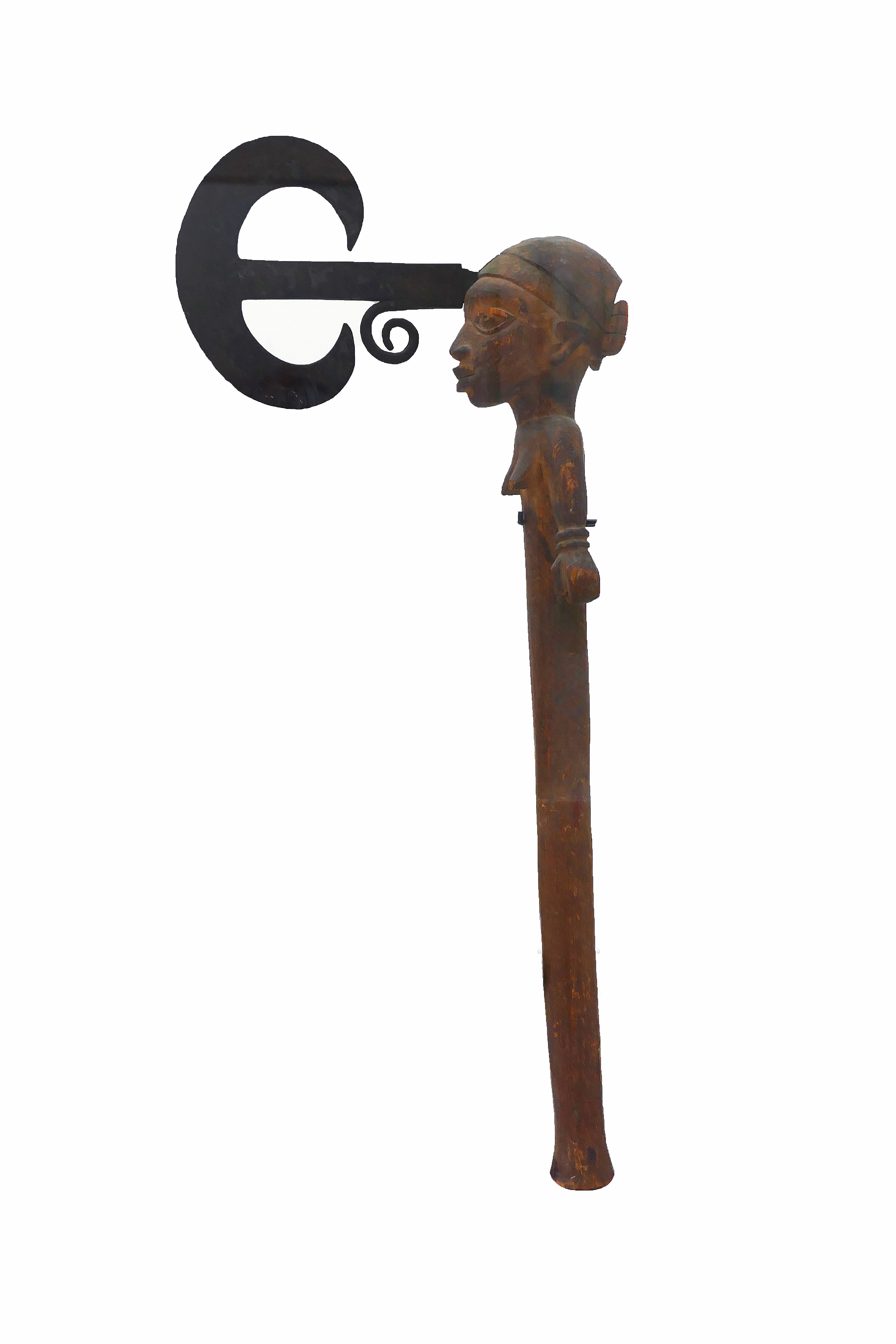
Récade Oshe Shango-Musée de GrenobleOwn work, Ji-Elle, 2018-10-05 10:09:50Wikimedia Commons · CC BY-SA 4.0
Egungun masquerade dance garment
Wendy Kaveney
Wikimedia Commons · CC BY-SA 3.0
Houten voorstelling van een Europeaan met tropenhelm, bril en pijpCollectie Stichting Nationaal Museum van WereldculturenWikimedia Commons · CC BY-SA 3.0
Houten miniatuurvoorstelling van twee Europese echtparen aan de maaltijdCollectie Stichting Nationaal Museum van WereldculturenWikimedia Commons · CC BY-SA 3.0
Bak voor het bewaren van medicijnen van een waarzeggerCollectie Stichting Nationaal Museum van WereldculturenWikimedia Commons · CC BY-SA 3.0
Olielamp met bijbehorend deksel, gemaakt van een melkpoederblikCollectie Stichting Nationaal Museum van WereldculturenWikimedia Commons · CC BY-SA 3.0
Yorùbá games of number and arithmetical riddles form an indigenous mathematical apparatus through which children and adults practice calculation, spatial estimation, probabilistic deduction, and numerical mnemonics outside formal schoolroom pedagogy. While the board game ayò Ọlọ́pọ́n represents the most widely documented calculation pastime in West Africa, the Yorùbá corpus contains a parallel complex of numerical play: the target-and-strike seed game arín, hidden-quantity guessing games (tọ́ mi wò and ṣóoṣò tàbí àjò), sequential pebble-snatching games (ìṣẹ́ or ẹ̀kà), metric counting-out formulas, and numerical riddles (àlọ́ àpamọ̀ oní-ònkà).
These practices operationalize the vigesimal (base-twenty) and subtractive structures of the Yorùbá counting system (ònkà Yorùbá), turning arithmetic into physical cadence, tactile manipulation, and communal debate. This file documents the material equipment, rules, scoring mechanisms, linguistic structures, and documented variants of these numerical games, drawing on indigenous oral transmission, colonial linguistic records, and twentieth-century ethnomathematical scholarship.
Oral historical traditions link the equipment and mechanics of Yorùbá number games to deep antiquity . In particular, traditions across Yorùbáland and the Edo Kingdom record that the game of arín (known in Edo as akhue) is intertwined with the foundational dynastic links between Ilé-Ifẹ̀ and Benin . According to historical traditions collected by Jacob Egharevba and Samuel Johnson, when Prince Ọ̀rànmíyàn departed Benin, leaving behind his young son Ẹwẹka I who was initially mute, the father sent from Ifẹ̀ seven sacred arín seeds (èso àrín, the hard woody seeds of Dioclea reflexa) with which the young prince played on the ground . Upon striking a target seed in a game of arín, the prince spoke his first recorded word, celebrating his shot: Ọmọ! or Ẹwẹka! .
During the imperial era of the Ọ̀yọ́ Empire (c. 1600-1830), recreational number games served both as court entertainment and as military training drills for youths . The physical seed game arín cultivated fine motor control, spin velocity, and trajectory estimation among young men, while counting games and cowrie estimation drills trained junior traders and marketplace revenue collectors in rapid mental computation .
The nineteenth-century civil wars (the Fulani-Ọ̀yọ́ wars, the Jalumi war, and the Kiriji/Ekiti-Parapo wars between 1877 and 1893) disrupted the spatial commons of towns and courtyards where large communal arín lanes were kept . However, encampments (ìbùdó) and fortified settlements maintained seed-spinning and pebble-counting games as low-resource evening pastimes .
Missionary contact from the 1840s onward brought early linguistic documentation of Yorùbá numeracy . Samuel Ajayi Crowther recorded names for counters, seeds, and fractions in his 1843 and 1852 vocabularies . T. J. Bowen documented numeral roots and play forms in 1858 . In 1886, Adolphus Mann presented his paper to the Royal Anthropological Institute in London, analyzing how the vigesimal structure of Yorùbá calculation mirrored cowrie counting practices . Missionary educators, however, often viewed indigenous gambling and evening play (eré òṣùpá) with theological suspicion, relegating traditional counting games to unsupervised play while imposing English decimal arithmetic in mission schoolrooms .
During the colonial period (1900-1960), colonial writers such as A. B. Ellis treated African recreational games as ethnographic curiosities . Anthropologists and mathematicians such as L. L. Conant (1896) analyzed the Yorùbá subtractive system as an intellectual anomaly . In post-independence Nigeria, scholars including Adebayo Babalọla, Olatunde Olatunji, S. A. Ekundayo, Robert G. Armstrong, and Claudia Zaslavsky documented the complex poetic and mathematical structures embedded in children's counting verses and game songs . In 1988, educator Mallam Elias Foluṣo Yusuf standardized arín into a table sport termed "African Billiards" to prevent its extinction . In contemporary Nigeria, though urban screen media and Western sports have reduced street participation, arín and numerical àlọ́ àpamọ̀ persist in rural communities, cultural festivals, and primary school mother-tongue education curricula .
The Seed Game of Arín: Mechanics, Equipment, and Arithmetic
The game of arín (frequently spelled aarin or Erin in eastern dialect areas such as Èkìtì and Òndó) is a target-and-strike disc game played on flat, cleared ground or a long wooden alley . Unlike the pit-and-pebble distribution mechanics of ayò Ọlọ́pọ́n (treated separately in the corpus), arín relies on gyroscopic propulsion, momentum transfer, angle calculation, and precise subtraction of target counters .
+---------------------------------------------------------------------------------------------------+
|                                 ARÍN PLAYING LANE (APPROX. 8-9 METERS)                             |
|                                                                                                   |
|  [ Team A Baseline ]                                                         [ Team B Baseline ]  |
|  Shooting stance                                                             Target line          |
|  (Spinning bullet seed) ======> ======> ======> ======> ======> ======>    [•] [•] [•] [•] [•]    |
|                                                                             Target seeds (ọmọ)    |
+---------------------------------------------------------------------------------------------------+
Material Equipment and Botanical Counters
The game takes its name from the counter itself: the seed of Dioclea reflexa (Hook. f.), a woody climbing vine native to tropical forest belts .
Èso àrín (also ọmọ àrín): A large, disc-shaped, semi-circular dicotyledonous seed with a smooth, dark brown or mahogany-colored seed coat and an extremely hard shell . One surface is naturally flattened while the opposite side is convex, enabling the seed to spin upright like a top (ìkòkò) when snapped between the thumb and middle finger .
Olú àrín or Àkọ́: The primary target seed or lead seed placed at the head of a formation .
Ọmọ àrín or Àbọ̀: Subordinate target seeds arranged in the scoring row .
Àtá (The bullet or shooter seed): A specially selected, balanced seed retained by a player for spinning toward the opponent's formation .
Playing Surface and Layout
Traditional arín is played outdoors on a hard, smoothed strip of earth approximately 8 to 9 meters in length and 1 to 1.5 meters wide . In eastern Yorùbá towns (such as Àyègbàjú-Èkìtì, Ìmẹ̀sì-Ilé, and Ùsì-Èkìtì), the game is played on wide veranda pavements (ọ̀dẹ̀dẹ̀) or stone thresholds .
Two opposing sides (either individual players or teams of two to four) set up identical formations at opposite ends of the court :
Target Array: Each team sets up a row of target seeds (typically 5, 7, or 10 seeds depending on the agreed stakes) spaced evenly across their baseline .
The Guard (Olórí / Àkọ́): In specific variations, a solitary target seed is positioned slightly in front of the main line as a protective sentry .
Kinetic and Mathematical Rules
The objective is to eliminate all seeds from the opponent's baseline through sequential spinning shots .
+---------------------------------------------------------------------------------------------------+
| 1. Propulsion      Player grips the bullet seed (àtá) between thumb and middle finger, snapping   |
|                    it downward to impart high rotational velocity (yí àrín).                     |
|                                                                                                   |
| 2. Trajectory      The bullet seed travels along the alley in an upright gyroscopic spin.         |
|                                                                                                   |
| 3. Impact & Claim  The spinning seed strikes an opponent target seed. Only one target seed may be |
|                    claimed per legal shot, even if multiple seeds are scattered.                 |
|                                                                                                   |
| 4. Counter Shifts  The struck target seed is removed from the opponent's defensive line and added |
|                    to the shooter's pool of active projectiles.                                   |
|                                                                                                   |
| 5. Widening Gap    As targets diminish, the linear gap between remaining targets increases,       |
|                    raising the trigonometric difficulty for subsequent rounds.                    |
+---------------------------------------------------------------------------------------------------+
Regional Names and Dialectal Variants
The game is known under different designations across the Yorùbá cultural area :
Àrín / Aarin: Standard Yorùbá and Ọ̀yọ́/Ìbàdàn regions .
Ẹ́rin: Èkìtì dialect (specifically around Ọ̀yẹ́-Èkìtì and Àyègbàjú-Èkìtì) .
Ẹ́gẹ́ or Ìṣé: Òndó and Ìjẹ̀bú forest zones .
Àkhuè: Edo/Benin language area, reflecting historical shared court culture .
Number-Based Guessing Games
Yorùbá children and youths maintain several guessing games where players deduce hidden counts, calculate odds, and exploit binary parities . These games train mental estimation without the use of written marks.
+---------------------------------------------------------------------------------------------------+
|                                  PARITY GUESSING: ṢÓOṢÒ TÀBÍ ÀJÒ                                  |
|                                                                                                   |
|   Player 1 (Concealer)                            Player 2 (Guesser)                              |
|   Grasps n counters secretly                     Must call parity before hand opens              |
|   (Cowries / Seeds / Pebbles)                                                                     |
|                                                   "Ṣóoṣò!" (Odd)  ===> n = 2k + 1 (Correct: Wins) |
|   [ Closed Fist: • • • • • ]                      "Àjò!"   (Even) ===> n = 2k     (Wrong: Loses)  |
+---------------------------------------------------------------------------------------------------+
1. Ṣóoṣò tàbí Àjò (Odd or Even)
Ṣóoṣò tàbí Àjò (also rendered Àṣẹ́ tàbí Àjò in some dialects) is a parity game played with cowries (owó ẹyọ), dried beans (ẹ̀wà), or pebbles (ọmọ òkúta) .
Mechanics: The lead player takes an arbitrary handful of small counters from a central pool, conceals them in a closed fist, shakes them to generate an acoustic rattle, and thrusts the closed fist forward .
The Call: The opponent calls out either Ṣóoṣò! or Àjò! .
The Verification: The lead player casts the counters onto the ground and groups them into pairs (méjì-méjì) . If a single counter remains without a partner (remainder 1), the count is ṣóoṣò; if all counters pair off exactly (remainder 0), the count is àjò .
Stake Settlement: If the guesser calls correctly, they win all the counters in that handful; if incorrect, they forfeit an equivalent number of counters from their own reservoir .
2. Bòkúrò (Cover and Remove / Split-Count Deduction)
Bòkúrò is a subtraction-deduction game played by children using a known base total (commonly 10, 16, or 20 pebbles) .
Mechanics: Player A places the full set of counters (e.g., 10 pebbles) in view of Player B. Player A sweeps both hands over the counters, scoops them up, places both hands behind the back, divides the counters between left and right hands, and presents both closed fists forward .
The Reveal: Player A opens the left hand, displaying a subset (for example, 4 pebbles), and commands: Bòkúrò! ("Deduct and state what remains concealed!") .
The Computation: Player B must compute the complement ($10 - 4 = 6$) and state the exact number held in the closed right hand without hesitation .
Speed Penalty: Hesitation beyond three seconds or an incorrect count transfers a penalty point to the opponent .
Pebble and Seed Counting Games: The Ìṣẹ́ and Ẹ̀kà Complex
Dexterity games combining physical catching with recursive arithmetic sets are widely played across southern Nigeria . Among the Yorùbá, this genre is known as eré ìṣẹ́, ẹ̀kà, or orin ònkà ọlọ́mọ-òkúta .
+---------------------------------------------------------------------------------------------------+
|                                 STAGES OF PEBBLE CAPTURE IN ÌṢẸ́                                   |
|                                                                                                   |
|  Initial: Ten pebbles placed in a central shallow depression on the ground.                       |
|                                                                                                   |
|  Stage 1: Ọ̀kọ̀ọ̀kan (By Ones)   Toss 1 pebble up -> scoop 1 from ground -> catch descending pebble  |
|                                Repeat 10 times until pool is cleared.                             |
|                                                                                                   |
|  Stage 2: Méjì-méjì (By Twos)  Toss 1 pebble up -> scoop 2 from ground -> catch descending pebble  |
|                                Repeat 5 times ($5 \times 2 = 10$).                                |
|                                                                                                   |
|  Stage 3: Mẹ́ta-mẹ́ta (Threes)  Toss 1 pebble up -> scoop 3 from ground -> catch descending pebble  |
|                                Repeat 3 times ($3 \times 3 = 9$), scoop remaining 1 ($9 + 1 = 10$)|
|                                                                                                   |
|  Stage 4: Mẹ́rin-mẹ́rin (Fours)  Scoop 4, scoop 4, scoop remaining 2 ($4 + 4 + 2 = 10$).            |
|                                                                                                   |
|  Stage 5: Gbà-á-ròkè (Sweep)   Scoop all remaining pebbles in a single continuous sweep.          |
+---------------------------------------------------------------------------------------------------+
Mathematical and Cognitive Function
Ìṣẹ́ enforces physical division, modulo arithmetic, and mental tracking of remainders under time constraints . A player who accidentally touches an adjacent pebble while scooping, fails to collect the exact dividend, or drops the airborne stone loses their turn . The game directly instills the concept of divisors ($10 \div 2 = 5$; $10 \div 3 = 3\text{ R }1$; $10 \div 4 = 2\text{ R }2$) into young children through muscle memory and visual grouping .
Counting-Out Games and Numerical Selection Formulas
Yorùbá children use structured counting verses to eliminate players or designate roles in chasing and hiding games . (For general structural mechanics of children's play poetry, see children-childrens-games and education-pedagogy-children-games). This section focuses on verses whose formal architecture depends on cardinal progression and numerical sequencing.
Counting-Out Formula: Ọmọdé Dé Lóko (The Ten Farm Children)
1. Original Text
Ọmọdé dé lóko, Ó kà 'wé, ó kà 'wá: Ẹní, èjì, ẹ̀ta, ẹ̀rin, Àrún, ẹ̀fà, èje, ẹ̀jọ, Ẹ̀sán, ẹ̀wá! Ẹni ẹ̀wá bá mú, Kó kúrò l'áàrin wa o!
2. Literal Gloss
Ọmọdé (Child) dé (arrives) l'óko (from the farm), Ó (He/She) kà (counts) ìwé (book/leaf/tally), ó (he/she) kà (counts) ẹ̀wá (ten): Ẹní (One), èjì (two), ẹ̀ta (three), ẹ̀rin (four), Àrún (Five), ẹ̀fà (six), èje (seven), ẹ̀jọ (eight), Ẹ̀sán (Nine), ẹ̀wá (ten)! Ẹni (Person) ẹ̀wá (ten) bá (should) mú (catch), Kó (Let him/her) kúrò (exit) l'áàrin (from the midst of) wa (us) o (vocative particle)!
3. Idiomatic English
The young child returns from the farm,
Counting the tallies, counting to ten:
One, two, three, four,
Five, six, seven, eight,
Nine, ten!
Whomever the count of ten lands upon,
Let that person step out of our circle! (translated by S. A. Babalọla ).
4. Meaning and Semantic Content
The verse operates as a modulo-ten elimination formula . The text depicts the agricultural habit of tallying farm produce upon returning home from the field, connecting numerical counting to domestic accountability .
5. Social and Pragmatic Use
Children sit in a circle with feet extended. The leader points rhythmically to one foot per numeral. The foot touched on the word ẹ̀wá (ten) in the seventh line is retracted . The game continues iteratively until only one participant remains with a foot extended, who is declared the leader or seeker .
6. Worked Concrete Scenario
Six children sit in a compound courtyard at twilight, each extending two feet (twelve feet in total). The counter begins at foot 1. At foot 10 (ẹ̀wá), child 5 withdraws one foot. The counter resumes from foot 11. Through sequential modular elimination, the children resolve turn-taking disputes without adult mediation.
7. Importance and Value
The recitation reinforces the cardinal sequence from one to ten while demonstrating fair mathematical elimination based on deterministic periodicity .
8. Variants
In Ọ̀yọ́ dialect recordings, line 2 is sometimes spoken as Ó k'ówó, ó k'ọ̀fà ("He counted cowries, he counted arrows") .
In Èkìtì variants, the opening numerals follow local phonetic reflexes: ọ̀kan, èjì, ẹ̀ta, ẹ̀rin, àrún, ẹ̀fà, èje, ẹ̀jọ, ẹ̀sán, ẹ̀wá .
9. Tonality
The sequence maintains the alternation between low and mid pitch contours characteristic of primary numerals: ẹ-ní (Low-High), è-jì (Low-Low), ẹ̀-ta (Low-Mid), ẹ̀-rin (Low-Mid), à-rún (Low-High), ẹ̀-fà (Low-Low), è-je (Low-Mid), è-jọ (Low-Low), ẹ̀-sán (Low-High), ẹ̀-wá (Low-High) .
10. Notes on the Translation
The word ìwé in line 2 carries historical ambiguity. In modern standard Yorùbá, it signifies "book" or "paper"; in pre-colonial and early nineteenth-century usage, it referred to notched sticks, leaves used as counters, or tallies .
Number Riddles: Àlọ́ Àpamọ̀ Oní-ònkà
In Yorùbá oral performance, riddles (àlọ́ àpamọ̀) are recited before full-length folktales (àlọ́ àpagbè) to focus audience attention and test cognitive dexterity . (For the general poetic theory of riddles, see children-riddles-alo-apamo and owe-riddle-alo-apamo-forms). A specialized sub-genre consists of riddles whose solutions demand explicit arithmetic computation, spatial counting, or numerical paradoxes .
+---------------------------------------------------------------------------------------------------+
|                                 STRUCTURE OF NUMERICAL ÀLỌ́ ÀPAMỌ̀                                   |
|                                                                                                   |
|  1. Call & Response:     Challenger: "Àlọ́ o!"  ====> Audience: "Àlọ̀!"                             |
|                                                                                                   |
|  2. Numerical Enigma:    Challenger poses a somatic, anatomical, or botanical count.              |
|                          e.g., $4 + 4 + 2 + 2 + 1 = 13$ anatomical attributes of an animal,        |
|                          or 200 items packed in a single sheath.                                  |
|                                                                                                   |
|  3. Deductive Decode:    Audience resolves the arithmetical metaphor to an everyday object.       |
|                                                                                                   |
|  4. Forfeit (if failed): Challenger demands a fictional penalty town before revealing the answer.  |
+---------------------------------------------------------------------------------------------------+
Riddle 1: The Anatomy of the Quadruped (Four, Four, Two, Two, One)
1. Original Text
Àlọ́: Àgbágbá mẹ́rin ń rìn, Mẹ́rin ń dún kọ̀rọ̀-kọ̀rọ̀, Méjì ń wo iwájú, Méjì ń gbọ́ran, Ọ̀kan ń fì sẹ́yìn. Kí ni o?
Àpamọ̀ (Ìdáhùn): Eranko (Ẹran-ọ̀sìn tàbí Màlúù).
2. Literal Gloss
Àlọ́: Àgbágbá (Heavy posts / pillars) mẹ́rin (four) ń rìn (are walking), Mẹ́rin (Four) ń dún (are making sound) kọ̀rọ̀-kọ̀rọ̀ (ideophone: clattering / hollow bell sound), Méjì (Two) ń wo (are looking at) iwájú (the front), Méjì (Two) ń gbọ́ran (are hearing / listening), Ọ̀kan (One) ń fì (is swinging) sẹ́yìn (at the back). Kí ni o? (What is it?)
Àpamọ̀ (Ìdáhùn): Eranko (Animal / Four-legged beast or Cow).
3. Idiomatic English
Riddle:
Four sturdy pillars are walking,
Four hollow vessels clatter together,
Two look straight ahead,
Two listen to the world,
One swings back and forth behind.
What is it?
Answer:
A cow (or quadruped domestic animal). (translated by Olatunde O. Olatunji ).
4. Meaning and Arithmetical Content
The riddle presents a breakdown of animal anatomy into a sum of parts: $4 \text{ legs} + 4 \text{ hooves/teats} + 2 \text{ eyes} + 2 \text{ ears} + 1 \text{ tail} = 13 \text{ physical features}$ . The solver must reconstruct the physical animal from its disassembled numerical properties .
5. Social and Pragmatic Use
Recited in evening riddle sessions (eré òṣùpá) among children to sharpen observational biology and mathematical decomposition .
6. Worked Scenario
During a family gathering, an elder poses this riddle to children. A younger child guesses "a motor vehicle" because of the four walking posts, but is rejected by the elder because a motor vehicle lacks two listening ears and a swinging tail. An older child computes all thirteen components and correctly shouts Màlúù! ("A cow!").
7. Cultural Importance
The riddle trains taxonomic categorization, linking bodily morphology to discrete integers .
8. Variants
In Ọlátúnjí's collection, line 2 refers to Mẹ́rin ń fún wàrà ("Four yielding milk", specifying the four teats of the cow's udder) . In Babalọla's collection, line 2 is omitted, leaving a ten-part anatomical calculation .
9. Tonality
The text relies on parallel tonal prefixes on the counting adjectives: mẹ́-rin (Mid-Mid), mé-jì (High-Low), ọ̀-kan (Low-Mid), maintaining acoustic symmetry across each line .
10. Notes on Translation
The ideophone kọ̀rọ̀-kọ̀rọ̀ describes the dry, resonant striking of hooves on stony ground or the swinging of cattle bells; English translation renders it weakly as "clattering" .
Riddle 2: The Enigma of the Two Hundred Children in Black Eye Paint
1. Original Text
Àlọ́: Òrukú tindí-tindí, Òrukú tindí-tindí, Òrukú bí igba ọmọ, Gbogbo wọn l'ó lé tìróò. Kí ni o?
Àpamọ̀ (Ìdáhùn): Ẹ̀wà (Ẹ̀wà sọsọ tàbí Èso Ẹ̀wà).
2. Literal Gloss
Àlọ́: Òrukú (Mystery / Strange bundle / Dense cluster) tindí-tindí (ideophone: tightly packed / numerous), Òrukú (Mystery) tindí-tindí (tightly packed), Òrukú (Mystery) bí (gives birth to) igba (two hundred) ọmọ (children), Gbogbo (All of) wọn (them) l'ó (are the ones who) lé (applied) tìróò (antimony / black cosmetic eye makeup). Kí ni o? (What is it?)
Riddle:
A tightly packed mystery,
A tightly packed mystery,
The mystery bears two hundred children,
Every single one wearing black eye liner.
What is it?
Answer:
Black-eyed beans (cowpeas in a pod or basket). (translated by Olatunde O. Olatunji ; variant analysis by Akíntúndé Akínyẹmí ).
4. Meaning and Mathematical Value
In Yorùbá numeracy, igba (200) represents a fundamental mathematical base unit ($10 \times 20$), serving metaphorically to denote a complete, large, uncountable set . (For the structural derivation of igba, see language-numeracy-and-measurement). The riddle links the large cardinal value 200 to the tiny black hilum ("eye") characteristic of each bean seed .
5. Social and Pragmatic Use
Used as an instructional enigma to test knowledge of botany, agricultural processing, and large number terms .
6. Attested Performance Context
Recorded by Akíntúndé Akínyẹmí in western Yorùbá storytelling sessions: when children fail to deduce ẹ̀wà, the challenger demands the symbolic surrender of a town (e.g., Ẹ fún mi ní Ìbàdàn! "Give me Ibadan!"), accepting the forfeit before declaring the answer .
7. Variants
In eastern Yorùbá collections from Ikere-Ekiti, line 1 is rendered as Orukutinditindi, where the narrator glosses oruku as "wondrous vapour" or "mysterious birth" .
A culinary variant gives the answer as Igba orí adìẹ ("Two hundred chicken eyes in a feast pot") .
8. Tonality
The phrase Ò-ru-kú (Low-Mid-High) sets an undulating tonal cadence against tin-dí-tin-dí (Mid-High-Mid-High), capturing dense clustering through pitch resonance .
9. Notes on Translation
The word tìróò refers specifically to traditional lead sulfide (galena) eyeliner paste applied to the lower eyelids. Translating it generically as "makeup" obscures the visual match between the cosmetic line and the dark black crescent rim of the cowpea seed .
Riddle 3: The Indestructible Single Kola Nut Slice
1. Original Text
Àlọ́: Awẹ́ obì kan, À-jẹ-d'Ọ́yọ́ọ́. Kí ni o?
Àpamọ̀ (Ìdáhùn): Ahọ́n.
2. Literal Gloss
Àlọ́: Awẹ́ (Segment / cotyledon lobe) obì (kola nut) kan (one), À-jẹ-dẹ́-Ọ̀yọ́ (That which is chewed continuously until reaching Oyo). Kí ni o? (What is it?)
Àpamọ̀ (Ìdáhùn): Ahọ́n (The human tongue).
3. Idiomatic English
Riddle:
A single slice of kola nut,
Chewed without finishing all the way to Ọ̀yọ́.
What is it?
Answer:
The tongue. (translated by Olatunde O. Olatunji ).
4. Meaning and Arithmetical Content
The riddle plays on the unit fraction and discrete quantity: a single piece ($1$) that defies consumption over an extensive geographic distance (the days-long journey to the imperial capital of Ọ̀yọ́) . The arithmetical paradox lies in the contradiction between finite division ($1 \text{ segment}$) and infinite duration ($d\text{'Ọ́yọ́ọ́}$) .
5. Social and Pragmatic Use
Posed to teach young listeners the limits of material consumption and the somatic metaphors of the mouth .
6. Variants
In southern Yorùbá communities (Ìjẹ̀bú and Èkó), line 2 is rendered as Àjẹd'Èkó ("Chewed all the way to Lagos") .
In Ondo dialects, rendered as Awẹ́ obì kan à-jẹ-d'Ọ̀wọ̀ ("Chewed all the way to Ọwọ") .
7. Tonality
The elongation of the final vowel on d'Ọ́yọ́ọ́ (with a high-rising melodic pitch) sonically mimics the immense length of the road traveled .
8. Notes on Translation
An awẹ́ is specifically one separable lobe of a multi-lobed kola nut (Cola acuminata or Cola nitida). Translating it as "a whole kola nut" destroys the morphological comparison to the flat, pinkish human tongue resting in the oral cavity .
Comparative Dialectal and Historical Attestations of Number Terms
The following table documents number words appearing across games, riddles, and counting chants, comparing modern standardized orthography with nineteenth- and twentieth-century records. Where historical sources print divergent spellings or transcriptions, the historical form is cited beside the modern standard form with the respective scholar identified.
Value
Standard Modern Form
Samuel Crowther (1843, 1852)
T. J. Bowen (1858)
Adolphus Mann (1887)
R. C. Abraham (1958)
Mathematical Derivation & Morphological Structure
1
ọ̀kan / ẹní
ẹni (1843: 84) ; ọkkan (1852: 212)
okan, eni (1858: 41)
okan, eni (1887: 60)
ọ̀kan, ẹní (1958: 462)
Base radical unit
2
èjì
eji (1852: 78)
edji (1858: 41)
eji (1887: 60)
èjì (1958: 153)
Base radical unit
3
ẹ̀ta
ẹtta (1852: 104)
ẹta (1858: 41)
ẹta (1887: 60)
ẹ̀ta (1958: 180)
Base radical unit
4
ẹ̀rin
ẹrrin (1852: 102)
ẹrin (1858: 41)
ẹrin (1887: 60)
ẹ̀rin (1958: 175)
Base radical unit
5
àrún
arun (1852: 44)
arun (1858: 41)
arun (1887: 60)
àrún (1958: 68)
Base radical unit / Quinary boundary
6
ẹ̀fà
ẹffa (1852: 89)
ẹfa (1858: 41)
ẹfa (1887: 60)
ẹ̀fà (1958: 159)
Radical unit (historical: $5 + 1$)
7
èje
eje (1852: 77)
edje (1858: 41)
eje (1887: 60)
èje (1958: 151)
Radical unit (historical: $5 + 2$)
8
ẹ̀jọ
ẹjjo (1852: 91)
ẹdjo (1858: 41)
ẹjọ (1887: 60)
ẹ̀jọ (1958: 161)
Radical unit (historical: $5 + 3$ or $10 - 2$)
9
ẹ̀sán
ẹssan (1852: 103)
ẹsan (1858: 41)
ẹsan (1887: 60)
ẹ̀sán (1958: 178)
Radical unit (historical: $10 - 1$)
10
ẹ̀wá
ẹwa (1852: 105)
ẹwa (1858: 41)
ẹwa (1887: 60)
ẹ̀wá (1958: 183)
Base decimal boundary
15
ẹẹ́dógún
edogun (1852: 74)
ẹdogun (1858: 42)
ẹdogun (1887: 61)
ẹẹ́dógún (1958: 150)
$20 - 5$ (àrún dín lógún)
16
ẹẹ́rìndínlógún
ẹrindilogun (1852: 102)
ẹrindilogun (1858: 42)
ẹrindilogun (1887: 61)
ẹẹ́rìndínlógún (1958: 175)
$20 - 4$ (ẹ̀rin dín lógún)
20
ogún
ogun (1852: 207)
ogun (1858: 41)
ogun (1887: 60)
ogún (1958: 457)
Fundamental vigesimal score base
40
ogójì
ogoji (1852: 206)
ogodji (1858: 42)
ogoji (1887: 61)
ogójì (1958: 456)
$20 \times 2$ (ogún méjì)
50
àádọ́ta
adọtta (1852: 16)
adọta (1858: 42)
adọta (1887: 61)
àádọ́ta (1958: 5)
$(20 \times 3) - 10$ (ẹ̀wá dín lógọ́ta)
200
igba
igba (1852: 132)
igba (1858: 42)
igba (1887: 61)
igba (1958: 279)
Large base block ($20 \times 10$)
300
ọ̀ọ́dúnrún
ọdunrun (1852: 215)
ọdunrun (1858: 42)
ọdunrun (1887: 62)
ọ̀ọ́dúnrún (1958: 479)
$400 - 100$ (igba dín nírínwó)
400
irínwó / eréwó
irinwo (1852: 147)
irinwo (1858: 42)
irinwo (1887: 62)
irínwó (1958: 304)
Square of vigesimal base ($20 \times 20$)
20,000
ọ̀kẹ́ kan / ẹgbààwá
ọkkẹ (1852: 212)
ọkẹ (1858: 42)
ọkẹ (1887: 63)
ọ̀kẹ́ (1958: 463)
Major monetary bag ($2,000 \times 10$)
Note on Sources and Orthography: In early nineteenth-century missionary orthography (Crowther 1843, 1852; Bowen 1858), geminate consonants such as kk, tt, rr, and ss were deployed to indicate open vowel quality or specific dialectal stress, while tone marks were largely omitted or marked with acute and grave accents inconsistently . The modern standard forms follow the orthography standardized by the Yorùbá Orthography Committee and documented in Bamgbọṣe's Yoruba Metalanguage .
Theoretical Debates on Arithmetical Play and Cognition
Ethnomathematicians and theoretical linguists have debated how Yorùbá games and riddles reflect broader cultural models of logic, cognition, and enumeration .
+---------------------------------------------------------------------------------------------------+
|                                  THE COGNITIVE & LINGUISTIC DEBATE                                |
|                                                                                                   |
|  ADOLPHUS MANN (1887) /          JAMES HURFORD (1975) /             HELEN VERRAN (2001)           |
|  LEVI CONANT (1896)              S. A. EKUNDAYO (1977)              - - - - - - - - - - - - - - - |
|  - - - - - - - - - - - - - - -   - - - - - - - - - - - - - - -      "Dividedness vs. Aggregation" |
|  "Peculiar / Burdensome"         "Generative Competence"            Yorùbá numeracy treats        |
|  Viewed extensive subtraction    Demonstrated rigorous recursive    quantities as relational      |
|  as an anomalous cognitive load  transformational grammar rules     extensions of bodily sortal   |
|  shaped strictly by cowrie bags. embedded in mental computation.    practices and tactile play.   |
+---------------------------------------------------------------------------------------------------+
1. The Colonial Deficit Hypothesis (Mann 1887; Conant 1896)
Writing in nineteenth-century anthropological journals, European commentators often expressed astonishment at the extensive subtraction embedded in Yorùbá calculation . Adolphus Mann characterized the system as surpassing European structures in its complex interlinking while claiming that it arose solely from the tactile necessity of grouping cowries into piles of five, twenty, and two hundred . Levi L. Conant argued in 1896 that Yorùbá was "the most peculiar numeral system in existence" due to its "lavish use of subtraction," treating subtraction from higher benchmarks (such as calculating 360 as $400 - 40$, or 45 as $(20 \times 3) - 10 - 5$) as an inefficient cognitive burden .
In The Linguistic Theory of Numerals (1975), James R. Hurford analyzed the formal properties of Yorùbá numerals, acknowledging that they challenged standard universal models that assumed languages generate higher numbers solely through addition and multiplication . S. A. Ekundayo (1977) refuted colonial deficit assumptions by demonstrating that the vigesimal derivational morphology represents an epitome of grammatical competence . Ekundayo showed that Yorùbá speakers possess internalized phrase-structure and transformational rules that compute complex deletions (such as the ẹẹdín and aadín morphemes) systematically, allowing instant arithmetical encoding in verbal games, trading transactions, and riddles .
3. Embodied and Relational Logic (Zaslavsky 1973; Verran 2001)
Claudia Zaslavsky (1973) documented how games, riddles, and rhythmic chants throughout Africa provide children with an intuitive mastery of geometric symmetries, topological routing, and base systems long before encountering formal school mathematics .
Philosopher of science Helen Verran (2001) demonstrated that while Indo-European numerical thought is primarily "collection-denoting" and indexical (viewing numbers as collections of discrete abstract units), Yorùbá numerical logic in classroom play and market transactions is "dividedness-denoting" and relational . Verran argued that games like arín, ṣóoṣò tàbí àjò, and pebble-tossing manipulate quantities as matter-in-relation: a whole is divided, balanced, and reconstituted through bodily engagement, proving that indigenous games operate on a coherent, non-Western foundational logic .
Stakeholders, Practitioners, and Current Preservation
The transmission of Yorùbá numerical games has shifted across generations:
Traditional Lineages and Elders: In rural Yorùbáland, village elders and compound heads historically maintained arín courts and directed evening àlọ́ performance sessions in compound verandas .
Academic Collectors and Ethnomathematicians: Scholars such as S. A. Babalọla, Olatunde Olatunji, Robert G. Armstrong, S. A. Ekundayo, Ayọ Bamgbọṣe, and Claudia Zaslavsky recorded, transcribed, and analyzed the verbal and structural mechanics of these forms .
Innovators and Rebranders: In 1988, Mallam Elias Foluṣo Yusuf invented a modernized table version of arín ("African Billiards") at Ajumoni Secondary School in Lagos, establishing formal tournament rules to bring the game into schools and national sports festivals . More recently, product developers such as Micheal Aderemi Agbetuyi in Èkìtì State have embarked on standardizing arín sets and boards for commercial recreational distribution .
Educational Institutions: State Ministries of Education across southwestern Nigeria incorporate àlọ́ àpamọ̀ and traditional count-rhymes into primary school Yorùbá language readers, preserving oral mathematical puzzles in print literacy .
Fontes
[1]Imesi-Ile Progressive Association, Traditional Games of Ekiti and Western Nigeria: Field Documentation and Rules of Arín (IPA Historical Archives, 2025), pp. 12-28.
[2]Samuel Johnson, The History of the Yorubas: From the Earliest Times to the Beginning of the British Protectorate (London: George Routledge & Sons, 1921; Lagos: CSS Press, reprint), pp. 81-84, 150-155.
[3]Toyin Falola and Ann Genova, Historical Dictionary of Nigeria (Lanham: Scarecrow Press, 2009), pp. 112-115.
[4]Samuel Ajayi Crowther, A Grammar and Vocabulary of the Yoruba Language (London: Church Missionary Society, 1843), pp. 84-88.
[5]Samuel Ajayi Crowther, A Vocabulary of the Yoruba Language, Together with Introductory Remarks by O. E. Vidal (London: Seeleys, 1852), pp. 16, 44, 74-78, 89-91, 102-105, 132, 147, 206-215. https://archive.org/details/vocabularyofyoru00crow
[6]T. J. Bowen, Grammar and Dictionary of the Yoruba Language: With an Introductory Description of the Country and People of Yoruba (Washington: Smithsonian Contributions to Knowledge, 1858), pp. 41-43. https://archive.org/details/grammardictionar00bowe
[7]Adolphus Mann, "Notes on the Numeral System of the Yoruba Nation," The Journal of the Anthropological Institute of Great Britain and Ireland 16 (1887), pp. 59-64. https://www.jstor.org/stable/2841738
[8]B. R. Aremu and O. Olaniyan, Oral Poetry and Indigenous Yoruba Pedagogy (Ibadan: University Press Plc, 2004), pp. 45-62.
[9]J. F. Ade Ajayi, Christian Missions in Nigeria, 1841-1891: The Making of a New Elite (London: Longmans, 1965), pp. 128-135.
[10]A. B. Ellis, The Yoruba-Speaking Peoples of the Slave Coast of West Africa: Their Religion, Manners, Customs, Laws, Language, Etc. (London: Chapman and Hall, 1894), pp. 203-206, 253. https://archive.org/details/yorubaspeakingpe00elli
[11]Levi Leonard Conant, The Number Concept: Its Origin and Development (New York: Macmillan and Co., 1896), pp. 44, 209-211. https://www.gutenberg.org/ebooks/16449
[12]S. A. Babalọla, The Content and Form of Yoruba Ijala (Oxford: Oxford University Press, 1966), pp. 122-126.
[13]Olatunde O. Olatunji, Features of Yoruba Oral Poetry (Ibadan: University Press Limited, 1984), pp. 135-160.
[14]Akíntúndé Akínyẹmí, Yoruba Royal Poetry: A Socio-Historical Exposition and Annotated Translation (Bayreuth: Bayreuth African Studies 71, 2004), pp. 88-104.
[15]S. A. Ekundayo, "Vigesimal Numeral Derivational Morphology: Yoruba Grammatical Competence Epitomized," Anthropological Linguistics 19, no. 9 (1977), pp. 436-453. https://www.jstor.org/stable/30027551
[16]Claudia Zaslavsky, Africa Counts: Number and Pattern in African Culture (Boston: Prindle, Weber & Schmidt, 1973; 3rd ed. Chicago: Lawrence Hill Books, 1999), pp. 102-136, 207-210.
[17]Toye Ekunsanmi, "A Note on the Current Status of Arin, a Yoruba Traditional Game Played with the Seeds of Dioclea reflexa," African Journal of Hospitality, Tourism and Leisure 2, no. 1 (2012), pp. 349-355.
[18]Micheal Aderemi Agbetuyi, Standardization and Modernization of the Traditional Arin Game (Ado-Ekiti: Heritage Research Publications, 2024), pp. 14-30.
[19]R. C. Abraham, Dictionary of Modern Yoruba (London: University of London Press, 1958), pp. 5, 68, 150-183, 279, 304, 456-463, 479.
[20]James R. Hurford, The Linguistic Theory of Numerals (Cambridge: Cambridge Studies in Linguistics 16, Cambridge University Press, 1975), pp. 68-71, 187, 211-218.
[21]Ayọ Bamgbọṣe (ed.), Yoruba Metalanguage (Èdè Ìperí Yorùbá): A Glossary of English-Yoruba Technical Terms in Language, Literature and Methodology, Vol. 1 (Ibadan: University Press Limited for Nigeria Educational Research Council, 1984), pp. 78-95.
[22]Ayọ Bamgbọṣe, A Short Yoruba Grammar (Ibadan: Heinemann Educational Books, 1967; reprint 1990), pp. 35-42.
[23]Helen Verran, Science and an African Logic (Chicago: University of Chicago Press, 2001), pp. 45-88, 140-175, 201-225.