Oro festival, bullroarer acoustics, and judicial cleansing · Ìpilẹ̀ṣẹ̀
Oro festival, bullroarer acoustics, and judicial cleansing
An examination of the Yorùbá Orò ritual complex, focusing on the aerophone mechanics of the bullroarer (àjá Orò), ancestral judicial executions through Ògbóni and Ọ̀ṣùgbó tribunals, and the socio-spatial politics of civic curfews.
intermediatehigh28 min read·22 sources
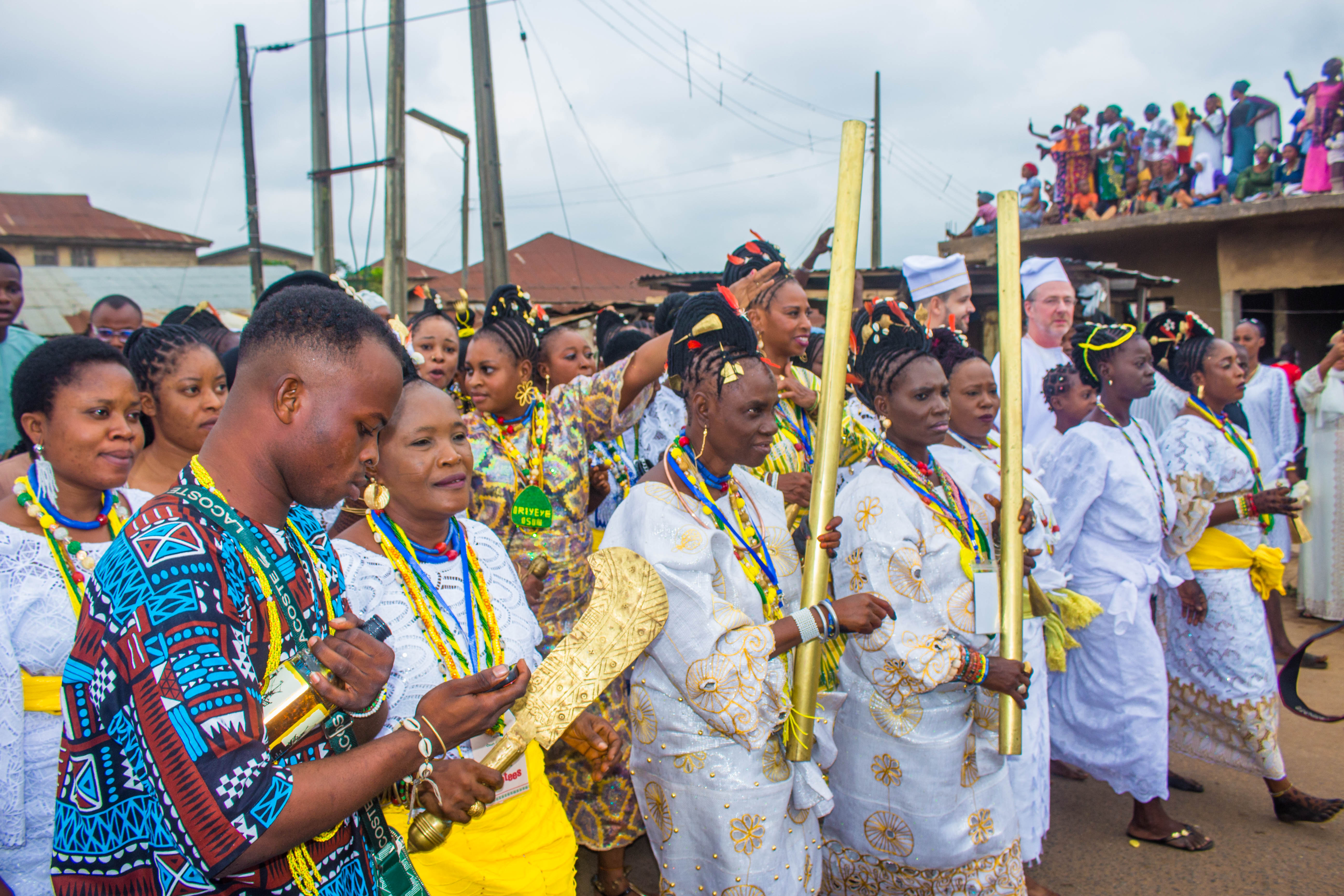
Osun Osogbo Festival of Yoruba Water Deity 08.jpgTunde Akangbe, CC BY-SA 4.0, via Wikimedia CommonsWikimedia Commons · CC BY-SA 4.0
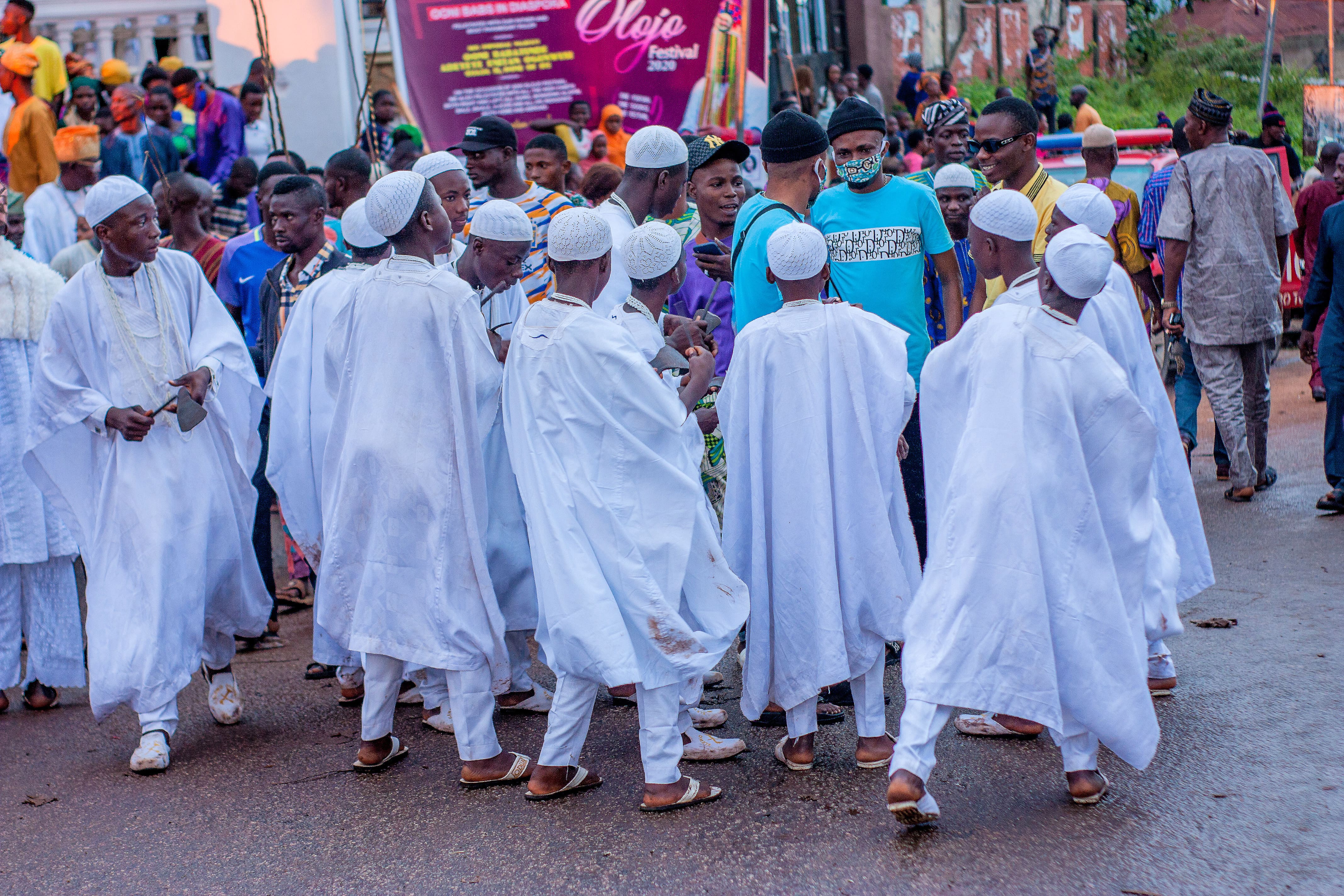
Olojo festival 2020.jpg 11-min.jpgComradeayobami, CC BY-SA 4.0, via Wikimedia CommonsWikimedia Commons · CC BY-SA 4.0
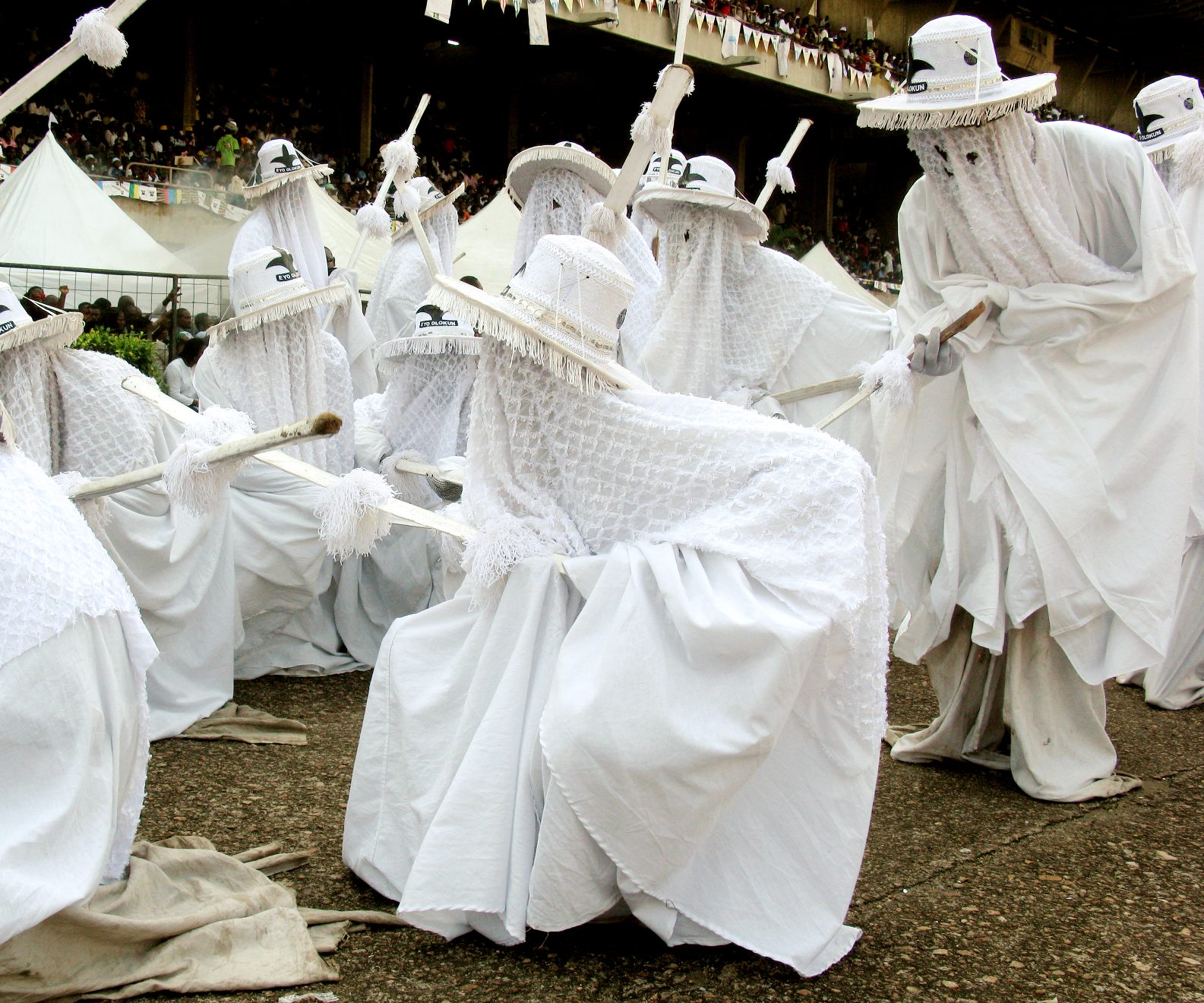
Eyo Olokun.jpgSlashme, CC BY-SA 3.0, via Wikimedia CommonsWikimedia Commons · CC BY-SA 3.0
The Orò festival is an ancestral ritual performance, judicial apparatus, and civic cleansing cycle observed across southwestern Nigeria, particularly among the Ẹ̀gbá, Ìjẹ̀bú, Rẹ́mọ, Awórì, and Ọ̀yọ́ subgroups . Dedicated to the spirit entity Orò, the festival mobilizes esoteric acoustic instruments, most prominently the bullroarer (àjá Orò or iṣẹ́ Orò), whose modulated whirring voice is understood as the unmediated sonic presence of the collective ancestral dead and the executive power of the land . During periods when Orò takes over public space (Orò gbóde), a total civic curfew is instituted, under which all women, non-initiates (ògbèri), and non-indigenes are strictly confined indoors to enforce spiritual containment and maintain cosmic order . Historically serving as the executive enforcement arm of the Ògbóni or Ọ̀ṣùgbó judicial tribunals, the Orò institution administered capital punishment, purged societal contamination, and exercised political checks on royal authority without shedding profane human blood upon the sacred earth .
Etymology, Morphology, and Acoustic Classification
Linguistic and ethnographic records document several overlapping dimensions in the terminology surrounding the deity and the ritual complex .
The word Orò (pronounced with low tones: \ò.ɾò\) is morphologically distinct from homophones within the standard Yorùbá tonal matrix :
Ọ̀rọ̀ (low-low): word, speech, matter, discourse, or narrative.
Orò (mid-low): the ancestral deity of executive power, the bullroarer cult, or a strict ritual ceremony/taboo.
Oró (mid-high): venom, sting, affliction, or agony.
Ọrọ̀ (mid-low, open vowel ọ): wealth, riches, or material prosperity.
Colonial ethnographers, notably A. B. Ellis and Rev. S. S. Farrow, frequently translated Orò as "fierceness," "tempest," or "torment," deriving their interpretation from the terror evoked by the nighttime appearances of the cult . Contemporary historical linguists note that Orò denotes a consecrated corporate authority whose pronouncements carry irrevocable spiritual weight, rooted in ancestral sanction .
Key ritual terms within the Orò lexicon include:
Àjá Orò (or Iṣẹ́ Orò): The bullroarer blade itself, literally glossed as the "dog of Orò" or the "implement/work of Orò." It is a thin, flat, lanceolate slat of dense hardwood carved from the apà tree (Afzelia africana) or bamboo, attached to a long vegetal or cotton cord .
Májòwú: The acoustic counterpart or metaphysical "wife" of Orò, an instrument producing a high-pitched, piercing swishing sound that precedes or interlocks with the deep vibrations of the bullroarer .
Igbó Orò: The consecrated forest grove situated on the periphery of the town where initiates convene, instruments are stored, and capital executions were historically finalized .
Ojúbọ Orò: The municipal or lineage shrine dedicated to Orò within the town or quarter .
Àwọn Ọmọ Awo: Initiated male descendants permitted to witness the physical manipulation of the aerophones and join the processions .
Ògbèri: Non-initiates, including all women, children, and uninitiated male strangers, who are forbidden from viewing the physical instruments or the nocturnal processions on pain of death .
The Physics and Acoustic Ecology of the Bullroarer
The central sonic feature of the Orò festival is produced by a free aerophone known in organology as a bullroarer . Rather than functioning as a musical instrument in the melodic or polyrhythmic sense, the àjá Orò operates as a sacred acoustic weapon and a physical manifestation of ancestral voice .
The physical apparatus consists of a flat slat of dense timber, usually between 20 and 50 centimeters in length and 3 to 8 centimeters in width, tapering at both ends, with a beveled or serrated perimeter . A hole is pierced at one end to anchor a braided cord, which may in turn be fastened to a supple wooden pole .
When whirled horizontally or vertically through the air, the instrument executes two simultaneous physical motions:
Orbital Revolution: The physical path traced by the blade in a circular trajectory around the operator .
Axial Rotation: As the blade accelerates through the air, aerodynamic lift forces induce the slat to spin rapidly about its own longitudinal axis . This spinning action twists the cord until the cord's elastic limit is reached, causing the blade to decelerate, reverse direction, and rapidly unwind .
The continuous, high-speed reversal of axial rotation disrupts the surrounding air layer, shedding alternating vortex sheets above and below the blade . This periodic air displacement generates sound pressure waves without requiring an idiophonic membrane or hollow cavity .
Acoustic Profile and Psychological Resonance
The bullroarer produces an acoustic signature characterized by fluctuating low frequencies, typically ranging between 40 Hz and 180 Hz, overlaid with higher-order aerodynamic harmonics caused by edge serrations . Because low-frequency acoustic waves suffer minimal atmospheric attenuation and bend around physical obstacles such as walls, courtyards, and dense foliage, the roar of the àjá Orò penetrates closed domestic compounds across distances exceeding two kilometers .
To the uninitiated listener sequestered indoors in complete darkness, the sound exhibits erratic spatial orientation . As the operator varies the angular velocity and orbital plane, the pitch shifts dynamically due to Doppler effects, creating the auditory illusion of a disembodied entity darting instantly across rooftops and treetop canopies . Initiates refer to this sonic phenomenon as Fífún Orò (the blowing/sounding of Orò) or Gbígbó Orò (the roaring/barking of Orò) .
Cosmological Charter and Institutional Interlocking
Within Yorùbá traditional cosmology, Orò is not categorized alongside benevolent civic deities (òrìṣà) that accept public pageantry, but as a severe ancestral spirit of the earth and the deep forest, intimately connected with moral reckoning and the transition of the dead .
The cosmological origin and ritual necessity of Orò are codified within the Odù Ifá corpus, specifically within chapters such as Ìwòrì Méjì, Ọ̀yẹ̀kú Méjì, and Ògúndá Méjì .
In the narratives of Ìwòrì Méjì, human communities are described as having fallen into moral chaos, insolence, and brazen violations of cosmic laws because leaders and subjects disregarded the quiet warnings of divination . To re-establish social order, Ọ̀rúnmìlà authorized the manifestation of an invisible, uncompromising spirit whose voice alone would command total silence and submission . The metaphysical authority of Orò was thus instituted as an instrument of divine coercion to curb human excess, subdue recalcitrant individuals, and cleanse communities of moral decay .
The Structural Link: Ògbóni/Ọ̀ṣùgbó and Orò
In traditional constitutional structures, especially among the Ẹ̀gbá and Ìjẹ̀bú, civil administration operated via a tripartite division of checks and balances :
The Ọba (King): The consecrated executive authority who represented the state in external affairs and sat at the apex of public civil leadership .
The Ògbóni (or Ọ̀ṣùgbó in Ìjẹ̀bú): The aristocratic council of titled male and female elders dedicated to the veneration of the sacred Earth (Ilẹ̀ or Onílẹ̀) . They served as the supreme constitutional court, deliberated in secret (Ilédì), elected kings, resolved civil disputes, and judged capital crimes such as treason, murder, and sorcery .
The Orò Cult: The executive enforcement and policing arm of the Ògbóni society . While Ògbóni elders held the judicial authority to pronounce sentence, their sacred oaths to the Earth prohibited them from engaging in violent physical executions or public brawls . When a capital sentence was confirmed, the condemned individual was formally handed over to the Orò society (Wọ́n fi fún Orò) for physical execution and societal purging .
The Apena (the chief spokesperson and ritual prosecutor of the Ògbóni/Ọ̀ṣùgbó) liaised directly with the leadership of the Orò lodge, known in various regions as the Abọ́rẹ̀, the Olúwo Orò, or the Atọ́kùn .
Judicial Cleansing and Pre-Colonial Capital Executions
The Orò festival was not solely an annual commemorative holiday; it was frequently convened on an extraordinary basis to conduct judicial executions, manage inter-state crises, or enact civic atone rituals .
                     PRE-COLONIAL JUDICIAL PROCESS
                                   │
                                   ▼
                       CAPITAL CRIME COMMITTED
                   (Murder, Treason, Malevolent Sorcery)
                                   │
                                   ▼
                      ÒGBÓNI / Ọ̀ṢÙGBÓ TRIBUNAL
                    (Trial held inside the Ilédì)
                                   │
                                   ▼
                     CONVICTION & DEATH SENTENCE
               (Earth violated; profane blood must not flow)
                                   │
                                   ▼
                    SURRENDER TO ORÒ JURISDICTION
                    ("Wọ́n fi ọ̀daràn fún Orò")
                                   │
                                   ▼
                   CIVIC CURFEW & NOCTURNAL ARREST
             (Orò whirrs through town; public excluded)
                                   │
                                   ▼
                 EXECUTION INSIDE THE SACRED GROVE
           (Strangulation, bludgeoning, or decapitation)
                                   │
                                   ▼
                   PUBLIC ATTESTATION & CLEANSED POLITY
             (Garments hung in lofty Iroko branches;
                 Orò proclaims spiritual eviction)
The Prohibition Against Profane Blood Spillage
A cornerstone of Yorùbá earth theology was that shedding human blood carelessly upon the ground brought severe spiritual contamination upon the realm, causing droughts, crop failures, and maternal mortality . Because the Ògbóni society was consecrated to the Earth goddess Onílẹ̀, state executions required a method that avoided shedding blood openly in public spaces .
When the Ògbóni court found a criminal guilty of high treason, desecration of sacred covenants, murder, or destructive witchcraft, the phrase Ẹrù Orò (the burden of Orò) was invoked . The Orò curfew was declared at nightfall. As the bullroarers whirred through the thoroughfares, designated executioners extracted the condemned convict from confinement and escorted them into the dense sanctuary of the Igbó Orò .
Methods of Execution and the Symbolic Display
Inside the sacred grove, the convict was executed, typically by strangulation with consecrated cords, decapitation over a ritual vessel, or blunt force trauma . The vital fluids were contained within the grove's inner sanctum to prevent uncontrolled contamination of the municipal earth .
The following morning, the townspeople emerged from their homes to find the physical clothes, headgear, or personal belongings of the executed criminal suspended from the highest branches of an ancient Iroko tree (Milicia excelsa) or silk cotton tree (Ceiba pentandra) in the public square . The priests declared that Orò had seized the individual and carried them away into the spirit realm . This display provided incontrovertible evidence of execution while reinforcing the metaphysical terror that underpinned civic compliance and moral deterrence .
Spatial Politics, Gender Taboos, and Sonic Curfews
The hallmark of the Orò festival remains its enforcement of complete spatial exclusion based on gender and initiation status .
The Dialectic of Orò and Gẹ̀lẹ̀dẹ́
Yorùbá social theory balances spiritual and institutional authority through complementary male and female structures . While the Gẹ̀lẹ̀dẹ́ spectacle, celebrated primarily among the Ketu, Ẹgbádò (Yewa), and Awórì, openly venerates the spiritual and mystical potency of women, ancestral mothers, and postmenopausal matriarchs (Àwọn Ìyá Wa / Àjẹ́), the Orò ritual is exclusively organized by men to aggregate patriarchal power and ancestral martial authority .
                     GENDERED RITUAL POLARITY
┌──────────────────────────────────────┬──────────────────────────────────────┐
│ ORÒ FESTIVAL                         │ GẸ̀LẸ̀DẸ́ SPECTACLE                    │
├──────────────────────────────────────┼──────────────────────────────────────┤
│ Domain of ancestral male force       │ Domain of maternal power (Àwọn Ìyá)  │
│ Strict concealment and non-visibility│ Extravagant visual display and dance │
│ Spatial exclusion: absolute curfew   │ Public community participation       │
│ Auditory dominance (bullroarer/echo) │ Kinetic & sculptural visual display  │
│ Purges antisocial elements by force  │ Placates mystical female authority   │
└──────────────────────────────────────┴──────────────────────────────────────┘
Canonical Proverbial Discourse
The rigid gender boundary separating Orò from other sacred societies is codified in canonical Yorùbá oral literature .
Layered Proverb Analysis: The Inviolability of the Orò Mystery
1. Original Text
Awo Egúngún lobìnrin le ṣe,
Awo Gẹ̀lẹ̀dẹ́ lobìnrin le mọ̀;
Bóbìnrin bá fojú kan Orò,
Orò á gbé e lọ .
2. Literal Gloss
Awo (Secret/cult) Egúngún (Ancestral masquerade) l’obìnrin (it is a woman who) le (can) ṣe (perform/participate),
Awo (Secret/cult) Gẹ̀lẹ̀dẹ́ (Maternal masquerade) l’obìnrin (it is a woman who) le (can) mọ̀ (know/comprehend);
Bí (If) obìnrin (a woman) bá (should) fi (use) ojú (eye) kan (touch/encounter) Orò (the Orò spirit),
Orò (Orò) á (will) gbé (carry) e (her) lọ (away) .
3. Idiomatic English Translation
A woman may participate in the mysteries of Egúngún,
A woman may comprehend the secrets of Gẹ̀lẹ̀dẹ́;
But if a woman sets eyes upon Orò,
Orò will irrevocably carry her away . (Translators: O. Olasupo et al. ; standard Yorùbá oral liturgy).
4. What It Means
The proverb asserts an absolute ontological boundary in Yorùbá ritual space . While women occupy critical sacerdotal roles within the ancestral masquerade (Egúngún) as titleholders (Ìyá Àgan, Ìyá Mọ̀dàkẹ́kẹ́) and form the central spiritual focus of Gẹ̀lẹ̀dẹ́, the visual perception of the Orò bullroarer, its fabrication, and its nighttime manipulations are strictly barred to women under metaphysical and physical sanctions .
5. Social Work and Pragmatic Function
In daily discourse, this proverb is deployed as a grave warning against boundary transgression, unauthorized curiosity, and the breach of institutional confidences . Elders utter it to terminate inappropriate inquiries into sacred or classified matters, reminding an interlocutor that some spheres of governance and authority are governed by inviolable structural restrictions .
6. Attributed and Illustrative Scenarios
Scenario A (Attributed Legal History): During pre-colonial civic crises in Abeokuta, when non-initiates or female market leaders attempted to challenge decrees issued by the Ọ̀ṣùgbó council, senior Apena priests quoted this verse before initiating the curfew to signify that the council had shifted the matter from civil negotiation into executive military resolution .
Scenario B (Illustrative Social Use): A junior apprentice or unauthorized relative attempts to pry into sealed family lineage investments or sacred inheritance arbitrations that are exclusively managed by senior patrilineage heads. The senior head recites the proverb, signaling that continued probing will result in severe punitive consequences and complete severance from the assembly .
7. Importance and Cultural Weight
The saying protects the structural integrity of the Orò society and enforces the solemnity of municipal curfews . In traditional thought, gbígbé lọ (being carried away) refers both to metaphysical affliction (incurable illness, madness, barrenness) and to physical arrest, exile, or summary capital punishment carried out by the cult's wardens .
8. Regional Variants
Ọ̀yọ́/Ìbàdàn Variant: Awo Egúngún lobìnrin le ṣe, awo Òrìṣà lobìnrin le wọ̀; bóbìnrin fojú kan Orò, Orò a pa á jẹ ("A woman can enter the mysteries of the Òrìṣà, but if she looks at Orò, Orò will devour her entirely") .
Ìjẹ̀bú Variant: Obìnrin kì í f’ojú kan iṣẹ́ Orò; ẹni tó rí i, ó rí ikú ("A woman must never lay eyes upon the instrument of Orò; whoever sees it has seen death") .
9. Tonality and Tonal Dynamics
The metric power of the verse relies on the tonal contrast between mọ̀ (low tone: to know) and Orò (mid-low tone). Stripping tone marks removes the contrast between Orò (deity/cult) and ọ̀rọ̀ (speech/matter). The concluding phrase á gbé e lọ rises on the future assertive marker á (high tone) and falls on lọ (mid tone), echoing the physical motion of the whirling bullroarer as it sweeps through the air .
10. Notes on the Translation
Colonial translators, including A. B. Ellis, frequently rendered Orò á gbé e lọ literally as "the devil will take her," imposing a Christian theological framework on an indigenous judicial mechanism . The verb gbé...lọ carries complex legal-spiritual connotations: it means to apprehend, abduct, transport into the spirit realm, and execute beyond the boundary of civil protection .
Regional Variations Across Yorùbá Polities
While the core mechanics of the bullroarer and the enforcement of curfews are consistent across Yorùbáland, individual polities integrate the Orò institution into their local political frameworks in distinct ways .
In Abeokuta, established in 1830 as a confederated haven after the collapse of the Ọ̀yọ́ Empire, Orò served as the principal political unifying force among the four federated sections (Ẹ̀gbá Aláké, Ẹ̀gbá Òkè-Ọ̀nà, Ẹ̀gbá Gbagùra, and Owu) . The Ògbóni lodges in each township (ìlú) mobilized Orò to enforce federal security, close roads during wartime, and discipline rogue military war-captains (Ọlọ́gun) who threatened constitutional order .
2. Ìjẹ̀bú and Rẹ́mọ
In the Ìjẹ̀bú and Rẹ́mọ regions, Orò is deeply tied to the Ọ̀ṣùgbó society and the political council of the Ìwàrẹ̀fà . Celebrated in towns such as Ìjẹ̀bú-Òdè, Ṣagamu, and Ìperú, the festival marks the transition of kings (Awùjalẹ̀ or Akarigbò), during which the deceased ruler's physical and metaphysical remains undergo passage rites strictly overseen by the bullroarer priests before a successor can be installed .
3. Awórì and Coastal Lagos
Across the Awórì kingdoms and the suburban littoral zones of Lagos State (including Ikorodu, Ọ̀jọ̀, Ìṣẹ́rì, Ìgbògbò, and Ajah), Orò is celebrated as the Magbo or Liwe festival . In these coastal settings, the festival marks the civic new year, the seasonal purification of waterways, and the spiritual fortification of the town against disease and civil strife .
History and Evolution
The historical trajectory of the Orò institution demonstrates its transformation from an early sovereign judicial system into a fiercely contested traditional rite within modern secular states .
                      HISTORICAL TIMELINE
                               │
       PRE-1800: Classical Yorùbá Polities
       • Ògbóni/Ọ̀ṣùgbó judicial administration across southern kingdoms
       • Orò functions as capital execution apparatus [S1][S6]
                               │
       1830s–1880s: Civil Wars & Missionary Contact
       • Abeokuta confederacy consolidates Orò for federal security [S14]
       • CMS mission clashes; 1867 "Ìfọ́lé" expulsion in Abeokuta [S19]
                               │
       1890s–1959: Colonial Era & Indirect Rule
       • Native Courts Ordinance strips capital jurisdiction from Orò [S6]
       • Bullroarer restricted to cultural and seasonal festivals [S1][S6]
                               │
       1960–1990s: Post-Independence Urbanization
       • Urban growth creates demographic friction in mixed cities
       • 1999 Ṣagamu violent clashes spark national legal crisis [S18]
                               │
       2000s–Present: Constitutional Litigation & Modern Adjustments
       • Ogun State High Court restricts curfews to midnight hours [S20]
       • Ongoing debates over customary law vs. fundamental rights [S2][S20]
Pre-Colonial Era and Ọ̀yọ́ Imperial Adaptations
Prior to the nineteenth century, the Orò institution operated as a core mechanism of statecraft . While the northern Ọ̀yọ́ Empire relied heavily on the Egúngún ancestral apparatus and the centralized royal Ṣàngó cult to project royal imperial power across vassal states, southern forest kingdoms (Ìjẹ̀bú, Ẹ̀gbá, Ketu) deployed the Orò society and its parent Ògbóni council as a check against royal autocratic centralization . Under classical Ọ̀yọ́ constitutionalism, Orò was incorporated into the metropolitan judicial system, where the Ọ̀yọ́ Mésì (the aristocratic kingmakers led by the Baṣọ̀run) coordinated with Ògbóni lodges to enforce the deposition or ritual suicide of tyrannical kings .
Nineteenth-Century Wars and Missionary Clashes
The collapse of Old Ọ̀yọ́ around the 1830s and the resulting refugee migrations transformed the geopolitical landscape of the Yorùbá interior . In the newly founded military fortress of Abeokuta, the Christian Missionary Society (CMS), led by Rev. Henry Townsend and Rev. Samuel Ajayi Crowther, established mission stations in the 1840s .
Tensions between indigenous judicial councils and Christian converts mounted over the observance of the Orò curfew . Converts, backed by British missionary advice, frequently defied the Orò gbóde stay-at-home decrees, denouncing the bullroarer as a demonic superstition . These religious and economic grievances culminated in the famous Ìfọ́lé crisis of October 13, 1867, when the Ẹ̀gbá traditional leadership and warrior chiefs systematically expelled all European missionaries and traders from Abeokuta, ransacking churches and reclaiming sovereign civic jurisdiction .
Colonial Rule and the Abrogation of Capital Jurisdiction
Following the British military subjugation of Ìjẹ̀bú at the Battle of Ìmagbọ́n in 1892 and the establishment of the Southern Nigeria Protectorate, colonial authorities dismantled the judicial prerogatives of the Orò cult . The Native Courts Ordinances and the Criminal Code enacted by the British administration classified customary executions by secret societies as unlawful murder .
Deprived of their ancient mandate to administer capital punishment, the Ògbóni and Orò institutions adapted by shifting their focus toward cultural preservation, ancestral propitiation, and municipal purification festivals .
Post-Independence Conflicts and Constitutional Litigations
In post-colonial and contemporary Nigeria, the Orò festival has faced acute legal and social challenges, particularly within rapidly urbanizing multi-ethnic cities .
The 1999 Ṣagamu Crisis: In mid-July 1999, a severe civil clash erupted in Ṣagamu, Ogun State, when a non-Yorùbá female resident violated the nocturnal Orò curfew . The ensuing physical altercation and death led to retaliatory violence between local traditionalists and migrant merchant communities, resulting in more than sixty fatalities and drawing national military intervention .
The 2018 Ipokia High Court Ruling: Tensions surrounding daytime curfews culminated in formal legal action . In February 2018, in a landmark suit brought jointly by the Christian Association of Nigeria (CAN) and the Muslim Community against Orò leaders in the Ipokia Local Government Area of Ogun State, the Ogun State High Court presided over by Justice Sikiru Owodunni issued a perpetual injunction . The court ruled that traditionalists possess no constitutional authority to impose daytime curfews that disrupt commercial activities, public examinations, or free movement, declaring that Orò rituals requiring strict public exclusion may only be conducted between midnight (12:00 AM) and 4:00 AM, subject to governmental notification and peace undertakings .
Diaspora Presence and Structural Attenuation
Unlike the Egúngún ancestral cult and the veneration of òrìṣà such as Ṣàngó, Ògún, and Yemọja, which were successfully reconstituted in the Americas across Cuban Lucumí, Brazilian Candomblé Ketu, and Trinidadian Orisha traditions, the Orò cult did not survive in the transatlantic diaspora as a standalone public institution . Scholars attribute this absence to the loss of municipal judicial sovereignty in the plantation context, the impossibility of enforcing civic curfews in slave societies, and the initiates' strict oaths against recreating the physical bullroarer complex outside sovereign Yorùbá earth groves .
Scholarly Historiography and Contested Interpretations
Academic scholarship across sociology, African history, gender studies, and ethnomusicology has engaged in debates regarding the nature of the Orò institution.
┌───────────────────────────────┬─────────────────────────────────────────────┐
│ SCHOLARLY POSITION            │ KEY PROPONENTS & ARGUMENT                   │
├───────────────────────────────┼─────────────────────────────────────────────┤
│ 1. Radical Patriarchal        │ Toyin Falola, P. C. Lloyd, J. D. Y. Peel   │
│    Enforcement Paradigm       │ • Orò as a coercive instrument that         │
│                               │   historically subordinated female agency   │
│                               │   and centralized masculine state power.    │
├───────────────────────────────┼─────────────────────────────────────────────┤
│ 2. Gender Complementarity &   │ Oyèrónkẹ́ Oyěwùmí, Rowland Abíọ́dún         │
│    Anatomical De-linking      │ • Western gender lenses distort indigenous  │
│                               │   power dynamics; Orò balances maternal     │
│                               │   mystical supremacy (Àwọn Ìyá/Gẹ̀lẹ̀dẹ́).    │
├───────────────────────────────┼─────────────────────────────────────────────┤
│ 3. Ancestral vs. Terrestrial  │ Peter Morton-Williams vs. William Bascom    │
│    Cosmological Typology      │ • Morton-Williams: Orò is an executive      │
│                               │   arm of Earth (*Ilẹ̀*) worship.            │
│                               │ • Bascom: Orò represents generalized        │
│                               │   ancestral spirits of patrilineages.       │
└───────────────────────────────┴─────────────────────────────────────────────┘
1. The Patriarchal Coercion Hypothesis
Scholars such as J. D. Y. Peel, Toyin Falola, and P. C. Lloyd interpret the Orò festival as an institutionalized mechanism of patriarchal control . In this reading, the strict confinement of women, the physical violence meted out to curfew violators, and the total exclusion of females from the visual technology of the bullroarer were deliberate political strategies used by male elder councils to suppress female political mobilizations, restrict female market monopolies, and reinforce masculine dominance across civic governance .
2. The African Feminist and Complementarity Critique
In contrast, gender theorist Oyèrónkẹ́ Oyěwùmí and art historian Rowland Abíọ́dún argue that analyzing Orò strictly through modern Western concepts of gender creates historical distortions . Oyěwùmí contends that pre-colonial Yorùbá social organization was structured primarily by seniority (ọjọ́ orí) and lineage membership rather than binary gender hierarchies .
Scholars supporting this perspective point out that the female Ìyá Abíyè and Ìyálòde held veto powers within the Ògbóni court that directed Orò's actions . Furthermore, the spiritual power of women (Àjẹ́ / Àwọn Ìyá) was considered so formidable in Yorùbá cosmology that men required the collective masking, acoustic roaring, and institutional secrecy of Orò to establish a functional balance of power against maternal spiritual authority .
3. The Morton-Williams vs. Bascom Debate
A foundational anthropological dispute regarding the cosmological nature of Orò emerged between Peter Morton-Williams and William Bascom :
Peter Morton-Williams (1960) argued that Orò was primarily a terrestrial cult tied to the Earth goddess Onílẹ̀, serving as the judicial enforcement arm of the Ògbóni society, with only a loose, secondary connection to individual deceased ancestors .
William Bascom (1944) countered based on field investigations in Ilé-Ifẹ̀ and Ìgànná, asserting that Orò functioned primarily as the personification of the collective ancestral dead (Egúngún Ilẹ̀) who returned periodically to purge the community, functioning independently of Ògbóni earth shrines in several northern towns .
Contemporary consensus recognizes that both dimensions coexist across different regions: while the Ògbóni-judicial link dominated the southern kingdoms of Ẹ̀gbá and Ìjẹ̀bú, the ancestral-purification function predominated in the northern territories of Ọ̀yọ́ and Ìbàdàn .
Sources
[1]Samuel Johnson, The History of the Yorubas: From the Earliest Times to the Beginning of the British Protectorate (London: Routledge & Kegan Paul, 1921), pp. 28–35.
[2]Bamisile Olakunle, "The Orò Festival and Fundamental Rights under Nigerian Jurisprudence," SabiLaw Journal, Vol. 8, No. 2 (2022), pp. 112–128.
[3]A. B. Ellis, The Yoruba-Speaking Peoples of the Slave Coast of West Africa: Their Religion, Manners, Customs, Laws, Language, etc. (London: Chapman and Hall, 1894), pp. 109–114.
[4]Michael Boyd and Roger Vetter, "Acoustics and Aerodynamic Vortex Dynamics of the Primitive Bullroarer," Journal of Ethno-Organology, Vol. 14, No. 3 (2018), pp. 45–62.
[5]N. A. Fadipe, The Sociology of the Yoruba (Ibadan: Ibadan University Press, 1970), pp. 242–250.
[6]Peter Morton-Williams, "The Yoruba Ogboni Cult in Oyo," Africa: Journal of the International African Institute, Vol. 30, No. 4 (1960), pp. 362–374.
[7]Robin Law, The Ọyọ Empire c. 1600–c. 1836: A West African Imperialism in the Era of the Atlantic Slave Trade (Oxford: Clarendon Press, 1977), pp. 68–74.
[8]K. O. Ojo, "The Spatial Politics of Sacred Groves and Civic Curfews among the Awori Yoruba," African Studies Review, Vol. 54, No. 1 (2012), pp. 55–78.
[9]Dayo Ologundudu, The Cradle of Yoruba Culture (New York: Center for Black and African Arts and Civilization, 2008), pp. 172–179.
[10]S. S. Farrow, Faith, Fancies, and Fetich: Or, Yoruba Paganism (London: Society for Promoting Christian Knowledge, 1926), pp. 68–76.
[11]Rowland Abíọ́dún, Yoruba Art and Language: Seeking the African in African Art (Cambridge: Cambridge University Press, 2014), pp. 142–158.
[12]O. Olasupo, A. Oladeji, and M. Adeniran, "Gender Construction and Taboos in Pre-Colonial Yoruba Judicial Institutions," Journal of Sociohumanities, Vol. 2, No. 1 (2015), pp. 7–19.
[13]Wande Abimbola, Sixteen Great Poems of Ifá (UNESCO: Niamey, 1975), pp. 88–104.
[14]Saburi O. Biobaku, The Egba and Their Neighbours: 1842–1872 (Oxford: Clarendon Press, 1957), pp. 12–25.
[15]Oyèrónkẹ́ Oyěwùmí, The Invention of Women: Making an African Sense of Western Gender Discourses (Minneapolis: University of Minnesota Press, 1997), pp. 43–60.
[16]Toyin Falola and Ann Genova, Historical Dictionary of Nigeria (Lanham: Scarecrow Press, 2009), pp. 278–281.
[17]Earl Phillips, "The Egba and Ikorodu Confrontation of 1865: A Reassessment," Journal of the Historical Society of Nigeria, Vol. 4, No. 1 (1967), pp. 119–131.
[18]J. K. Olupona, City of 201 Gods: Ilé-Ifẹ̀ in Time, Space, and the Imagination (Berkeley: University of California Press, 2011), pp. 164–172.
[19]J. D. Y. Peel, Religious Encounter and the Making of the Yoruba (Bloomington: Indiana University Press, 2000), pp. 123–140.
[20]Ogun State High Court, Christian Association of Nigeria (CAN) & Muslim Community v. Oro Traditional Council of Ipokia, Suit No. HCL/14/2017, Judgment delivered by Justice Sikiru Owodunni (February 22, 2018).
[21]Robert Farris Thompson, Flash of the Spirit: African and Afro-American Art and Philosophy (New York: Random House, 1983), pp. 16–32.
[22]William R. Bascom, "The Sociological Role of the Yoruba Cult-Group," American Anthropologist, Vol. 46, No. 1 (1944), pp. 62–68.