Ifá Origins: The ʿIlm al-Raml Diffusion Debate Against Autochthony · Ìpilẹ̀ṣẹ̀
Ifá Origins: The ʿIlm al-Raml Diffusion Debate Against Autochthony
A scholarly examination of the historical debate between Arabic geomantic diffusion and indigenous West African autochthony regarding the origins of Ifá divination.
advancedcontested32 min de lectura·26 fuentes
Tehran Museum of Contemporary Art-2Own workWikimedia Commons · CC BY-SA 4.0
Tehran Museum of Contemporary Art-4
Own work
Wikimedia Commons · CC BY-SA 4.0
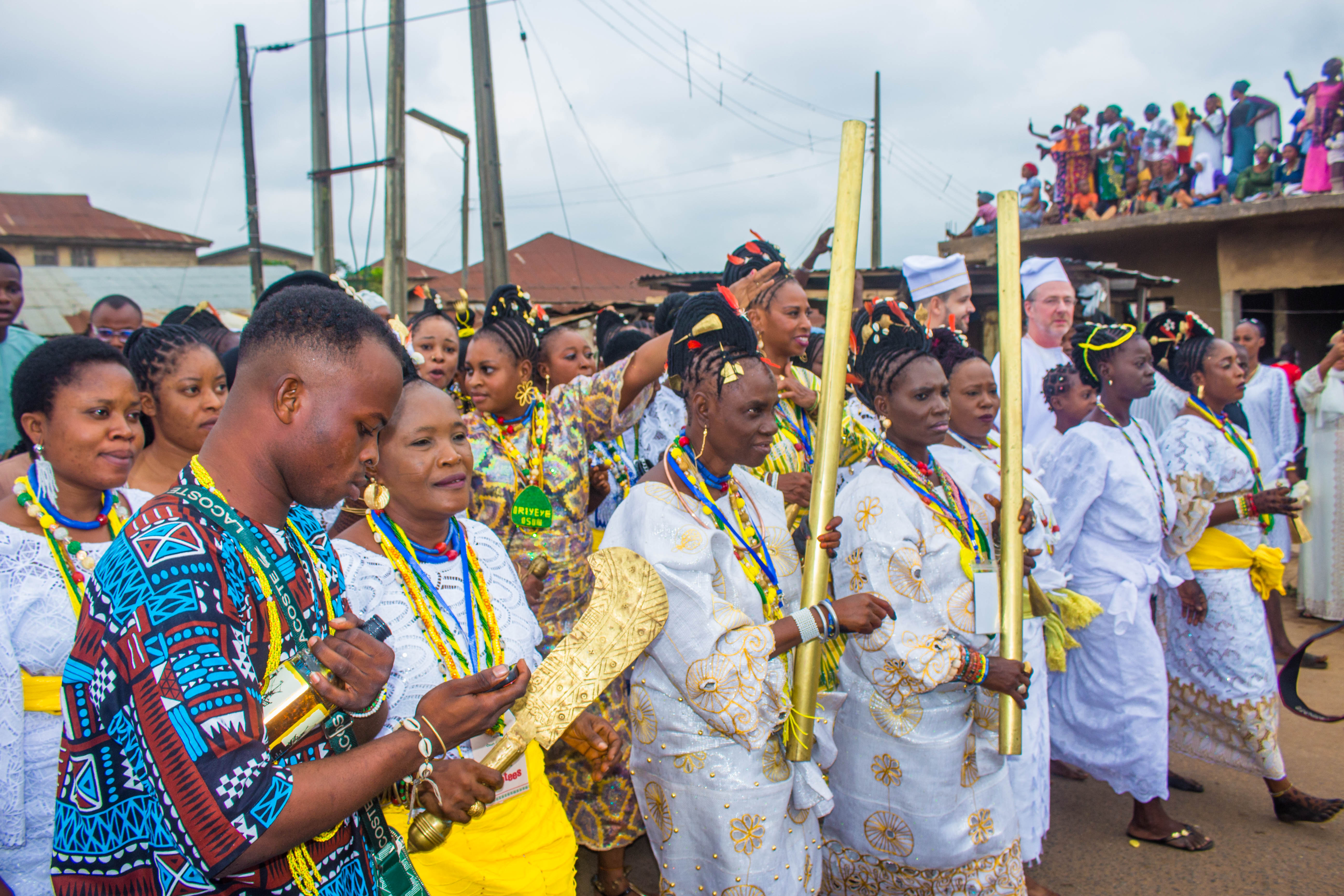
Osun Osogbo Festival of Yoruba Water Deity 08.jpgTunde Akangbe, CC BY-SA 4.0, via Wikimedia CommonsWikimedia Commons · CC BY-SA 4.0
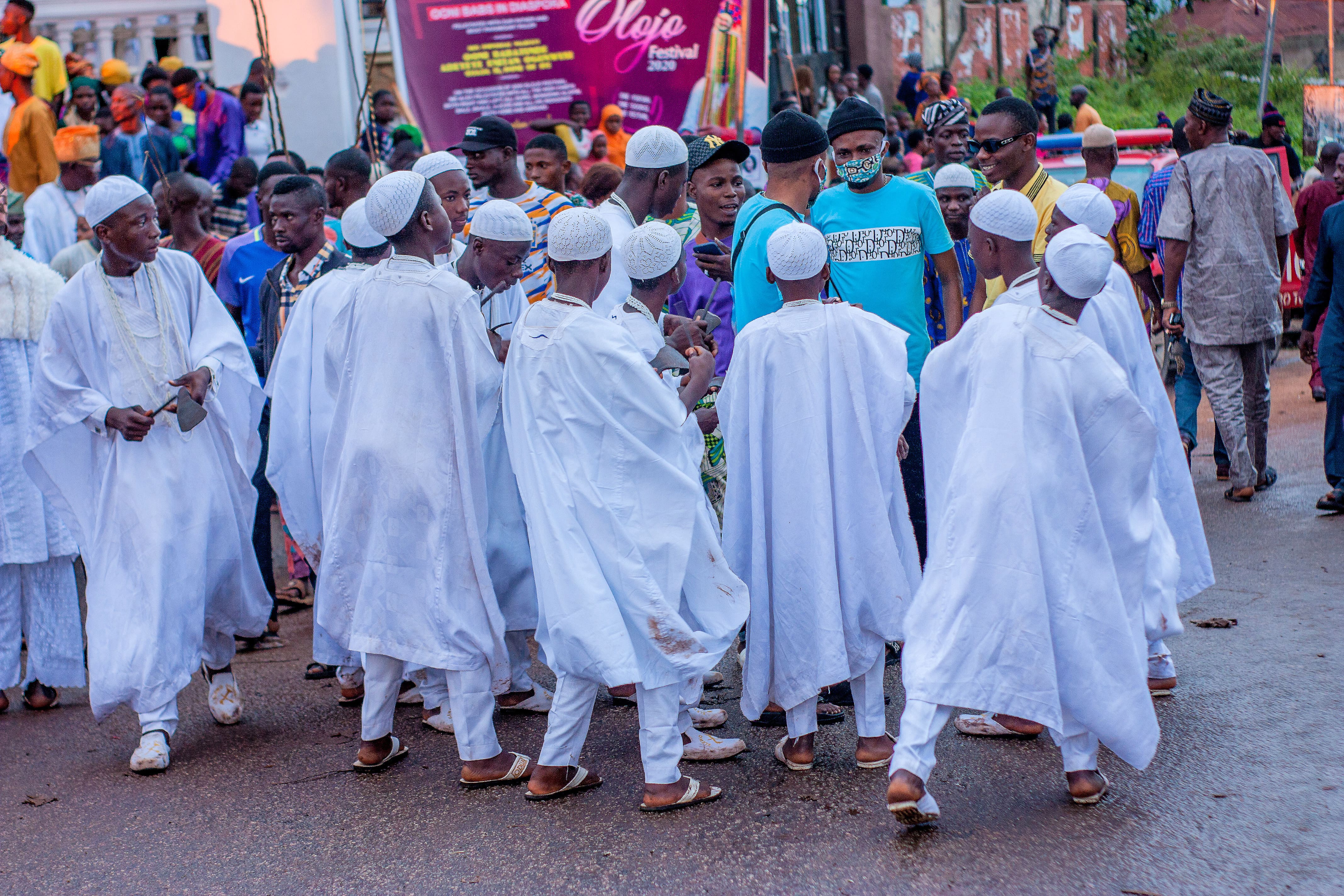
Olojo festival 2020.jpg 11-min.jpgComradeayobami, CC BY-SA 4.0, via Wikimedia CommonsWikimedia Commons · CC BY-SA 4.0
Carcar Museum, CebuOwn workWikimedia Commons · CC BY-SA 3.0
Ifá is the premier divinatory and epistemological system of the Yorùbá people, organized around an oral literary canon structured by 256 binary sign matrices called Odù [S1, S2]. The historical origin of this system remains one of the most vigorously contested subjects in African intellectual history, religious studies, and historical linguistics [S3, S4]. Academic scholarship divides fundamentally between two major paradigms: the diffusionist hypothesis, which traces the underlying sixteen-figure combinatorial matrix to Islamic sand divination known as ʿilm al-raml or khaṭṭ al-raml, and the autochthonous hypothesis, which argues that Ifá represents an ancient, indigenous West African development deeply embedded in Niger-Congo cosmology and local material cultures [S3, S5, S6].
This file presents the full architectural, linguistic, material, and historical evidence marshaled on both sides of the dispute. It distinguishes strictly between internal theological narratives preserved in oral literature, reconstructions based on archaeological and documentary history, and colonial-era ethnographies [S1, S6, S7]. Because neither school possesses definitive archival proof of single-source priority, the confidence rating of this comparative historical file is contested.
Structural and mathematical architecture: The shared sixteen-figure matrix
The core technical similarity linking Ifá to trans-regional geomancy is a binary combinatorial framework rooted in base-two mathematics [S3, S8]. Both systems generate configurations from four vertical levels, where each position assumes one of two values: single (odd/one stroke) or double (even/two strokes) [S3, S9].
Mathematically, four positions with two possibilities yield $2^4 = 16$ primary figures [S3, S8]. In Yorùbá, these sixteen basic patterns are named the Ojú Odù (the primary or principal Odù, literally "the eyes/faces of Odù") [S1, S2]. When these sixteen primary tetragrams are paired or squared ($16 \times 16$), they generate the full canon of $2^8 = 256$ composite figures, designated in Yorùbá as the Àmúlù Odù or Ọmọ Odù ("children of Odù") [S1, S10].
Value / Level
Single Stroke / Odd (I)
Double Stroke / Even (II)
Top level (1)
Line or single dot
Two dots or parallel lines
Second level (2)
Line or single dot
Two dots or parallel lines
Third level (3)
Line or single dot
Two dots or parallel lines
Bottom level (4)
Line or single dot
Two dots or parallel lines
In classical Arabic ʿilm al-raml (literally "the science of the sand," from ʿilm, science/knowledge, and raml, sand) or khaṭṭ al-raml ("sand line-drawing"), the diviner generates four initial primary figures (arkān or ummahāt, "mothers") through random markings on sand, earth, or paper, subtracting points by pairs until an odd (one dot) or even (two dots) residue remains [S9, S11]. Through a formal procedural algorithm involving addition modulo two, these four parent tetragrams generate a full tableau of sixteen figures arranged into twelve astrological houses and four outcome positions [S9, S11].
Scholars supporting diffusion point out that an identical $2^4 = 16$ combinatorial foundation governs a vast geographic arc across Africa, Europe, and Asia [S3, S4]. This comparative complex includes:
Sikidy in Madagascar and the Comoros, which employs sixteen four-row figures generated from seeds or beans and explicitly retains Arabized astronomical nomenclature [S3, S12].
Fa among the Fon and Afa among the Ewe, which utilize identical sixteen-sign structures borrowed from the Yorùbá [S4, S13].
Hakata or Ditaola four-tablet divination in Southern Africa (Shona, Sotho, Tswana, Venda), where four physical rectangular tablets carved with binary markings yield sixteen possible combined falls [S3, S14].
Cetiya or Turabu divination among the Nupe, Hausa, and Songhai in the West African Sahel, which directly preserves Islamic sand-tracing techniques [S4, S7].
Medieval European Geomancy, translated into Latin in twelfth-century Spain directly from Arabic treatises such as those of Muḥammad al-Zanātī [S9, S11].
Diffusionists argue that the independent discovery of an identical sixteen-sign vertical four-tier binary matrix in multiple isolated regions is mathematically improbable . Conversely, proponents of autochthony emphasize that base-two counting systems, binary textiles, cowrie-tossing techniques, and bipartite cosmological concepts were indigenous across ancient Sub-Saharan Africa centuries before trans-Saharan Islamic contact [S6, S8, S15].
The diffusionist argument: Islamic geomancy (ʿilm al-raml)
The diffusionist hypothesis posits that the formal combinatorial logic and mathematical architecture of Ifá spread into the West African forest belt from the Islamic Mediterranean, North Africa, and the trans-Saharan trade corridors between the tenth and fourteenth centuries CE [S3, S4].
Textual history of Arabic geomancy
The earliest surviving Arabic references to khaṭṭ al-raml appear in the ninth century CE, noted by authors such as Ibn al-Aʿrābī (died c. 844 CE) [S9, S11]. The system received its comprehensive philosophical and algorithmic codification in the thirteenth century through the North African Berber scholar Shaykh Abū ʿAbdallāh Muḥammad al-Zanātī, whose seminal treatise Kitāb al-faṣl fī uṣūl ʿilm al-raml ("The Book of Discrimination regarding the Fundamentals of Sand Science") standardized the sixteen figures, their astrological houses (buyūt), elemental assignments, and planetary rulerships [S9, S11, S16].
Al-Zanātī's text was translated into Byzantine Greek verse by Arsenius in 1266 CE and into medieval Latin, establishing the standard Western geomantic corpus [S9, S11]. Diffusionist scholars such as Wim van Binsbergen argue that Islam carried this standardized sixteen-sign computational device along trans-Saharan commercial routes into West African courts and markets [S3, S16].
Arguments for external transmission
Scholars advancing the diffusion of ʿilm al-raml to Ifá emphasize four primary arguments:
The medium of wood dust and sand: The physical use of ìyẹ̀ròsùn (term: ìyẹ̀ròsùn, yellow wood dust obtained from the ìrosùn tree, Baphia nitida / Millettia thonningii) sprinkled over a wooden tray (ọpọ́n Ifá) to trace lines with the fingertips replicates the physical operation of drawing lines in desert sand (raml) [S1, S7, S17].
Directional marking of lines: In classical Ifá divination, when a babaláwo marks the double and single strokes on the divination tray, the right column is recorded first, moving from right to left, matching the Semitic direction of Arabic calligraphy [S1, S7].
The introduction of the casting chain: Louis Brenner notes that Ifá possesses two distinct technical procedures: the manipulation of sixteen sacred palm nuts (ikìn) and the casting of the eight-half-nut chain (ọ̀pẹ̀lẹ̀) . Brenner suggests that the ọ̀pẹ̀lẹ̀, which drops instantly into two parallel four-tiered vertical figures, served as a mechanical device adopted to generate the four-row geomantic tetragram in a single cast without requiring successive physical finger tracings .
Sahelian intermediary transmission: Trade networks along the Middle Niger linked the Yorùbá directly with the Mande, Songhai, and Nupe worlds [S6, S18]. In Mande divination (laturu) and Songhai sand divination, Islamic geomancy was visibly assimilated into local ritual life, providing an identifiable geographical corridor for southbound transmission into northern Yorùbá polities such as Ọ̀yọ́ [S4, S18].
                     ISLAMIC KHATT AL-RAML
                     (Abbasid / Maghreb)
                             │
                             ▼
                 Trans-Saharan Caravan Routes
                             │
             ┌───────────────┴───────────────┐
             ▼                               ▼
       SAHELIAN ZONE                   EAST AFRICA /
   Mande (Laturu) / Nupe (Turabu)   INDIAN OCEAN (Sikidy)
             │
             ▼
      FOREST BELT ECOSYSTEM
   Yorùbá (Ifá) / Fon (Fa) / Ewe (Afa)
The autochthonous argument: Indigenous origins and material depth
Scholars advocating the autochthony of Ifá, supported by prominent indigenous philosophers and cultural historians, argue that the formal similarities between Ifá and ʿilm al-raml are superficial or represent the late structural adoption of an organizing grid over an ancient, pre-existing West African divination complex [S2, S5, S6, S19].
Epistemological and structural divergence
Autochthonous theorists point to profound structural differences between Ifá and Islamic geomancy that run counter to simple derivation:
Oral literary canon versus algorithmic computation: In classical Arabic ʿilm al-raml, the divinatory tableau functions mathematically. The geomancer calculates relationships between astrological houses through fixed computational rules (addition modulo two, projection of figures to determine "witnesses" and "judge") [S9, S11]. In Ifá, there is no mathematical calculation between houses; instead, the physical configuration acts strictly as a mnemonic index to a massive oral poetic library (ẹsẹ Ifá) running to tens of thousands of verses [S1, S2, S20].
Sacrifice (ẹbọ) and agency versus fatalistic astrology:ʿilm al-raml is essentially horary and diagnostic, forecasting outcomes determined by cosmic and astral alignments [S9, S11]. In Ifá philosophy, human destiny is flexible: the central theological mechanism is ẹbọ (propitiatory sacrifice and ritual action), which enables human agency to alter negative outcomes or activate favorable possibilities [S1, S2, S21].
The palm nut (ikìn) ritual apparatus: The primary, ritualistically indispensable instrument of Ifá is the ikìn (the specialized sixteen four-eyed nuts of the Elaeis guineensis palm tree) [S1, S7]. Palm cultivation is deeply tied to the ancient agrarian history of the West African forest belt, dating back thousands of years before the emergence of Islam . Ifá initiates consider ikìn manipulation to be the ancient root of the practice, while the ọ̀pẹ̀lẹ̀ chain is universally recognized within the tradition as a junior, secondary invention designed for convenience [S1, S4].
The divinity of wisdom (Ọ̀rúnmìlà): Ifá is not merely a method; it is an organized cult dedicated to Ọ̀rúnmìlà, the Yorùbá divinity of wisdom and destiny who was present at creation (Ẹlẹ́rìí Ìpín) [S1, S2, S22]. No comparable deity cult or ancestral priesthood exists in Islamic geomancy, where the practice was viewed as a technical occult science (ʿilm) rather than an òrìṣà tradition [S4, S9].
Linguistic and cosmological roots
Autochthonous scholars such as Wande Abimbola and Akinwumi Ogundiran point out that the names of the sixteen principal Odù are not loanwords from Arabic [S1, S6]. While Malagasy Sikidy explicitly preserves Arabic vocabulary (e.g., Arabic al-jamāʿa becomes Malagasy Asombola; al-bayāḍ becomes Alibiavo) [S3, S12], the Yorùbá Odù names (such as Èjì Ogbè, Ọ̀yẹ̀kú Méjì, Ìwòrì Méjì, Òdí Méjì) belong to archaic Niger-Congo linguistic strata without identifiable Semitic etymologies [S1, S6, S13].
Arabic Geomantic Figure
Sikidy Name (Malagasy)
Yorùbá Odù Name
Fon Fa Dù Name
al-Ṭarīq (The Road)
Taraiky
Èjì Ogbè / Ogbè Méjì
Gbe Méjì
al-Ijtimāʿ (The Assembly)
Asombola
Ọ̀yẹ̀kú Méjì
Yeku Méjì
al-Bayāḍ (The White)
Alibiavo
Ìwòrì Méjì
Woli Méjì
al-Kusaj (The Boy)
Alikasajy
Òdí Méjì
Di Méjì
The linguistic evidence reveals a clear historical pattern: while Malagasy Sikidy directly borrowed its technical lexicon from Arabic seafaring traders in the western Indian Ocean [S3, S12], the Yorùbá and Fon systems preserved a native linguistic terminology that later diffused westward to the Dahomey plateau and coastal regions [S4, S13].
Oral traditions of origin: What the tradition says of itself
Within Yorùbá epistemology, historical origins are transmitted through two primary genres: mythological accounts preserved in the sacred ẹsẹ Ifá poetry, and historical legends remembered in communal palace narratives [S1, S7, S22].
The theological descent of Ọ̀rúnmìlà
According to the sacred corpus, Ifá originated in the primordial realm (Ọ̀run) before the formation of the earth [S1, S22]. Ọ̀rúnmìlà, also titled Bàbá Àgbọnnìrègún (the father whose palm tree provides shelter and counsel), was commanded by the Supreme Deity Ọlọ́dùmarè to accompany the òrìṣà to earth (Ayé) to establish cosmic order, justice, and civilization [S1, S22].
Oral tradition places Ọ̀rúnmìlà's earthly residence at Ilé-Ifẹ̀, specifically on the hill called Òkè Ìgẹ̀tí [S1, S7]. After dwelling among humanity and training sixteen spiritual children, Ọ̀rúnmìlà withdrew to the spiritual realm following an insult from his youngest son, Olówò . In response to the subsequent chaos and agricultural failure on earth, Ọ̀rúnmìlà provided humanity with the sixteen sacred palm nuts (ikìn) so that mortals could communicate with him across the cosmic divide [S1, S22].
The legend of Sètìlù and the Nupe connection
A distinct oral historical tradition, recorded in the nineteenth century by the Yorùbá Christian historian Reverend Samuel Johnson, attributes the human historical foundation of Ifá to an indigenous diviner named Sètìlù .
According to Johnson's account:
Sètìlù was a blind boy born in the Nupe (Tápà) country north of the Niger River .
Born with uncanny spiritual vision, the child began accurately predicting events at the age of five .
As Islamic influence expanded in the Nupe territory, local Muslim authorities grew hostile to his divinatory practices and expelled him from the region .
Sètìlù crossed the Niger River, migrating southward into Yorùbá territory, settling first at Ìbàdàn, then removing to Òwù, and eventually establishing his permanent practice at Ilé-Ifẹ̀ .
At Ilé-Ifẹ̀, Sètìlù taught the system to local priests using sixteen palm nuts, founding the organized priesthood that later spread across all Yorùbá kingdoms .
Scholars analyze Johnson's narrative in divergent ways. Diffusionists cite the Nupe origin as proof of northern trans-Saharan introduction, arguing that "Sètìlù" may be an Africanized corruption of the Arabic name Shaytān (adversary) or Shatīr (clever), or a reference to the prophet Idrīs (associated with geomancy in Islamic lore) [S3, S4, S7]. Autochthonous historians view the narrative as documenting an early inter-regional exchange between contiguous Niger-Benue societies (Yorùbá and Nupe) whose material cultures and languages shared ancient regional affinities long preceding Islamic conversion [S6, S18].
History and evolution
The historical trajectory of Ifá reflects continuous institutional consolidation, interaction with regional empires, resistance to external religious suppression, and global transatlantic dispersal [S1, S6, S7, S23].
┌─────────────────────────────────────────────────────────────┐
│ HISTORICAL CHRONOLOGY OF IFÁ DIVINATION                     │
└─────────────────────────────────────────────────────────────┘
  ca. 500 BCE - 500 CE   Early Niger-Congo palm nut usage and
                         forest-belt divination roots. [S6]
  ca. 1000 - 1400 CE     Rise of classical Ilé-Ifẹ̀; ritual trays
                         and Odù system standardized. [S6, S24]
  ca. 1500 - 1800 CE     Ọ̀yọ́ Empire state patronage; expansion
                         into Dahomey (Fon Fa) and Ewe (Afa). [S4, S6]
  1800 - 1893 CE         Yorùbá Civil Wars; spread of Ifá priests;
                         transatlantic slave trade to the Americas. [S6, S23]
  1840s - 1960 CE        Missionary opposition (CMS); emergence of
                         indigenous written preservation (Johnson). [S7, S25]
  1960s - Present        Academic canonization (Abimbola); UNESCO
                         Masterpiece recognition; global diaspora. [S1, S26]
Archaeological depth and the classical Ilé-Ifẹ̀ period (c. 1000-1400 CE)
Archaeological excavations directed by Akinwumi Ogundiran and Peter Shinnie in ancient Yorùbáland indicate that urban civilization and complex lineage structures crystallized at Ilé-Ifẹ̀ during the early second millennium CE [S6, S24]. Material evidence demonstrates that specialized wood carving, terracotta shrine art, and palm nut processing were fully integrated into palace and ritual life between 1100 and 1400 CE [S6, S24].
While wooden divination trays (ọpọ́n Ifá) rarely survive early archaeological contexts due to forest soil acidity, the iconography of early terracotta and copper-alloy castings at Ilé-Ifẹ̀ features ritual emblems, royal beaded crowns, and depictions of mudfish and serpents that directly correspond to the symbolic registers of the Ojú Odù [S6, S17, S24].
Expansion under the Ọ̀yọ́ Empire (c. 1500-1800 CE)
During the rise of the militarized Ọ̀yọ́ Empire, Ifá underwent systematic state institutionalization [S6, S7]. The Aláàfin (monarch of Ọ̀yọ́) appointed an official imperial diviner, the Araba of Ọ̀yọ́, and ritual consultation became mandatory for all military campaigns, royal successions, and annual state festivals [S6, S7].
From Ọ̀yọ́, Ifá spread across the Dahomey gap [S4, S6]. In the eighteenth century, following Ọ̀yọ́'s tributary subjugation of the Kingdom of Dahomey, King Agaja and later King Tegbesu officially integrated the divinatory system into the royal court at Abomey under the Fon name Fa [S4, S13]. Fon diviners (bokɔnɔ) were sent to Yorùbá territory to be trained and certified, maintaining direct institutional fidelity to the Yorùbá ikìn canon while translating the accompanying narratives into Fongbe [S4, S13].
The nineteenth-century wars and missionary contact
The collapse of Ọ̀yọ́-Ilé in the 1830s and the ensuing sixty years of Yorùbá civil warfare radically restructured the social geography of Ifá [S6, S7]. Military camps like Ìbàdàn and refugee cities like Abẹ́òkúta became major centers of Ifá scholarship, as displaced priests preserved and cross-pollinated regional verse variants [S6, S25].
Concurrently, European Christian missionaries from the Church Missionary Society (CMS), led by figures such as Henry Townsend and the Yorùbá-born Bishop Samuel Ajayi Crowther, entered Yorùbáland in the 1840s . Missionary publications systematically demonized Ifá as heathen superstition and the work of the devil, targeting the ọpọ́n Ifá and ikìn for burning during conversion campaigns [S7, S25]. In response, Yorùbá cultural nationalists and bilingual converts, including the Reverend Samuel Johnson, began documenting the philosophical and historical dimensions of the corpus, laying the foundation for early ethnographic preservation [S7, S25].
Colonial rule and academic institutionalization
Under British colonial administration (1897-1960), the native courts occasionally marginalized traditional priests, yet the institutional resilience of the babaláwo network remained intact [S6, S25]. In 1934, the Ìjọ Ọ̀rúnmìlà Adulawọ was established in Lagos as an independent religious organization, presenting Ifá as the indigenous African scripture on equal footing with the Christian Bible and Islamic Quran [S5, S25].
Following Nigerian independence in 1960, scholars such as Wande Abimbola, J. Omosade Awolalu, and William Bascom elevated Ifá into an internationally recognized field of academic inquiry [S1, S5, S22]. In 2005, UNESCO formally proclaimed the Ifá Divination System as a "Masterpiece of the Oral and Intangible Heritage of Humanity," cementing its global status as a sophisticated knowledge system .
The Atlantic diaspora
Through the transatlantic slave trade from the seventeenth through the nineteenth centuries, enslaved Yorùbá initiates transported the knowledge of Ifá to Cuba, Brazil, Trinidad, and Saint-Domingue (Haiti) [S10, S23]. In Cuba, Ifá developed into an influential initiatory institution within Regla de Ocha-Ifá (Santería), where the 256 Odù were transcribed into written Spanish operational manuals called Libretas de Santería [S10, S23]. In Brazil, Ifá survived within the liturgical fabric of Candomblé Ketu, where sixteen-cowrie divination (Erindilogun) became the predominant public divinatory method [S5, S23].
Primary oral text: Ẹsẹ Ifá on cross-cultural divination
The Ifá corpus explicitly addresses encounters between indigenous diviners and external knowledge systems. The following verse from Odù Òtúrá Méjì (the Odù traditionally associated with Islam and northern trade) reflects on the practice of sand-writing (turabu) and asserts the supreme value of patience, character, and sacrifice [S1, S20].
                     PRIMARY PERFORMANCE TEXT
             From Odù Òtúrá Méjì (Recorded at Ọ̀yọ́)
1. Original Yorùbá Text
Ká tẹ́rùbà ká fọwọ́ kọ̀wé nínú iyanrìn,
A dífá fún Ìmọ̀le tí ń sunkún aláìríbi,
Wọ́n ní ó rúbọ nítorí àtìlẹ́yìn àti àlàáfíà,
Ó gbọ́ rírú ẹbọ, ó rú,
Ó gbọ́ ètùtù, ó ṣe ètùtù,
Ẹ wá bá ni ní àlàáfíà,
Àlàáfíà làá bá ni lẹ́sẹ̀ Ọ̀rúnmìlà.
2. Word-by-Word Gloss
Ká (Let us) tẹ́rùbà (flatten the sand / bow in reverence, from tẹ, to press/flatten, and eruba/turabu, geomantic sand/soil)
ká (let us) fọwọ́ (use the hand to) kọ̀wé (write script/marks) nínú (inside) iyanrìn (sand),
A dífá (Cast divination) fún (for) Ìmọ̀le (the Muslim / the practitioner of Islam) tí ń sunkún (who was weeping) aláìríbi (for barrenness / lack of descendants),
Wọ́n ní (They told him) ó rúbọ (he should offer sacrifice) nítorí (because of / for the sake of) àtìlẹ́yìn (support / successor) àti (and) àlàáfíà (peace / sound health),
Ó gbọ́ (He heard about) rírú (the offering of) ẹbọ (sacrifice), ó rú (he offered),
Ó gbọ́ (He heard about) ètùtù (atonement / placation), ó ṣe (he performed) ètùtù (atonement),
Ẹ wá (Come and) bá ni (find us) ní (in) àlàáfíà (peace),
Àlàáfíà (Peace) làá (is what we) bá ni (find) lẹ́sẹ̀ (at the feet of) Ọ̀rúnmìlà (Orunmila).
3. Idiomatic English Translation
To flatten the sacred earth and trace writing in the loose sand,
Cast divination for the Muslim who wept over the absence of offspring.
They instructed him to perform sacrifice for support and lasting peace.
He heard the prescription of sacrifice, and he sacrificed;
He heard the prescription of ritual appeasement, and he performed it.
Come and behold us enjoying enduring peace;
Peace is what one always finds in the presence of Ọ̀rúnmìlà. (Translation: Wande Abimbola, modified with morphological gloss) [S1, S20]
4. What the verse means
This verse demonstrates Ifá's capacity to incorporate foreign religious practices (Islamic sand-marking, designated as turabu from Arabic turāb, soil/earth) into its own theological framework [S4, S20]. The narrative affirms that while a Muslim scholar may utilize sand-writing techniques, real resolution and fertility require compliance with the universal cosmological principle of ẹbọ administered through Ọ̀rúnmìlà [S1, S20].
5. Social work and ritual application
Diviners chant this verse when a client approaches Ifá while torn between traditional indigenous therapy and Islamic or Christian practices [S1, S4]. It functions socially to:
Ease inter-religious conflict by acknowledging the validity of sand-drawing while defending the institutional primacy of Ifá offerings.
Reassure a client suffering from chronic infertility or career stasis that spiritual boundaries can be crossed through proper sacrifice.
Reconcile families divided by religious conversion across Yorùbá towns.
6. Illustrative scenario
A client raised in a Muslim merchant family in contemporary Ìbàdàn suffers business failures and childlessness after consulting conventional clerics. An elder relative escorts him to an experienced babaláwo. When Òtúrá Méjì appears on the ọpọ́n Ifá, the babaláwo recites this verse. The client immediately recognizes the direct reference to his family heritage (Ìmọ̀le) and the sand-writing (turabu) his father once practiced. The babaláwo uses the narrative to reassure the client that consulting Ifá does not betray his ancestral identity, provided he performs the communal ẹbọ prescribed by the Odù.
7. Importance and core value
The verse protects the intellectual openness of the Yorùbá religious system [S2, S20]. It demonstrates that Ifá did not reject the presence of Islam in West Africa but subordinated Islamic literacy and sand divination to the relational logic of Yorùbá sacrifice (ẹbọ) and character (ìwà) [S4, S21].
8. Textual variants
In the regional variant recorded by Bernard Maupoil among Fon diviners in Dahomey, the verse for Otura Meji (Tula Méjì) replaces Ìmọ̀le with the Fon term Dasa, referring specifically to the Muslim Dendi merchants from the north who carried sand divination trays along the Niger trade routes .
9. Tonality and wordplay
The opening line features a subtle tonal pun between tẹ́rùbà (high-mid-low: to flatten the sand/earth) and tẹríba (mid-high-mid: to bow one's head in prayer/submission), directly invoking both the physical gesture of geomantic smoothing and the Islamic posture of sujūd (prostration) [S4, S20].
10. Notes on translation
Colonial-era missionary translators frequently rendered Ìmọ̀le simply as "pagan" or "heathen," obscuring the specific historical reference to Muslims (from imọ́ lẹ, "light has appeared," or a Yorùbá adaptation of the Mali Empire's name) [S4, S7]. Preserving the precise term is essential for understanding how the Ifá canon actively conceptualized neighboring Islamic intellectuals.
Epistemological synthesis: The syncretism and synthesis model
Between the rigid binary of complete foreign diffusion and absolute autochthonous isolation, a third scholarly model has emerged, championed by Louis Brenner, Robert Farris Thompson, and Karin Barber: the symbiosis and transformation model [S4, S17, S25].
┌─────────────────────────────────────────────────────────────┐
│ MODELS OF HISTORICAL TRANSMISSION                           │
└─────────────────────────────────────────────────────────────┘

1. Hard Diffusionism (van Binsbergen)
   ʿIlm al-raml (Middle East) ──► Sahel ──► Ifá (Yorùbá)
   [Ifá is classified as a derivative transformation of Arabic sand science]

2. Strict Autochthony (Abimbola, Lucas)
   Ancient Yorùbáland ──► Independent emergence of binary palm cult
   [Any similarity to Arabic geomancy is coincidental base-two parallelism]

3. Symbiotic Synthesis (Brenner, Ogundiran, Barber)
   Indigenous Forest Palm-Nut Divination (Ancient substratum)
                    │
                    ▼ (Cross-regional encounter, 11th, 15th c.)
   Appropriation of 16-sign geomantic grid + chain technology (Ọ̀pẹ̀lẹ̀)
                    │
                    ▼
   Elaboration of vast oral literary canon (Ẹsẹ Ifá) and Òrìṣà theology
This synthetic model argues that:
An ancient indigenous substratum of palm nut manipulation, ancestral veneration, and sacrifice existed in the Niger-Congo forest belt long before the arrival of trans-Saharan traders [S6, S8].
Between the eleventh and fifteenth centuries, as trans-Saharan commerce connected the savanna and forest belts, Yorùbá ritual specialists encountered the sixteen-figure algorithmic grid of ʿilm al-raml through northern trade contacts [S4, S6, S18].
Yorùbá intellectuals did not passively copy an Islamic art. Instead, they seized upon the sixteen-figure matrix and adapted it as an indexing system for their own vast oral library of poetry, historical memory, and herbal pharmacology [S2, S4, S25].
The introduction of the ọ̀pẹ̀lẹ̀ chain served as an indigenous mechanical synthesis, enabling diviners to cast the geomantic binary signs rapidly while maintaining the palm nuts (ikìn) as the sacred ritual foundation [S1, S4].
Comparative evaluation of current positions
The debate between external diffusion and autochthony remains active because each position relies on different categories of evidence:
Dimension
Diffusionist Argument (ʿIlm al-Raml)
Autochthonous Argument (Indigenous Ifá)
Mathematical Basis
Identical $2^4 = 16$ and $2^8 = 256$ binary structure across Eurasia and Africa .
Natural base-two logic and binary cowrie counting common to West Africa .
Physical Medium
Tracing signs on sand/wood powder replicates desert raml [S3, S7].
Palm nuts (ikìn) and sacred ìyẹ̀ròsùn wood dust derive from forest ecology [S1, S6].
Linguistic Data
Figure generation names in the Sahel directly retain Arabic roots .
Yorùbá Odù names have archaic Niger-Congo etymologies with no Semitic roots [S1, S6].
Method of Operation
Formal mathematical calculation between astrological houses [S9, S11].
Mnemonic literary retrieval of chanted poetry (ẹsẹ Ifá) and sacrifice [S1, S2].
Theological Core
Horary astrology and diagnostic divination [S9, S11].
Priesthood of Ọ̀rúnmìlà, destiny (Orí), and sacrificial agency (ẹbọ) [S1, S22].
Scholars continue to re-examine these questions as new archaeological discoveries in the Niger-Benue confluence and linguistic reconstructions of proto-Yoruboid languages yield more granular data on the deep history of West African ritual systems .
Fuentes
[1]Wande Abimbola, Ifá: An Exposition of Ìfá Literary Corpus (Ibadan: Oxford University Press Nigeria, 1976), pp. 1-45, 112-150.
[2]Jacob K. Olupona, City of 201 Gods: Ilé-Ifẹ̀ in Time, Space, and the Imagination (Berkeley: University of California Press, 2011), pp. 180-215.
[3]Wim van Binsbergen, "Transregional and Historical Connections of Four-Tablet Divination in Southern Africa," Journal of Religion in Africa, vol. 26, no. 1 (1996), pp. 2-29.
[4]Louis Brenner, "Muslim Divination and the History of Religion of Sub-Saharan Africa," in John Pemberton III (ed.), Insight and Artistry in African Divination (Washington, D.C.: Smithsonian Institution Press, 2000), pp. 45-59.
[5]William Bascom, Ifa Divination: Communication Between Gods and Men in West Africa (Bloomington: Indiana University Press, 1969), pp. 3-12, 103-120.
[6]Akinwumi Ogundiran, The Yoruba: A New History (Bloomington: Indiana University Press, 2020), pp. 78-142, 215-260.
[7]Samuel Johnson, The History of the Yorubas: From the Earliest Times to the Beginning of the British Protectorate, edited by Obadiah Johnson (Lagos: C.M.S. Bookshops, 1921), pp. 3-35, 57-68.
[8]Ron Eglash, African Fractals: Modern Computing and Indigenous Design (New Brunswick: Rutgers University Press, 1999), pp. 89-105.
[9]Toufic Fahd, La divination arabe: Études religieuses, sociologiques et folkloriques sur le milieu natif de l'Islam (Leiden: E. J. Brill, 1966), pp. 195-204.
[10]Rowland Abiodun, Yoruba Art and Language: Seeking the African in African Art (Cambridge: Cambridge University Press, 2014), pp. 24-58.
[11]Emilie Savage-Smith and Marion B. Smith, Islamic Geomancy and a Thirteenth-Century Divinatory Device (Malibu: Undena Publications, 1980), pp. 1-28.
[12]Marc Chemillier, Denis Jacquet, Victor Randrianary, and Marc Zabalia, "Aspects mathématiques et cognitifs de la divination sikidy à Madagascar," Gradhiva, no. 5 (2007), pp. 7-39.
[13]Bernard Maupoil, La Géomancie à l'ancienne Côte des Esclaves (Paris: Institut d'Ethnologie, 1943; reprinted 1988), pp. 1-64, 412-430.
[14]Hugh Tracey, "The Hakata of Southern Rhodesia," Nada, vol. 12 (1934), pp. 25-34.
[15]Kwasi Wiredu, A Companion to African Philosophy (Malden: Blackwell Publishing, 2004), pp. 341-358.
[17]Robert Farris Thompson, Flash of the Spirit: African and Afro-American Art and Philosophy (New York: Random House, 1983), pp. 1-42.
[18]B. Kassibo, "La géomancie ouest-africaine: Formes endogènes et emprunts extérieurs," Cahiers d'Études Africaines, vol. 32, no. 128 (1992), pp. 541-596.
[19]Jonathan Olumide Lucas, The Religion of the Yorubas: Being an Account of the Religious Beliefs and Practices of the Yoruba Peoples of Southern Nigeria (Lagos: C.M.S. Bookshop, 1948), pp. 67-92.
[20]Wande Abimbola, Sixteen Great Poems of Ifá (Paris: UNESCO, 1975), pp. 2-38.
[21]Barry Hallen and J. O. Sodipo, Knowledge, Belief, and Witchcraft: Analytic Experiments in African Philosophy (London: Ethnographica, 1986; Stanford: Stanford University Press, 1997), pp. 43-85.
[22]E. Bọlaji Idowu, Olódùmarè: God in Yoruba Belief (London: Longmans, 1962), pp. 75-106.
[23]Stefania Capone, Searching for Africa in Brazil: Power and Tradition in Candomblé (Durham: Duke University Press, 2010), pp. 112-148.
[24]Frank Willett, Ife in the History of West African Sculpture (London: Thames and Hudson, 1967), pp. 11-48.
[25]J. D. Y. Peel, Religious Encounter and the Making of the Yoruba (Bloomington: Indiana University Press, 2000), pp. 88-122.
[26]UNESCO, Masterpieces of the Oral and Intangible Heritage of Humanity: Proclamations 2001, 2003, 2005 (Paris: UNESCO Publishing, 2005), pp. 48-49.