The Yorubaization of Afro-Atlantic Religious Matrixes · Ìpilẹ̀ṣẹ̀
The Yorubaization of Afro-Atlantic Religious Matrixes
A scholarly analysis of how Yorùbá cosmological, ritual, and linguistic forms attained cultural hegemony across Afro-Atlantic religious traditions, examining transatlantic intellectual circuits, ethnological complicities, and the historical marginalization of Central African and Dahomean matrixes.
advancedhighìṣẹ́jú 28 kíkà·orísun 38
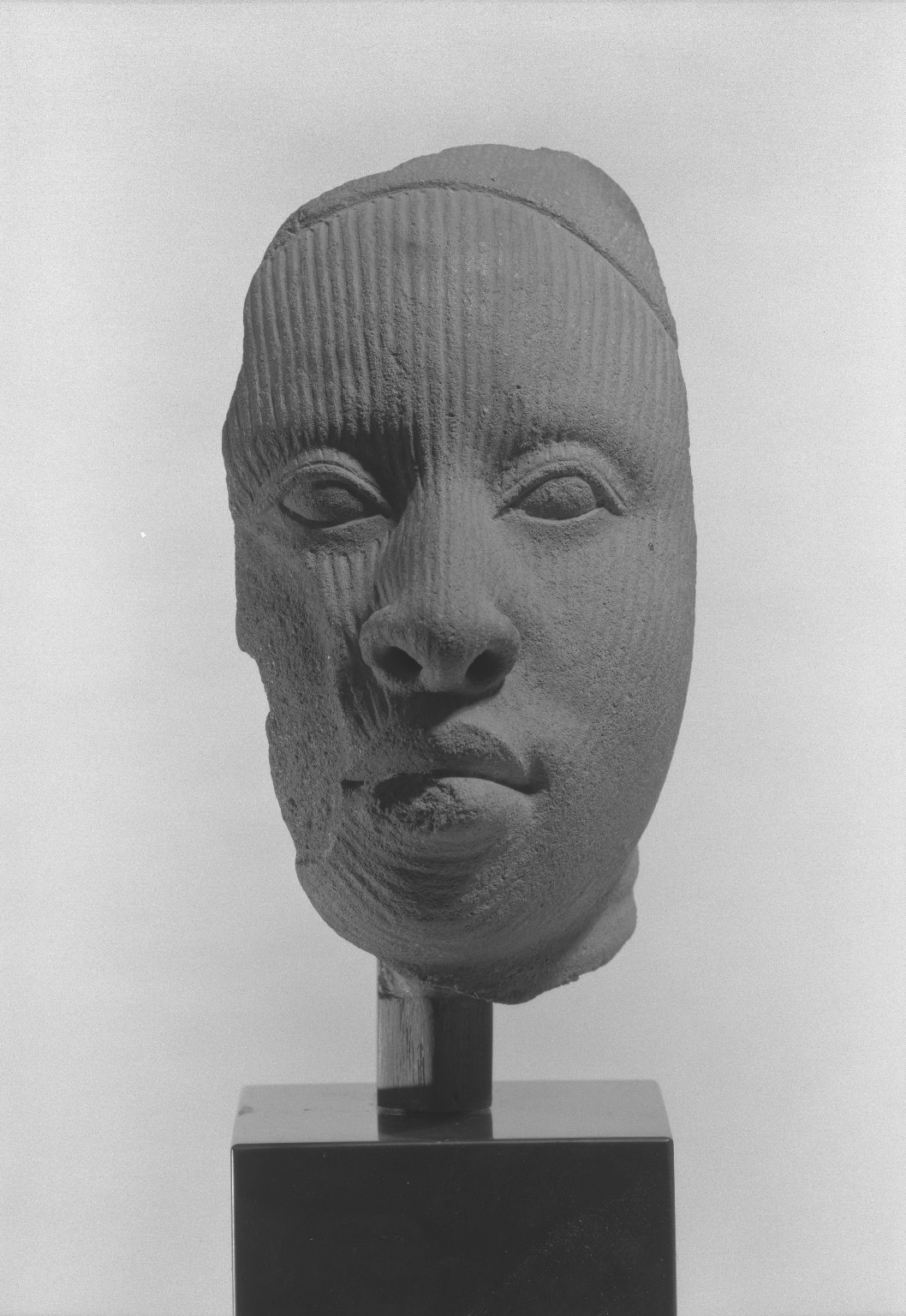
Fragment of a HeadOnline Collection of Brooklyn Museum; Photo: Brooklyn Museum, L54.5_front_acetate_bw.jpgWikimedia Commons · CC BY 3.0
The Yorubaization of Afro-Atlantic religious matrixes refers to the historical, theological, and scholarly processes through which Yorùbá-derived beliefs, deities, and ritual idioms became the dominant benchmark of African authenticity and prestige across the Americas . This structural hegemony, often designated by scholars as Nagôcentrism or Yorùbá purism, elevated Yorùbá traditions such as Candomblé Ketu in Brazil and Regla de Ocha (Lucumí) in Cuba to the apex of religious legitimacy . In doing so, this historical dynamic subordinated equally ancient and demographically larger West-Central African (Kongo-Angola) and Dahomean (Gbe/Jeje/Fon) traditions to peripheral or stigmatized positions . Rather than being a simple survival of ancestral memory, Yorubaization was actively constructed through late-nineteenth-century transatlantic circuits of free Black travelers, nineteenth-century imperial disruptions in West Africa, ethnological alliances between priestesses and Western academics, and twentieth-century Pan-African cultural politics .
+-------------------------------------------------------------------------+
|                  THE DUAL MECHANISM OF YORUBAIZATION                    |
+-------------------------------------------------------------------------+
|                                                                         |
|  [ HISTORICAL / DEMOGRAPHIC WAVE ]      [ INTELLECTUAL & SCHOLARLY ]    |
|   - 19th-c. Fall of Oyo & Civil Wars     - 1890s Lagosian Renaissance   |
|   - Late arrival into urban centers      - Nina Rodrigues, Ortiz,       |
|     (Salvador da Bahia, Havana)            Bastide, Verger alliances    |
|   - Concentrated mutual-aid sodalities   - Academic elevation of Ketu/  |
|     (Cabildos Lucumí, Irmandades)          Lucumí as "pure civilizational"|
|                  |                                     |                |
|                  +------------------+------------------+                |
|                                     |                                   |
|                                     v                                   |
|                [ NAGÔ-KETU & LUCUMÍ STRUCTURAL HEGEMONY ]               |
|                                     |                                   |
|         +---------------------------+---------------------------+       |
|         |                                                       |       |
|         v                                                       v       |
|  [ INTERNAL RE-ALIGNMENT ]                           [ SYSTEMIC EXCLUSIONS ]
|   - Subordination of Bantu (Kongo/Angola)             - Erasure of Dahomean/Jeje
|   - Re-naming of Nkisi/Vodun into Orisha idioms         foundations in liturgy
|   - 20th-c. "Anti-syncretism" & Oyotunji              - Stigmatization of Palo
|     Re-Africanization movements                         and Macumba as "feitiço"|
+-------------------------------------------------------------------------+
History and Evolution
Earliest Record and the Pre-Nineteenth-Century Baseline
Before the nineteenth century, enslaved populations from West-Central Africa (Bantu speakers from the Kongo and Ndongo regions) and the Bight of Benin (Gbe-speaking Fon, Ewe, and Allada peoples) constituted the vast majority of Africans transported to Brazil, Saint-Domingue, and the Hispanic Caribbean . In colonial Brazil, West-Central Africans established the earliest ritual sodalities, shaping the lingua franca, spirit-possession paradigms, and funerary practices of urban and rural Afro-descendants . In Cuba, the early cabildos de nación (mutual aid ethnic sodalities chartered by the Spanish Crown) were predominantly organized by Bantu-speaking Congos and Senegambian groups .
The Yorùbá, known in colonial records by exonyms such as Nagô in Brazil (derived from the Fon exonym Anagó for western Yorùbá groups) and Lucumí in Cuba (likely derived from the Yorùbá greeting olùkù mi, meaning "my friend"), were present only in modest numbers during the sixteenth, seventeenth, and eighteenth centuries . Their religious structures had not yet coalesced into overarching pan-ethnic institutions in the diaspora .
The Nineteenth-Century Wars and the Late Captive Surge
The collapse of the Ọ̀yọ́ Empire following the Owu Wars (1821-1826), the Fulani jihadist incursions, and protracted civil wars across Yorùbáland triggered a massive, concentrated wave of enslavement between 1810 and 1860 . Millions of Yorùbá-speaking captives, including trained priests of Ṣàngó, Ọya, Ògún, and Ifá, alongside high-ranking political figures, were channeled through the slave ports of Lagos, Badagry, and Ouidah directly into the urban ports of Salvador da Bahia and Havana .
This sudden demographic density in urban environments allowed the newly arrived Yorùbá captives to establish tight-knit, structurally coherent sodalities . Unlike early plantation slaves who were dispersed across rural estates, these captives entered bustling Atlantic metropolises where they formed unified ritual networks that synthesized previously localized lineage cults from Ọ̀yọ́, Kétu, Ẹ̀gbá, and Ìjẹ̀ṣà into integrated liturgical systems .
Transatlantic Circuits and the Lagosian Cultural Renaissance
Between the 1850s and 1890s, a vital counterflow occurred. Emancipated Africans from Brazil and Cuba, known respectively as Agudas or Amaros, purchased their freedom and repatriated to coastal West Africa, settling in Lagos, Agoué, and Ouidah . Simultaneously, educated Christianized Yorùbá returnees from Freetown (the Saros) catalyzed the Lagosian Cultural Renaissance of the 1890s .
Figures such as Samuel Johnson, Mojola Agbebi, and other intellectuals sought to defend African dignity against British colonial racism by systematizing Yorùbá history, philosophy, and grammar, transforming the term Yorùbá from an Ọ̀yọ́-specific ethnonym into a proud, unified ethno-national identity .
Regular maritime trade between Salvador da Bahia and Lagos, operated by Afro-Brazilian merchants such as Martiniano Eliseu do Bonfim and Rodolfo Martins de Andrade (Bamgbobṣe Nobeluké), allowed ritual specialists to travel back and forth across the Atlantic . These travelers transported sacred materials, kola nuts (obì), cowrie shells (owó ẹyọ), ritual texts, and theological orthodoxies directly between coastal West Africa and Bahian terreiros, solidifying the intellectual and liturgical supremacy of the Nagô-Ketu houses .
During the early and mid-twentieth century, the hegemony of Yorùbá religious matrixes was formalized through an alliance between Afro-Atlantic religious leaders and Western ethnologists . In Bahia, pioneering medical doctor and anthropologist Raimundo Nina Rodrigues and later scholars including Arthur Ramos, Edison Carneiro, Pierre Verger, and Roger Bastide focused their academic investigations almost exclusively on the Nagô-Ketu terreiros, particularly Ilê Axé Iyá Nassô Oká (Engenho Velho / Casa Branca), Ilê Axé Opô Afonjá, and Ilê Iyá Omi Axé Iyamassé (Gantois) .
These scholars framed Nagô religion as a classic, civilized, and philosophical theology possessing a dignified pantheon comparable to Mount Olympus, while treating Bantu-derived traditions (such as Candomblé Angola, Macumba, and Cabula) as degenerate, disorganized forms of primitive fetishism and sorcery (feitiço) .
In Cuba, polymath Fernando Ortiz established a similar hierarchy, placing the Lucumí tradition at the apex of civilizational development while classifying Palo Monte (Kongo-derived) and Abakuá (Ékpè-derived) as socially dangerous and cognitively underdeveloped .
Afro-Brazilian priestesses, most notably Mãe Aninha (Obá Biyi) and Mãe Senhora (Oxum Muiwá) of Ilê Axé Opô Afonjá, actively utilized these ethnological partnerships to secure municipal and intellectual protection against brutal police persecution, effectively codifying Nagô-Ketu ritual forms as the only true Afro-Brazilian orthodoxy .
Post-War Re-Africanization, Oyotunji, and Contemporary Forms
From the 1970s onward, the Yorubaization project expanded into an explicit re-Africanization and anti-syncretism movement . In 1983, at the Second World Conference of Orisha Tradition and Culture held in Salvador da Bahia, prominent priestesses including Mãe Stella de Oxóssi of Ilê Axé Opô Afonjá publicly declared the complete expulsion of Catholic saint statues and syncretic imagery from their shrines, demanding a return to an unadulterated Yorùbá ritual core .
In the United States, African American cultural nationalist Walter Eugene King was initiated into the Lucumí priesthood in Matanzas, Cuba, in 1959, adopting the royal name Ọba Ẹfuntọ́lá Òṣéyẹmí Adélabú Adéfúnmi I . Adefunmi rejected Cuban Lucumí syncretism as a slave compromise, moving south in 1970 to establish Oyotunji African Village in Beaufort County, South Carolina . Oyotunji reconstructed an idealized nineteenth-century Ọ̀yọ́ kingdom complete with divine kingship, Ifá divination, facial scarifications, and an exclusively Yorùbá liturgical framework .
In the contemporary era, the global spread of Nigerian Ìṣẹ̀ṣe revivalism via international conferences, academic publications, and digital networks has intensified debates across Brazil, Cuba, Trinidad, and the United States over ritual purity, initiation authenticity, and the legitimacy of creolized Afro-Atlantic practices .
Theoretical Framework: Nagocentrism and the Invention of Purity
The academic analysis of Yorubaization underwent a profound paradigm shift during the late 1980s and 1990s through the work of Brazilian anthropologist Beatriz Góis Dantas, French sociologist Stefania Capone, and American anthropologist J. Lorand Matory .
+-------------------------------------------------------------------------+
|                  SCHOLARLY DEBATES ON NAGÔ HEGEMONY                      |
+-------------------------------------------------------------------------+
|                                                                          |
|  [ ESSENTIALIST / CONTINUITY MODEL ]     [ CRITICAL / CONSTRUCTIVIST ]   |
|   Proponents: Herskovits, Verger,         Proponents: Dantas, Capone,    |
|   Bastide, Ramos                          Matory, Palmié                 |
|   Premise: Nagô religion survived         Premise: "Nagô purity" was     |
|   intact due to innate civilizational     socially constructed through   |
|   complexity, high mythology, and deep    transatlantic politics, class  |
|   theological coherence.                  alliances, and academic power. |
|                                                                          |
+-------------------------------------------------------------------------+
The Constructivist Critique: Dantas and Capone
Beatriz Góis Dantas demonstrated that Nagô purity was not an inherent, pristine survival from West Africa, but an ideological construction forged through the mutual interests of Bahian Black elites and white intellectuals . Dantas showed that outside Bahia, such as in the state of Sergipe, Afro-Brazilian Xangô houses incorporated diverse African, Indigenous, and Catholic elements without anxiety over purity . In Bahia, however, the concept of Nagô purity operated as a social strategy to claim prestige, civic legitimacy, and immunity from police repression in a racist society .
Stefania Capone extended this critique by analyzing the Afro-Brazilian religious field not as a set of separate, bounded ethnic nations (Ketu, Angola, Jeje), but as an integrated ritual continuum . Within this continuum, individual practitioners and religious leaders constantly manipulate symbols, claiming Ketu-Nagô identity to acquire spiritual authority and public prestige . Capone revealed how early ethnologists uncritically accepted the exegesis of their favored Nagô informants as objective truth, publishing ethnographies that were subsequently read by Candomblé initiates and used as instruction manuals to reshape their own rituals to conform to academic standards of African purity .
The Transatlantic Dialogue: Matory's Revision
J. Lorand Matory challenged the assumption that Afro-Atlantic religions were passive retentions of isolated memories . Matory argued that the pan-Yorùbá identity was a modern, transnational creation that emerged simultaneously on both sides of the Atlantic through ongoing commercial, intellectual, and religious dialogue .
Matory demonstrated that the defense of cultural purity in late-nineteenth-century Lagos directly informed the ritual restructuring of Bahian Candomblé, highlighting Black agency in constructing a globalized religious empire .
Regional Expressions of Yoruba Hegemony
The consolidation of Yorùbá hegemony unfolded through distinct institutional mechanics across the Afro-Atlantic diaspora.
+-------------------------------------------------------------------------+
|                  REGIONAL MANIFESTATIONS OF YORUBAIZATION               |
+-------------------------------------------------------------------------+
|                                                                         |
|  REGION         PRIMARY MATRIX           HEGEMONIC PROCESS              |
|  ------         -------------           ----------------              |
|  Bahia (BR)     Candomblé Ketu           Elevation of Nagô-Ketu terreiros|
|                                          over Candomblé Angola & Cabula;|
|                                          re-Africanization campaigns.   |
|                                                                         |
|  Cuba           Regla de Ocha (Lucumí)   Standardization of Ocha/Ifá    |
|                                          priesthoods over Palo Monte,   |
|                                          Arará, and Abakuá.             |
|                                                                         |
|  Trinidad       Trinidad Orisha          Transformation of "Shango"     |
|                 (Shango)                 Baptist syncretism into pure   |
|                                          Orisha shrines.                |
|                                                                         |
|  United States  Oyotunji African         Complete expunging of Spanish  |
|                 Village / Ìṣẹ̀ṣe          Catholicism; structural        |
|                                          emulation of Ọ̀yọ́ monarchies.   |
+-------------------------------------------------------------------------+
Bahia and Candomblé Ketu
In Salvador da Bahia, Candomblé is divided into nações (nations), primarily Ketu (Nagô/Yorùbá), Jeje (Fon/Ewe), and Angola-Congo (Bantu) . From the late nineteenth century onward, the Ketu nation established institutional hegemony . Shrines trace their lineages back to the foundational temple, Ilê Axé Iyá Nassô Oká, founded around 1830 by freed African women including Iyá Nassô, Marcelina da Silva (Obá Tossi), and Maria Júlia da Conceição Nazareth .
The liturgical language of Ketu, a preserved and ritualized dialect of Yorùbá, became the supreme sacred tongue of Candomblé . Non-Ketu terreiros, particularly those of the Angola nation, were increasingly pressured to adopt Yorùbá chants, incorporate Yorùbá orixás alongside their native nkisi, and align their festive calendars with the Ketu liturgical cycle to avoid accusations of practicing inferior witchcraft .
Cuba and Regla de Ocha (Lucumí)
In Cuba, a parallel hierarchy developed within Afro-Cuban religious culture . While Central African captives had established the complex and widely practiced religious system known as Palo Monte (divided into Mayombe, Biyumba, and Brillumba branches), white intellectual elites and middle-class Creoles branded Palo as primitive sorcery (brujería) centered on graveyard magic and physical manipulation of bones and iron caldrons (ngangas) .
In contrast, the Lucumí religion (Regla de Ocha and the Ifá divination complex) was conceptualized as an elaborate theological system governing universal elemental forces . Key nineteenth-century Lucumí reformers in Havana and Regla, such as Lorenzo Samá (Obá Dimeji), Latuán (Rosalía Abreu), Timotea Albear (Latuán's successor), and Bernardo Rojas (Ifá babaláwo), codified Lucumí initiation into a standardized four-tier structure (kariocha), consolidating multiple individual oricha lineages into a single unified ritual corpus .
As a result, Fon/Ewe-derived Arará houses in Matanzas and Jovellanos preserved their distinct Dahomean liturgy only by aligning their foddunes with the dominant Lucumí oricha pantheon .
Trinidad Orisha
In Trinidad, the religious complex historically termed "Shango" or "Shango Baptist" originated among thousands of free Yorùbá indentured laborers and recaptives who arrived in the colony following the abolition of slavery in 1834 .
Throughout the nineteenth and twentieth centuries, Orisha worship operated in close syncretic intimacy with the Spiritual Baptist (Shouter Baptist) faith, sharing prayer houses, hymnody, and trance rituals .
However, during the late twentieth century, under the influence of global Pan-Africanism, Caribbean intellectual exchange, and visits by Nigerian religious dignitaries, leading Trinidadian shrines initiated a deliberate process of Yorubaization . Priests discarded Spiritual Baptist Bibles, candles, and Christian saints, restructured shrines along strict Nigerian Yorùbá lines, and officially renamed the tradition "Trinidad Orisha" .
The Marginalization and Subversion of Alternative Matrixes
The historical ascent of Yorùbá hegemony did not occur in a vacuum; it directly caused the systemic marginalization, distortion, and active erasure of West-Central African and Dahomean cosmological frameworks .
+-------------------------------------------------------------------------+
|                  THE DISPLACED AFRO-ATLANTIC MATRIXES                    |
+-------------------------------------------------------------------------+
|                                                                          |
|  CENTRAL AFRICAN (BANTU/KONGO)           DAHOMEAN (GBE/FON/JEJE)         |
|  - Traditions: Palo Monte, Candomblé    - Traditions: Candomblé Jeje,   |
|    Angola, Macumba, Cabula                Regla Arará, Haitian Vodou     |
|  - Key Concepts: Nkisi, Kalûnga,         - Key Concepts: Vodun, Mahu,    |
|    Mpungu, Simbi                          Legba, Sakpata, Dan            |
|  - Stigmatized As: "Feitiço" (sorcery),  - Subsumed As: Minor variants   |
|    "brujería", graveyard magic,           of Yorùbá Orishas (e.g.,       |
|    lacking moral theology.                Sakpata equated to Obaluayê).  |
+-------------------------------------------------------------------------+
The Central African (Bantu) Matrix
Demographic data from the Trans-Atlantic Slave Trade Database indicates that enslaved peoples from West-Central Africa (Congo and Angola) formed the numerical backbone of the African presence in the Americas for nearly four centuries . Central African cosmology, structured around the veneration of ancestral spirits, territorial nature spirits (simbi), and the concentration of cosmic agency in physical power objects (minkisi, singular nkisi), provided the structural foundation for early Afro-Atlantic spirituality .
Under the hegemonic gaze of Nagôcentrism, this physical, pragmatic, and immanent engagement with spiritual forces was systematically pathologized . Anthropologists and Nagô priestesses characterized Bantu traditions as lacking true theology, dismissing minkisi as material fetishism while celebrating Yorùbá orìṣà as elevated cosmic archetypes .
Despite this official denigration, Central African structures deeply infiltrated Nagô practice from below . The fundamental concept of the assentamento (the localized physical vessel containing stones, iron, and herbal substances where an orixá resides) shares structural mechanics with the Central African nkisi .
The Dahomean (Gbe/Fon/Jeje) Matrix
The peoples of the Dahomean bight (Fon, Ewe, Mahi, Gun) shared centuries of intimate geographical, political, and cultural interaction with the Yorùbá prior to the Atlantic crossing . Deities such as Sakpata (the vodun of smallpox and earth), Dan/Dangbe (the rainbow serpent), and Mawu-Lisa existed in dynamic interchange with Yorùbá counterparts like Ọbalúayé, Òṣùmàrè, and Ọbàtálá .
In Bahia, the Jeje nation established influential temples, such as the Terreiro do Seja Hundebó (founded by Ludovina Pessoa in Cachoeira) and the Terreiro Bogum in Salvador .
However, because the Fon were fewer in number during the final decades of the slave trade and lacked the transatlantic intellectual infrastructure developed by the Lagosian elite, Jeje practices were progressively subsumed under the Nagô umbrella . In contemporary Bahian discourse, Jeje songs and rituals are often incorrectly described as archaic dialects of Yorùbá, and voduns are routinely referred to simply as orixás .
Linguistic and Orthographic Transformations
The process of Yorubaization is acutely visible in linguistic registers across the Americas. In diaspora communities, the Yorùbá language was preserved primarily as an oral, liturgical register rather than a vernacular medium for everyday communication .
Morphology, Etymology, and Liturgical Creolization
In Cuba, the ritual lexicon is known as Lùkùmí (derived from the archaic Yorùbá olùkù mi, "my intimate associate/friend") . In Brazil, the sacred tongue is termed Iorubá or Língua de Santo .
Over two centuries of separation from the African continent and contact with Iberian phonology, these liturgical dialects underwent systematic phonological shifts, lexical attrition, and morphological re-analysis .
Homeland Yorùbá is a strictly tonal language possessing three distinct register tones: High (´), Mid (unmarked), and Low (`) . The pitch of a syllable is phonemic, meaning a shift in tone alters the lexical meaning entirely (for example, ọwọ́ means hand, ọ̀wọ̀ means honor, and owó means money) .
In the transatlantic crossing to Spanish- and Portuguese-speaking environments, tonal systems underwent significant decay . In Cuban Lucumí and Brazilian Nagô, the grammatical and semantic functions of tone were largely replaced by Iberian stress and intonational accents .
However, within the rhythmic structure of sacred drumming (toques played on the batá or atabaques), ancestral tonal contours were preserved musically . Master drummers (olúbàtá or alabês) strike the high, medium, and low heads of sacred drums to "speak" the tonal phrases of praise poetry (oríkì) directly to the divinities .
Textual Analysis and Sacred Exegesis
To understand how Yorùbá theological paradigms assert cosmological and ethical authority over the Afro-Atlantic diaspora, we examine a classical oral text from the Ifá divination corpus (Odù Ìwòrì Méjì), which addresses the ontological necessity of ethical character (ìwà) over superficial ritual observance .
+-------------------------------------------------------------------------+
|                        SACRED TEXT ANALYSIS                             |
+-------------------------------------------------------------------------+
|                                                                         |
|  Text: Ẹsẹ Ifá from the Odù Ìwòrì Méjì                                  |
|  Source: Transcribed by Wande Abimbola (1975)                           |
|                                                                         |
|  1. Original Performance Text:                                          |
|     Ìwọ̀rì méjì, awo orí,                                                |
|     A díá fún Òrúnmìlà,                                                 |
|     Nígbà tí Olúwa mi ń lọ gbé Ìwà níyàwó.                              |
|     Wọ́n ní kí Baba ó fẹ́ Ìwà sùn-ùn,                                     |
|     Wọ́n ní gbogbo ire ayé níí tọ Ìwà lẹ́yìn wá.                          |
|     Òrúnmìlà gbé Ìwà níyàwó,                                            |
|     Ayé rọ̀ ọ́ sọ̀rọ̀.                                                      |
|     Ó ní: "Ìwà, Ìwà nìkan l'ó soro o,                                   |
|     Gbogbo ire ayé, Ìwà nìkan l'ó soro."                                |
|                                                                         |
|  2. Word-by-Word Gloss:                                                 |
|     Ìwọ̀rì méjì [The dual Iwori], awo [diviner of] orí [the inner head],  |
|     A díá fún [cast divination for] Òrúnmìlà [the divinity of wisdom],  |
|     Nígbà tí [at the time that] Olúwa mi [my Lord] ń lọ [was going]     |
|     gbé [to take] Ìwà [Character/Beingness] níyàwó [as a wife].         |
|     Wọ́n ní [they said] kí Baba [that Father] ó fẹ́ [should marry]        |
|     Ìwà [Character] sùn-ùn [patiently/firmly],                          |
|     Wọ́n ní [they said] gbogbo ire ayé [all blessings of the world]       |
|     níí tọ [follow] Ìwà [Character] lẹ́yìn wá [afterwards to arrive].    |
|     Òrúnmìlà [Orunmila] gbé [took] Ìwà [Character] níyàwó [as wife],     |
|     Ayé [the world/life] rọ̀ [became soft/easy for] ọ́ [him] sọ̀rọ̀ [fully].|
|     Ó ní [He said]: "Ìwà [Character], Ìwà nìkan [Character alone]        |
|     l'ó soro o [is that which is difficult/precious],                   |
|     Gbogbo ire ayé [all the good things of life], Ìwà nìkan              |
|     [Character alone] l'ó soro [is paramount]."                         |
|                                                                         |
|  3. Idiomatic English Translation (Wande Abimbola):                     |
|     "Iwori Meji, the diviner of the inner head,                         |
|     Cast divination for Orunmila,                                       |
|     When my Lord was going to take Character as his wife.               |
|     They instructed Father to cherish Character with deep patience,     |
|     For they declared that all the blessings of existence trail behind  |
|     Character.                                                          |
|     Orunmila took Character as his bride,                               |
|     And existence became exquisitely smooth and fruitful for him.       |
|     He declared: 'Character, gentle character alone is what is precious,|
|     Of all the blessings in this wide world, character alone is the key.'"|
+-------------------------------------------------------------------------+
Depth Layers
4. What It Means
The verses establish that material wealth (ajé), children (ọmọ), health (àlàáfíà), and victory over adversaries (ìṣẹ́gun) are fundamentally unstable unless anchored by Ìwà-rere (good or gentle character) . In Yorùbá philosophy, Ìwà is personified as a primordial woman whom Ọ̀rúnmìlà must court with supreme patience, signifying that ethical balance is not an innate property but a cultivated virtue requiring constant ritual and psychological vigilance .
5. What It Is Used For
Within the social matrix of the diaspora, this verse is chanted during initiation ceremonies (kariocha or feitura de santo) and major divinatory readings (itá) to admonish new initiates . It operates as a stern rebuke against spiritual arrogance, reminding practitioners that mastery over esoteric incantations (ọfọ̀) and sacrificial rites (ẹbọ) is useless if the initiate exhibits volatile, predatory, or dishonest behavior .
6. Worked Scenario
In a contemporary Lucumí house-temple (ilé) in Miami, an initiate who has recently achieved economic prosperity begins to mistreat younger godchildren, demanding exorbitant fees for auxiliary ceremonies. During an annual consultation with the cowrie oracle (diloggún), the presiding oriaté (master of ceremonies) casts the sign Eyeunle-Iroso (corresponding to cosmological balance) and recites this narrative of Ọ̀rúnmìlà and Ìwà.
The oriaté informs the elder that their material fortune is actively repelling spiritual protection because they have abandoned Ìwà. The elder understands that without immediate humility and restitution to the community, the blessings will disintegrate.
7. Importance and Value
This verse occupies a foundational position in Afro-Atlantic ethics because it provides the intellectual counter-narrative to external accusations of sorcery . By centering Ìwà, both homeland Ifá and diaspora traditions assert that the highest purpose of religious life is not magical manipulation (oògùn), but the realization of moral harmony between the individual's inner destiny (Orí) and the cosmic order governed by Ọlọ́dùmarè .
8. Sourced Variants
In Cuban Lucumí patakís (sacred narratives), the story of Ìwà is frequently adapted into Spanish-Lucumí folktales where Orunmila marries a woman named Iwa who has unpleasant habits, testing his patience . In the Cuban variant recorded by Natalia Bolívar Aróstegui, Orula fails the test initially by losing his temper and driving Iwa away, causing his good fortune to vanish until he wanders the world in penance to win her back .
In the Brazilian Candomblé version documented by Reginaldo Prandi, Ìwà is explicitly identified as the daughter of Olodumare whose presence brings cooling water and tranquil breath to the hot, conflict-ridden earth .
9. Tonality Analysis
The phrase Ìwà nìkan l'ó soro contains a crucial tonal dynamic . Ìwà carries Low-High tones. If the tones are mispronounced as Mid-Mid (iwa), the word shifts from "character/nature" to "the act of coming/existence."
The verb phrase ó soro carries High Mid-Mid tones, meaning "it is difficult" or "it is precious." If pronounced with Low tones (ó sòrọ̀), it means "he speaks." Thus, in oral homeland performance, the speaker plays on the auditory ambiguity: character is that which is difficult to maintain, character is that which is priceless, and character is that which speaks for the person when their voice is silent .
10. Notes on the Translation
Published translations diverge significantly. Missionary-era translations by Christian Yorùbá scholars, such as Reverend E. M. Lijadu (1898), frequently translated Ìwà as "righteousness" or "holiness" in an attempt to align Ifá with Christian biblical theology .
Academic folklorist William Bascom translated Ìwà functionally as "character" or "destiny" . Contemporary philosopher Barry Hallen and scholar Wande Abimbola emphasize that Ìwà derives etymologically from the verb wà (to exist or to be), so that Ìwà literally means "the state of beingness" or "the essential nature of existing in harmony with the cosmos" . English translations that render it merely as "morality" obscure this deep ontological foundation.
Key Historical Figures and Transatlantic Agents
The emergence of Yorùbá hegemony was driven by concrete historical individuals operating across transnational networks.
+-------------------------------------------------------------------------+
|                  TRANSATLANTIC ARCHITECTS OF YORÙBÁ HEGEMONY            |
+-------------------------------------------------------------------------+
|                                                                          |
|  FIGURE                     REGION              PRIMARY HISTORICAL ROLE  |
|  ------                     ------              ----------------------  |
|  Martiniano do Bonfim       Bahia / Lagos       Babalawo, translator,    |
|  (1859-1943)                                    co-founder of Opô Afonjá;|
|                                                 solidified Nagô ties to  |
|                                                 Lagos and academic elite.|
|                                                                          |
|  Bamgboṣé Nobeluké          Bahia / Lagos /     Key Nagô-Ketu priest;    |
|  (Obá Sanyá)                Ouidah              consecrated foundational |
|                                                 shrines in Salvador.     |
|                                                                          |
|  Mãe Aninha (Obá Biyi)      Bahia (BR)          High priestess of Opô    |
|  (1869-1938)                                    Afonjá; allied with Nina |
|                                                 Rodrigues & Edison       |
|                                                 Carneiro; won legal      |
|                                                 recognition for Candomblé|
|                                                 under decree law.        |
|                                                                          |
|  Lorenzo Samá (Obá Dimeji)  Cuba / USA          Standardized the Lucumí  |
|  (d. 1927)                                      kariocha system; wrote   |
|                                                 foundational libretas de |
|                                                 itá in Havana/Matanzas.  |
|                                                                          |
|  Oba Oseijeman Adefunmi I   USA                 Founded Oyotunji Village;|
|  (1928-2005)                                    pioneered North American |
|                                                 Black Nationalist        |
|                                                 re-Yorubaization.        |
+-------------------------------------------------------------------------+
Martiniano Eliseu do Bonfim (1859-1943)
Born in Salvador da Bahia to freed African parents, Martiniano was sent to Lagos in 1875 by his father to receive formal education in English and Yorùbá and to undergo intensive training in the Ifá priesthood . Returning to Bahia in the 1880s as a fully initiated babaláwo fluent in English, Portuguese, and Yorùbá, Martiniano became the primary interlocutor for Nina Rodrigues, Arthur Ramos, Edison Carneiro, and Donald Pierson .
Martiniano utilized his transatlantic authority to restructure Bahian Candomblé along orthodox West African lines, establishing the Obás de Xangô (the Twelve Ministers of Shango) civil council at Ilê Axé Opô Afonjá in 1936 to incorporate prominent white intellectuals as legal patrons and ceremonial protectors .
Bamgboṣé Nobeluké (Obá Sanyá)
A native of West Africa who traversed the Atlantic multiple times between Lagos, Ouidah, and Salvador da Bahia during the late nineteenth century, Bamgboṣé was one of the most powerful ritual technicians of his era .
As a high-ranking priest of Ṣàngó and a master of sacred herbalism, Bamgboṣé played an instrumental role in establishing the ritual foundations of Ilê Axé Iyá Nassô Oká (Casa Branca) and Ilê Axé Opô Afonjá, personally initiating several foundational matriarchs and establishing the direct genealogical link between Bahian Ketu houses and the royal priesthoods of Kétu and Ọ̀yọ́ .
Lorenzo Samá (Obá Dimeji) and Latuán (Rosalía Abreu)
In late-nineteenth- and early-twentieth-century Cuba, Lorenzo Samá (a babaloricha initiated to Aganyú and Ṣàngó) and Latuán (an African-born priestess of Ọbàtálá who served as the premier oríaté of Havana) executed a monumental reform of Afro-Cuban religion .
Prior to their collaboration, Lucumí initiates were consecrated only to their specific patron oricha . Samá and Latuán standardized the parada (presentation) and asiento rituals into a comprehensive system where the initiate received a full pantheon of foundational orichas (Èṣù, Ògún, Ọ̀ṣọ́ọ̀sì, Ọbàtálá, Ọya, Ọ̀ṣun, Yemọja, Ṣàngó) simultaneously .
This institutional unification enabled Lucumí practice to spread across urban Cuba and later internationally, solidifying its structural dominance over localized Arará and Congo systems .
Contemporary Debates and Continuing Frictions
The structural dominance of Yorubaization remains one of the most contentious battlegrounds within Atlantic religious communities and African Studies .
+-------------------------------------------------------------------------+
|                  CONTEMPORARY THEOLOGICAL BATTLEGROUNDS                  |
+-------------------------------------------------------------------------+
|                                                                          |
|  [ DIASPORA CREOLE ORTHODOXY ]           [ NIGERIAN ÌṢẸ̀ṢẸ REVIVALISM ]   |
|   (Lucumí / Candomblé Ketu)               (Traditional West African)     |
|   - Defends syncretic evolution,          - Demands purge of Catholic    |
|     Iberian spiritism, Cabildo heritage     saints, Spiritism, and       |
|     as hard-won survival technology.        diasporic innovations.       |
|   - Validates consecration of women       - Restricts babaláwo ranks     |
|     to high Ifá/Ocha governance.            exclusively to men; returns  |
|   - Treats diaspora libretas and            to town-specific lineage     |
|     terreiro lineages as complete.          cult structures.             |
|                                                                          |
+-------------------------------------------------------------------------+
The Ìṣẹ̀ṣe vs. Lucumí/Candomblé Controversy
The resurgence of traditional Yorùbá religion (Ìṣẹ̀ṣe L'àgbà) in southwestern Nigeria and its aggressive global expansion has sparked fierce jurisdictional disputes with established Cuban Lucumí and Brazilian Ketu communities .
Proponents of Nigerian Ìṣẹ̀ṣe often portray diasporic traditions as corrupted by European Catholicism, Allan Kardec Spiritism, and colonial distortions, urging Western practitioners to travel to Nigeria to receive "authentic" initiations .
In response, prominent Lucumí and Candomblé elders vigorously defend their traditions as sovereign, highly refined ancestral institutions . They argue that the syncretic mechanisms and ritual modifications developed in Cuba and Brazil were conscious survival strategies engineered by African-born ancestors (los mayores), representing a legitimate, living evolution of the tradition that cannot be subordinated to modern Nigerian practices .
Gender, Sexuality, and Hierarchical Power
Another critical fault line concerns gender roles and mediumship hierarchies . In nineteenth- and twentieth-century Bahia, Nagô Candomblé became famously celebrated, most notably by American anthropologist Ruth Landes in her 1947 work The City of Women, as a matriarchal institution where women held supreme political and sacred authority as mães-de-santo .
J. Lorand Matory and other scholars have demonstrated that this matriarchal image was partly an ideological construct negotiated between priestesses and sympathetic researchers .
Furthermore, the late-twentieth-century resurgence of Nigerian Ifá orthodoxy, which maintains strictly patriarchal lineages restricting the role of Babaláwo to biological males, has clashed directly with the diaspora where women and non-heteronormative men have historically held central leadership and ritual mediumship positions .
Àwọn orísun
[1]Stephan Palmié, Wizards and Scientists: Explorations in Afro-Cuban Modernity and Tradition (Duke University Press, 2002), pp. 79-158.
[2]Stefania Capone, Searching for Africa in Brazil: Power and Tradition in Candomblé (Duke University Press, 2010), pp. 1-72, 145-210.
[3]Paul Christopher Johnson, Secrets, Gossip, and Gods: The Transformation of Brazilian Candomblé (Oxford University Press, 2002), pp. 35-82.
[4]Todd Ramón Ochoa, Society of the Dead: Quita Manaquita and Palo Praise in Cuba (University of California Press, 2010), pp. 45-89.
[5]Robert Farris Thompson, Flash of the Spirit: African and Afro-American Art and Philosophy (Random House, 1983), pp. 101-158.
[6]J. Lorand Matory, Black Atlantic Religion: Tradition, Transnationalism, and Matriarchy in the Afro-Brazilian Candomblé (Princeton University Press, 2005), pp. 38-148, 188-245.
[7]Beatriz Góis Dantas, Nagô Grandma and White Papa: Candomblé and the Creation of Afro-Brazilian Identity, translated by Stephen Berg (University of North Carolina Press, 2009), pp. 13-112.
[8]Linda M. Heywood and John K. Thornton, Central Africans, Atlantic Creoles, and the Foundation of the Americas, 1585-1660 (Cambridge University Press, 2007), pp. 169-234.
[9]Matt D. Childs, The 1812 Aponte Rebellion in Cuba and the Struggle against Atlantic Slavery (University of North Carolina Press, 2006), pp. 54-92.
[10]Fernando Ortiz, Los negros brujos: Apuntes para un estudio de etnología criminal (Librería de Fernando Fé, 1906; repr. Editorial de Ciencias Sociales, 1995), pp. 23-88.
[11]David H. Brown, Santería Enthroned: Art, Ritual, and Innovation in an Afro-Cuban Religion (University of Chicago Press, 2003), pp. 22-86.
[12]J. F. Ade Ajayi and Robert Smith, Yoruba Warfare in the Nineteenth Century (Cambridge University Press, 1964), pp. 63-124.
[13]Yeda Pessoa de Castro, Falares africanos na Bahia: Um vocabulário afro-brasileiro (Academia Brasileira de Letras / Topbooks, 2001), pp. 45-110.
[14]Lisa Earl Castillo, "The 'Ketu Nation' of Brazilian Candomblé in Historical Context," History in Africa, Vol. 48 (2021), pp. 83-124.
[15]J. D. Y. Peel, Religious Encounter and the Making of the Yoruba (Indiana University Press, 2000), pp. 123-186, 278-310.
[16]Raimundo Nina Rodrigues, Os Africanos no Brasil (Companhia Editora Nacional, 1932; orig. written 1905), pp. 45-130.
[17]Roger Bastide, The African Religions of Brazil: Toward a Sociology of the Interpenetration of Civilizations, translated by Helen Sebba (Johns Hopkins University Press, 1978), pp. 156-218.
[18]Carl Monroe Hunt, Oyotunji Village: The Yoruba Movement in America (University Press of America, 1979), pp. 12-78.
[19]Mãe Stella de Oxóssi, Meu Tempo é Agora (Editora Oduduwa, 1993), pp. 31-64.
[20]Kamari Maxine Clarke, Mapping Yoruba Networks: Power and Agency in the Making of Transnational Communities (Duke University Press, 2004), pp. 45-112.
[21]Aisha M. Beliso-De Jesús, Electric Santería: Racial and Sexual Assemblages of Transnational Religion (Columbia University Press, 2015), pp. 78-134.
[22]Natalia Bolívar Aróstegui, Los Orishas en Cuba (Ediciones Unión, 1990), pp. 15-68.
[23]Jill Flanders Crosby, "Arará," in Encyclopedia of African American Religions, edited by Larry G. Murphy et al. (Routledge, 1993), pp. 58-61.
[24]James T. Houk, Spirits, Blood, and Drums: The Orisha Religion in Trinidad (Temple University Press, 1995), pp. 33-98.
[25]Frances Henry, Re-Africanization of the Orisha Religion in Trinidad (University of Florida Press, 2003), pp. 1-84.
[26]David Eltis and David Richardson, Atlas of the Transatlantic Slave Trade (Yale University Press, 2010), pp. 195-228.
[27]Wyatt MacGaffey, Religion and Society in Central Africa: The BaKongo of Lower Zaire (University of Chicago Press, 1986), pp. 132-176.
[28]Edna G. Bay, Wives of the Leopard: Gender, Politics, and Culture in the Kingdom of Dahomey (University of Virginia Press, 1998), pp. 88-142.
[29]Luis Nicolau Parés, The Formation of Candomblé: Vodun History and Ritual in Brazil, translated by Richard Vernon (University of North Carolina Press, 2013), pp. 115-189.
[30]Ayo Bamgbose, A Grammar of Yoruba (Cambridge University Press, 1966), pp. 1-35.
[31]Amanda Villepastour, Ancient Text Messages of the Yorùbá Bàtá Drum: Cracking the Code (Ashgate Publishing, 2010), pp. 45-112.
[32]Angela Lühning, "Acorda Mané: A Música no Candomblé de Salvador," Cadernos de Campo, Vol. 4, No. 4 (1994), pp. 121-140.
[33]Wande Abimbola, Ìwàpẹ̀lẹ́: The Concept of Good Character in Ifá Literary Corpus, in Yoruba Oral Tradition, edited by Wande Abimbola (Department of African Languages and Literatures, University of Ife, 1975), pp. 389-420.
[34]William Bascom, Ifa Divination: Communication Between Gods and Men in West Africa (Indiana University Press, 1969), pp. 103-145.
[35]Reginaldo Prandi, Mitologia dos Orixás (Companhia das Letras, 2001), pp. 240-275.
[36]E. M. Lijadu, Ifa: Imole Re Ti Ise Ipile Isin Ni Ile Yoruba (Ondo: Phillips Press, 1898; repr. 1908), pp. 14-52.
[37]Barry Hallen, The Good, the Bad, and the Beautiful: Discourse about Values in Yoruba Culture (Indiana University Press, 2000), pp. 45-92.
[38]Ruth Landes, The City of Women (Macmillan, 1947; repr. University of New Mexico Press, 1994), pp. 35-118.